
Street Food
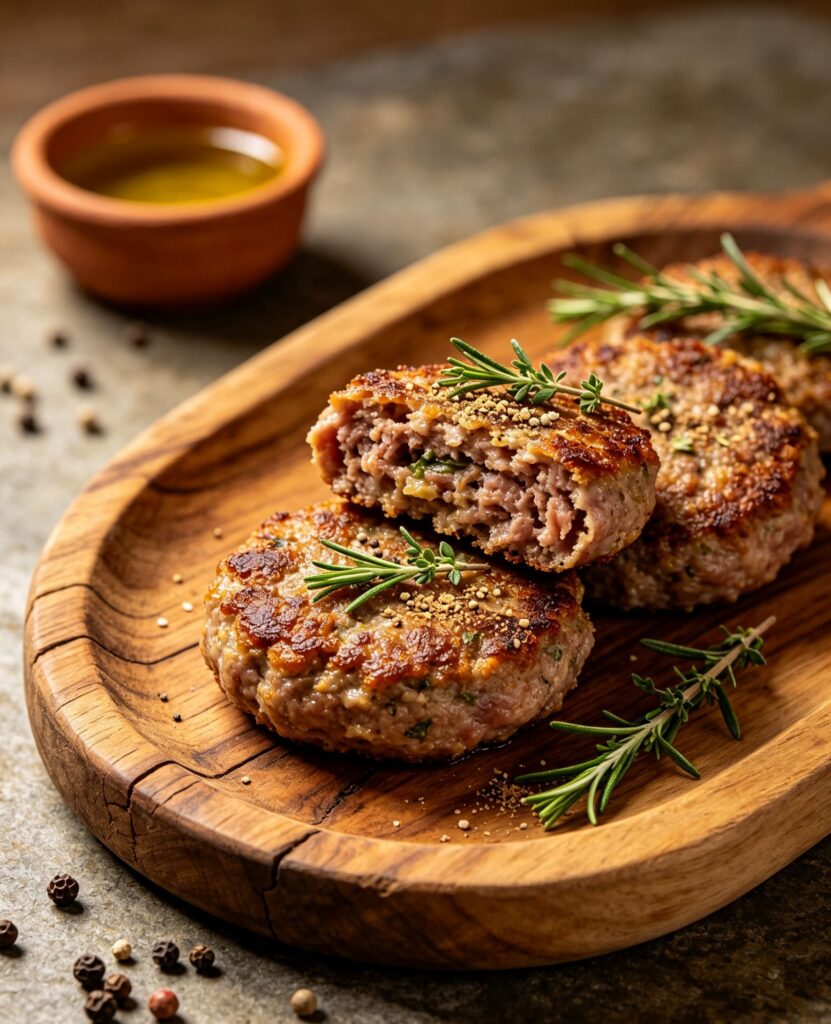
Isicia Omentata (Roman Spiced Meat Patties)
The Quirky Foodster Team
Ingredients
- 500g Minced pork
- 60g White bread, crusts removed, soaked in a little milk
- 30g Pine nuts, roughly chopped
- 15ml Fish sauce
- 1/2 tsp ground black pepper
- 1/4 tsp ground cumin
- 30ml Olive oil, for frying
Method
- Squeeze the excess milk from the soaked bread and crumble it into a mixing bowl.
- Add the minced pork, pine nuts, fish sauce, pepper and cumin, and combine well with your hands.
- Shape the mixture into 8 small, flat patties.
- Heat the olive oil in a frying pan over medium heat and fry the patties for 6-7 minutes per side, until golden brown and cooked through.
- Serve hot, straight from the pan, in the style of a Roman street stall.
Native Name: Isicia Omentata
Cultural Background: Recorded in Apicius, isicia are seasoned minced meat patties bound with soaked bread and pine nuts, cooked over a fire and sold hot from street stalls and popinae, the small eateries that lined Roman streets – a direct ancestor of the modern burger and meatball.
Tips: Don't over-mix the meat mixture – combine just until it holds together, to keep the patties tender rather than dense.
Variations: A modern take sold in some historical-food circles wraps the patty in caul fat before frying, which is what the name 'omentata' (caul-wrapped) originally referred to.
Vegetarian / Vegan Note: Not suitable as written; the dish is built around minced meat.
Storage: Store covered in the refrigerator for up to 2 days.
Reheating: Reheat in a pan over medium heat for 3-4 minutes per side, or in a 180C (350F) oven for 8-10 minutes, until piping hot throughout.
Nutrition: Approx. 320 kcal, 22 g protein, 8 g carbohydrate, 22 g fat per serving.
FAQs:
Q: What does 'omentata' mean?
A: It refers to omentum, the caul fat traditionally wrapped around the patties before cooking, which bastes them as they fry.
Q: Can I use beef instead of pork?
A: Yes, a mix of beef and pork or beef alone both work well and were both used in Roman recipes.
Please log in to leave a comment.