
Injeolmi
The Quirky Foodster Team
Ingredients
- Glutinous rice flour — 420 g (15 oz)
- Water — 360 ml (12 fl oz)
- Sugar — 1 tbsp
- Roasted soybean powder (konggaru) — 100 g (3.5 oz)
- Sugar, for the coating — 2 tbsp
- Of Salt — pinch
Method
- Combine the glutinous rice flour, water, sugar and salt, mixing to form a thick, smooth paste.
- Steam the mixture for 25–30 minutes until fully cooked through and translucent.
- Transfer to a mortar (or a sturdy bowl) and pound vigorously for several minutes until smooth, elastic and very sticky.
- Combine the roasted soybean powder with the extra sugar in a shallow dish.
- With wet hands, shape the pounded rice cake into a flat rectangle or small pieces.
- Cut into bite-sized pieces and roll in the sweetened soybean powder to coat thoroughly.
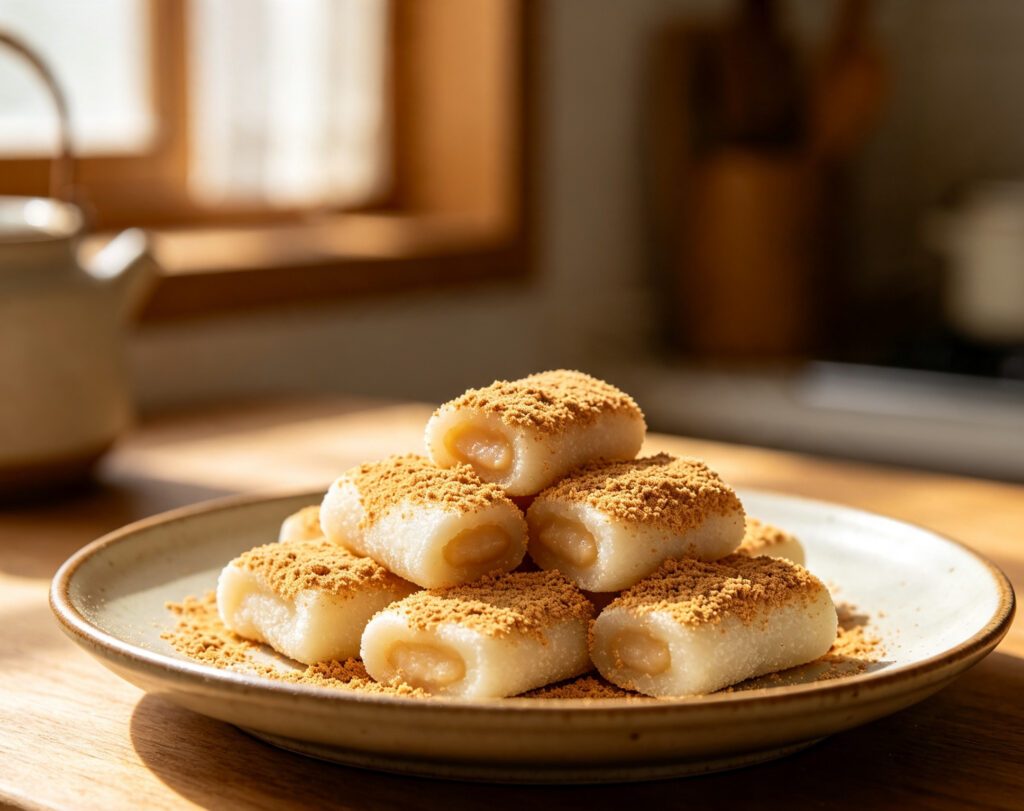
Introduction: Soft, chewy glutinous rice cakes coated in toasted soybean powder, a traditional Korean sweet enjoyed at celebrations and as an everyday treat.
Cultural Background: Injeolmi has been made across the Korean peninsula for centuries, traditionally pounded by hand in a large mortar, its soft, chewy texture and nutty coating making it a beloved treat for holidays and gatherings.
Tips: Pounding thoroughly is essential for the characteristic soft, chewy, elastic texture of proper injeolmi. Keep your hands and tools wet or lightly oiled when handling the very sticky rice cake.
Variations: Use ground sesame seeds instead of soybean powder for a different coating. Add a few drops of mugwort extract to the rice cake for a traditional green variation.
Storage: Store in an airtight container at room temperature for up to 2 days, or refrigerate for up to 5 days.
Reheating: Not typically reheated; enjoyed at room temperature, though a brief steam can soften it if it has firmed up.
FAQs:
Q: What is konggaru?
A: Roasted soybean powder, a traditional Korean coating for rice cakes, giving a nutty flavour and fine, dry texture.
Q: Why does injeolmi need to be pounded so much?
A: Vigorous pounding develops the rice cake's characteristic soft, chewy, elastic texture, distinguishing it from a simple steamed rice cake.
- Glutinous rice flour — 420 g (15 oz)
- Water — 360 ml (12 fl oz)
- Sugar — 1 tbsp
- Roasted soybean powder (konggaru) — 100 g (3.5 oz)
- Sugar, for the coating — 2 tbsp
- Of Salt — pinch
Please log in to leave a comment.