
Ikshu Rasa (Fresh Sugarcane Juice)
The Quirky Foodster Team
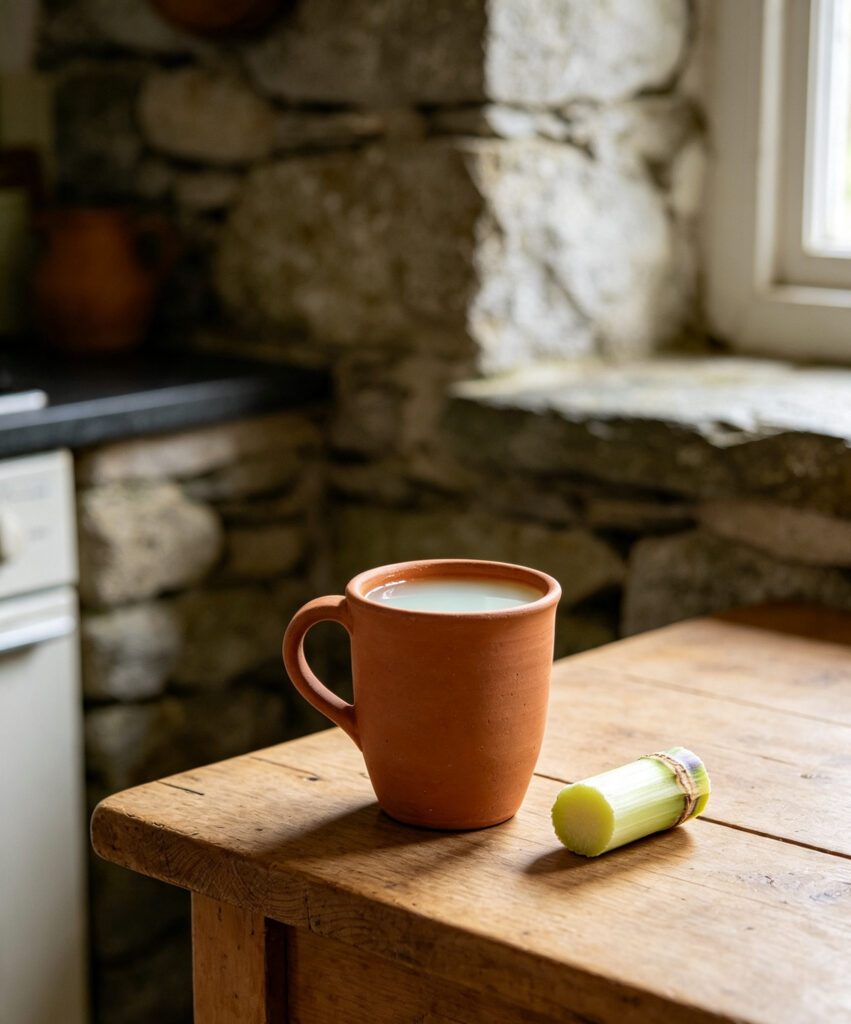
Ingredients
- Fresh sugarcane stalks, peeled and cut into manageable lengths — 4-5
- Fresh ginger, grated — 1/2 tsp
- Fresh lime juice — 1 tbsp
- Ice cubes or cold water, for serving (optional) — a few
Method
- Peel the tough outer skin from the sugarcane stalks and cut into pieces sized to fit your juicer or press.
- Pass the sugarcane pieces through a dedicated sugarcane press if available, collecting the juice as it emerges.
- If using a blender as an alternative, blend the chopped sugarcane pieces with a small amount of water until broken down, then strain thoroughly through a fine sieve or muslin cloth, pressing firmly to extract as much juice as possible.
- Stir the grated ginger and lime juice into the fresh sugarcane juice.
- Serve immediately over ice or with a little cold water, as fresh sugarcane juice is best enjoyed right after pressing.
Introduction: The fresh, sweet juice pressed directly from sugarcane stalks, ikshu rasa was a refreshing, widely available drink sold across the markets and roadsides of the Mauryan Empire, reflecting the region’s ancient cultivation of sugarcane.
Cultural Background: Sugarcane, referred to as ikshu in Sanskrit, was cultivated across the Indian subcontinent from an early period, and its juice, along with derived products such as jaggery, formed a significant part of the region’s food economy well before crystallised sugar production became widespread. As a simple, unprocessed drink requiring only pressing, ikshu rasa would have been a common, accessible refreshment sold by street vendors in the heat of the Mauryan Empire’s cities and countryside.
Tips: (cid:127) Fresh sugarcane juice oxidises and loses quality quickly, so press and serve it as close to consumption as possible rather than storing it for later. (cid:127) A dedicated sugarcane press gives the cleanest, most efficient extraction; a blender method works as a reasonable home alternative but yields a somewhat lower juice extraction.
Variations: (cid:127) A pinch of ground cumin or a few mint leaves can be added for a different, equally traditional flavour profile. (cid:127) Serve warm rather than chilled during cooler weather, as this remains a common way the drink is enjoyed today.
Storage: Best consumed immediately after pressing; if necessary, store in an airtight container in the refrigerator for a few hours only, as the juice ferments and degrades quickly.
Reheating: This drink is typically served cold or freshly pressed and is not conventionally reheated.
Nutrition: Per serving (approx., 250 ml): 180 kcal, 0 g protein, 45 g carbohydrate, 0 g fat, 0 g fibre, 15 mg sodium.
FAQs:
Q: Where can I find fresh sugarcane to make this at home?
A: Fresh sugarcane stalks are increasingly available in South Asian, Latin American and some Southeast Asian grocery stores, particularly during the warmer months. (cid:127) Q: Can I use bottled sugarcane juice instead of pressing my own? A: Yes, though bottled juice, especially if pasteurised or sweetened, will differ somewhat in flavour and freshness from juice pressed immediately before serving.
- Fresh sugarcane stalks, peeled and cut into manageable lengths — 4-5
- Fresh ginger, grated — 1/2 tsp
- Fresh lime juice — 1 tbsp
- Ice cubes or cold water, for serving (optional) — a few
Please log in to leave a comment.