
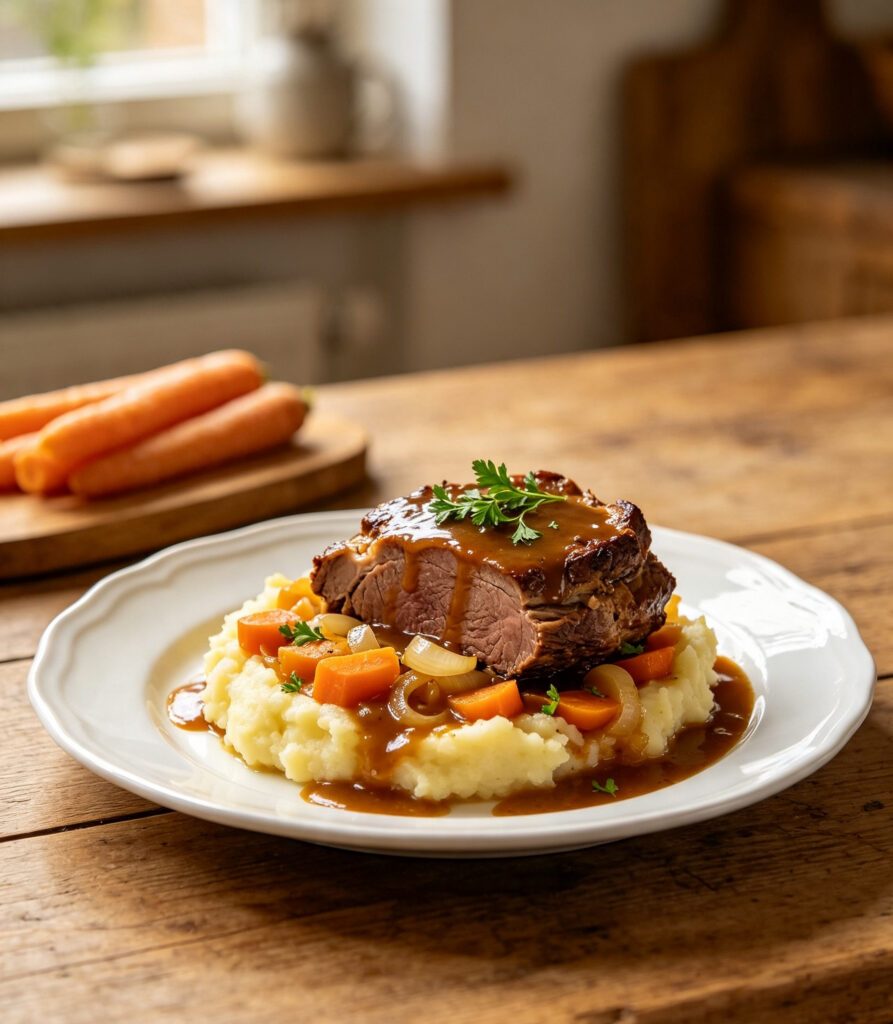
Hutspot met Klapstuk
The Quirky Foodster Team
Ingredients
- Potatoes, peeled and cubed — 1 kg (2.2 lb)
- Carrots, sliced — 500 g (1 lb 2 oz)
- Onions, chopped — 2
- Beef brisket or klapstuk — 800 g (1.75 lb)
- Butter — 3 tbsp
- Milk, warmed — 120 ml (4 fl oz)
- Water or beef stock — 960 ml (32 fl oz)
- Bay leaf — 1
- Salt and pepper — to taste
Method
- Place the beef in a large pot with the water or stock and bay leaf, and simmer for 2–2.5 hours until very tender.
- Remove the beef and set aside, reserving the cooking liquid.
- Add the potato, carrot and onion to the reserved liquid, adding more water if needed to cover, and simmer for 20–25 minutes until tender.
- Drain the vegetables, reserving a little of the cooking liquid.
- Mash the vegetables together with the butter and warm milk until smooth, adding reserved liquid if needed for the right consistency; season with salt and pepper.
- Slice the beef and serve alongside the mashed hutspot.
Introduction: Mashed potato, carrot and onion served with slow-braised beef, a historic Dutch dish tied to the relief of the Siege of Leiden.
Cultural Background: Hutspot is closely associated with Leidens Ontzet, the annual celebration of the city's liberation from Spanish siege in 1574, when the story goes that fleeing soldiers left behind a pot of stewed vegetables that helped feed the starving city.
Tips: Simmer the beef long enough to become properly tender, as this also builds a flavourful base for cooking the vegetables. Mash the vegetables while still hot for the smoothest result.
Variations: Add a splash of the beef's cooking liquid directly into the mash for extra flavour. Serve with a spoonful of mustard on the side.
Storage: Refrigerate mash and beef separately in airtight containers for up to 3 days.
Reheating: Reheat the mash gently with a splash of milk, stirring; reheat the beef in a covered pan with a little stock.
FAQs:
Q: What is the history behind hutspot?
A: It's tied to the 1574 liberation of Leiden from Spanish siege, commemorated annually with this dish as part of Leidens Ontzet celebrations.
Q: What cut of beef is klapstuk?
A: A Dutch cut similar to a flat rib or brisket, well suited to long, slow braising.
- Potatoes, peeled and cubed — 1 kg (2.2 lb)
- Carrots, sliced — 500 g (1 lb 2 oz)
- Onions, chopped — 2
- Beef brisket or klapstuk — 800 g (1.75 lb)
- Butter — 3 tbsp
- Milk, warmed — 120 ml (4 fl oz)
- Water or beef stock — 960 ml (32 fl oz)
- Bay leaf — 1
- Salt and pepper — to taste
Please log in to leave a comment.