
Hovmästarsås (Mustard-Dill Sauce)
The Quirky Foodster Team
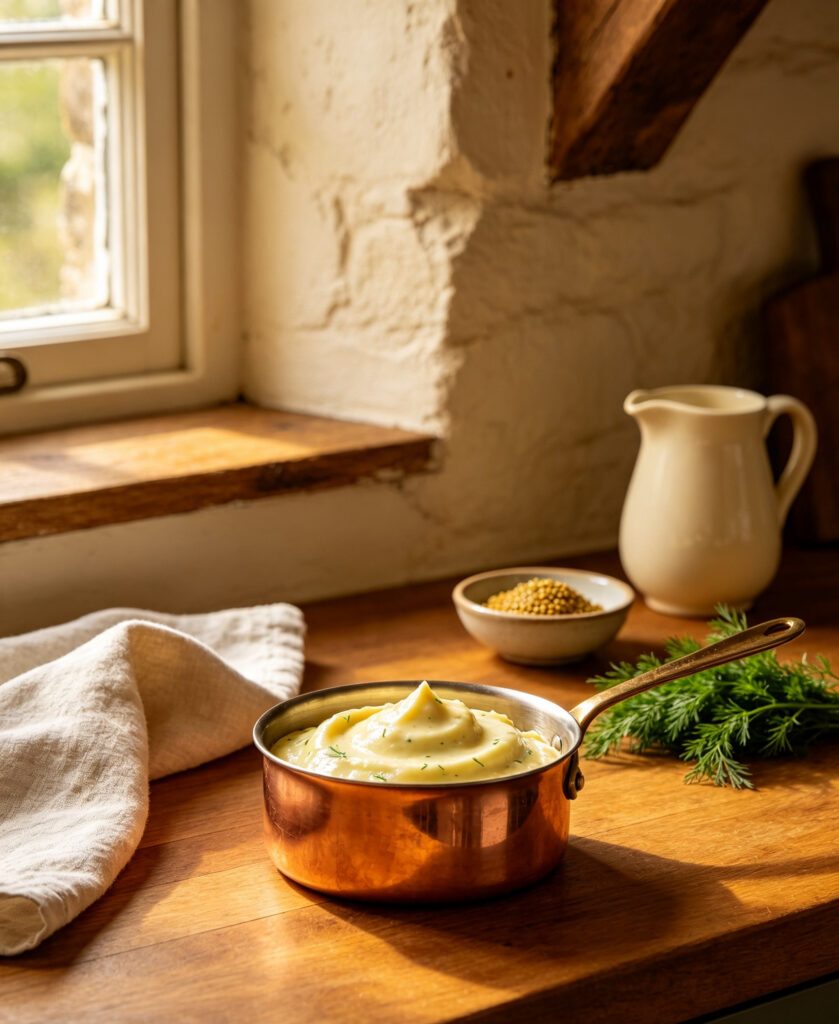
Ingredients
- Swedish or Dijon mustard — 60 g (4 tbsp)
- Sweet mustard (if available, or extra sugar) — 20 g (4 tsp)
- Sugar — 20 g (4 tsp)
- White wine vinegar — 15 ml (1 tbsp)
- Neutral oil — 150 ml (2/3 cup)
- Fresh dill, finely chopped — 20 g (4 tbsp)
- Salt and white pepper — to taste
Method
- Whisk mustard, sugar and vinegar together in a mixing bowl until sugar dissolves.
- Whisking constantly, drizzle in oil slowly to form a light emulsion, similar to a thick vinaigrette.
- Stir in finely chopped fresh dill.
- Season with salt and white pepper to taste.
- Chill at least 20 minutes before serving.
Cultural Background: Meaning 'headwaiter's sauce', hovmästarsås is a sweet mustard and dill sauce from Sweden, traditionally whisked with oil to a light emulsion and served over gravlax (cured salmon), a pairing considered essential at any Swedish smörgåsbord.
Tips: • Adding oil slowly while whisking is key to achieving the sauce's characteristic light, creamy texture. • Fresh dill is essential — dried dill lacks the necessary bright, aromatic quality.
Variations: • Add a touch of lemon juice for extra brightness. • Use crème fraîche instead of some oil for a creamier, less oily texture.
Storage: Refrigerate in an airtight container up to 5 days.
Reheating: Not applicable; served cold. Nutrition (per serving) Approx. 90 kcal, 0.2 g protein, 9.5 g fat, 2 g carbohydrate per 15 ml serving. FAQs What is hovmästarsås traditionally served with? Gravlax (dill-cured salmon), a classic Scandinavian smörgåsbord pairing. Why is it called headwaiter's sauce? The name reflects its origin as a refined, restaurant-style accompaniment historically served by headwaiters at formal Swedish meals.
FAQs: What is hovmästarsås traditionally served with? Gravlax (dill-cured salmon), a classic Scandinavian smörgåsbord pairing. Why is it called headwaiter's sauce? The name reflects its origin as a refined, restaurant-style accompaniment historically served by headwaiters at formal Swedish meals.
- Swedish or Dijon mustard — 60 g (4 tbsp)
- Sweet mustard (if available, or extra sugar) — 20 g (4 tsp)
- Sugar — 20 g (4 tsp)
- White wine vinegar — 15 ml (1 tbsp)
- Neutral oil — 150 ml (2/3 cup)
- Fresh dill, finely chopped — 20 g (4 tbsp)
- Salt and white pepper — to taste
Please log in to leave a comment.