
Hand Pies (Meat Pasties)
The Quirky Foodster Team
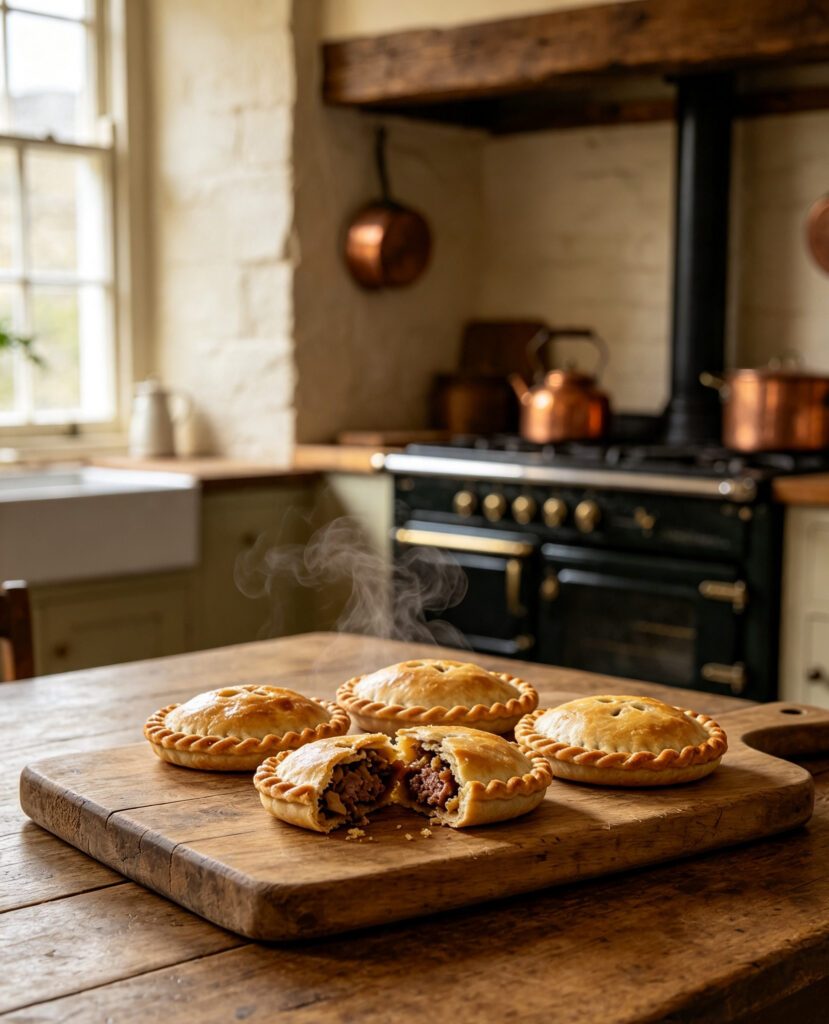
Ingredients
- Minced beef or mutton — 300 g (10.5 oz)
- Small onion, finely chopped — 1
- Ground cinnamon — 1/2 tsp
- Ground black pepper — 1/4 tsp
- Fine salt — 1/2 tsp
- Currants — 2 tbsp
- Beef stock or water — 1 tbsp
- Plain flour — 350 g (2.75 cups)
- Cold unsalted butter or lard, cubed — 175 g (3/4 cup)
- Fine salt, for the pastry — 1/2 tsp
- Cold water — 80-100 ml (1/3-1/2 cup)
- Egg, beaten, for glazing — 1
Method
- In a frying pan over medium heat, cook the minced meat and onion together for 8-10 minutes, breaking up the meat, until browned and cooked through.
- Stir in the cinnamon, pepper, salt, currants and stock, and cook for a further 2 minutes. Set aside to cool completely.
- Meanwhile, rub the cold butter or lard into the flour and salt for the pastry until it resembles breadcrumbs, then mix in the cold water gradually until a firm dough forms.
- Wrap and chill the pastry for 20 minutes, then roll out to about 4 mm (1/6 in) thickness.
- Cut into rounds about 12 cm (5 in) across using a cutter or small bowl.
- Preheat the oven to 200°C (400°F). Place a spoonful of the cooled filling onto one half of each round, fold over, and crimp the edges firmly to seal.
- Place the pies on a baking tray, brush with beaten egg, and cut a small slit in the top of each.
- Bake for 22-25 minutes, until deep golden brown.
- Serve warm or at room temperature, ideal for eating by hand.
Introduction: Small, portable pastries filled with seasoned minced meat, hand pies were sold by Tudor street vendors and eaten on the move by working people and travellers.
Cultural Background: Street vendors and cookshops in Tudor London and other towns sold ready-cooked hand pies to those without kitchens of their own, including labourers, apprentices and travellers passing through. Their small, self-contained pastry casing made them ideally suited to eating while walking, a practical solution recorded in period accounts of urban life.
Tips: (cid:127) Ensure the meat filling is completely cool before assembling the pies, as warm filling can make the pastry soggy and difficult to seal. (cid:127) Crimp the edges firmly with a fork or your fingers to prevent the filling from leaking during baking.
Variations: (cid:127) Chopped dried apricots or prunes can be used in place of currants for a different sweet-savoury balance. (cid:127) A mixture of beef and pork can be used for a richer filling.
Storage: Store in an airtight container in the refrigerator for up to 3 days.
Reheating: Reheat in an oven preheated to 180°C (350°F) for 10-12 minutes until warmed through and the pastry has re-crisped.
Nutrition: Per serving (approx., 1 pie): 380 kcal, 14 g protein, 34 g carbohydrate, 22 g fat, 2 g fibre, 420 mg sodium.
FAQs:
Q: Can these hand pies be frozen?
A: Yes, freeze the baked and fully cooled pies for up to 2 months; reheat from frozen in an oven preheated to 180°C (350°F) for 20-25 minutes. (cid:127) Q: Why are currants included in a savoury pie? A: Mixing dried fruit with meat and warm spices was a common Tudor flavour combination, reflecting the period’s fondness for blending sweet and savoury tastes.
- Minced beef or mutton — 300 g (10.5 oz)
- Small onion, finely chopped — 1
- Ground cinnamon — 1/2 tsp
- Ground black pepper — 1/4 tsp
- Fine salt — 1/2 tsp
- Currants — 2 tbsp
- Beef stock or water — 1 tbsp
- Plain flour — 350 g (2.75 cups)
- Cold unsalted butter or lard, cubed — 175 g (3/4 cup)
- Fine salt, for the pastry — 1/2 tsp
- Cold water — 80-100 ml (1/3-1/2 cup)
- Egg, beaten, for glazing — 1
Please log in to leave a comment.