
Guriltai Shul
The Quirky Foodster Team
Ingredients
- Mutton or beef, cut into small pieces — 400 g (14 oz)
- Onion, chopped — 1
- Carrot, sliced — 1
- Potato, cubed — 1
- Plain flour — 1.5 cups (190 g / 6.5 oz)
- Water — 1/2 cup (120 ml / 4 fl oz)
- Water or stock — 6 cups (1.4 litres / 48 fl oz)
- Oil — 2 tbsp
- Salt and pepper — to taste
Method
- Combine the flour and 1/2 cup water into a firm dough; rest for 15 minutes, then roll thin and cut into noodle strips.
- Heat the oil in a large pot and brown the meat pieces.
- Add the onion and cook until softened.
- Add the water or stock, bring to a boil, then simmer for 30 minutes until the meat is nearly tender.
- Add the carrot and potato, and simmer for a further 10 minutes.
- Add the noodle strips and cook for 5–6 minutes until tender.
- Season with salt and pepper and serve hot.
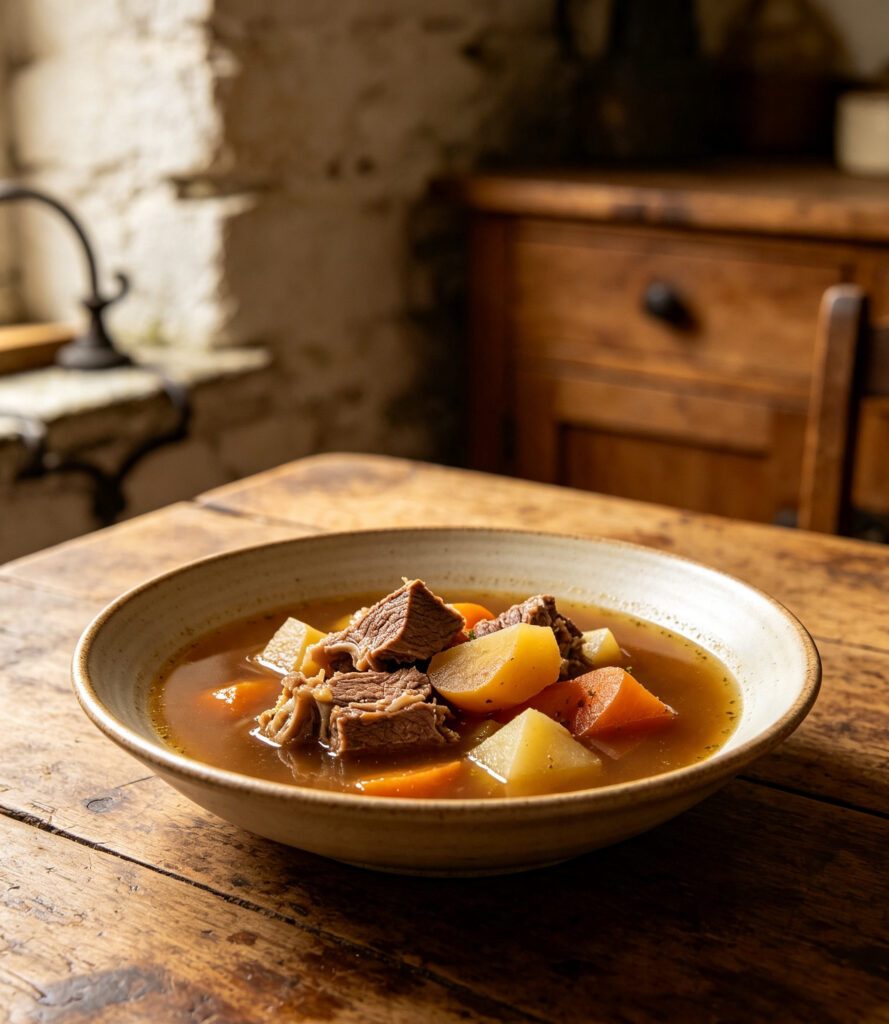
Introduction: A hearty noodle soup made with mutton, root vegetables and hand-cut noodles, a comforting bowl found across Mongolian homes.
Cultural Background: Guriltai shul (‘noodle soup’) provides warmth and sustenance through Mongolia’s long winters, its simple combination of meat, noodles and vegetables reflecting the resourceful, protein-rich diet of herding communities.
Tips: Cut the noodles a little thicker than pasta, as they hold up better in the long-simmered broth. Simmer the meat until properly tender before adding the noodles.
Variations: Add a handful of chopped cabbage for extra vegetables. Use dried noodles instead of homemade for a quicker version.
Storage: Refrigerate in an airtight container for up to 2 days.
Reheating: Reheat gently on the stovetop over medium heat until warmed through.
Nutrition: Per serving (approx.): 380 kcal, 22 g protein, 14 g fat, 40 g carbohydrate.
FAQs:
Q: Can I use store-bought noodles?
A: Yes, wide egg noodles or a similar substitute work well if
Q: What meat is most traditional?
A: Mutton, reflecting the centrality of sheep to Mongolian herding
- Mutton or beef, cut into small pieces — 400 g (14 oz)
- Onion, chopped — 1
- Carrot, sliced — 1
- Potato, cubed — 1
- Plain flour — 1.5 cups (190 g / 6.5 oz)
- Water — 1/2 cup (120 ml / 4 fl oz)
- Water or stock — 6 cups (1.4 litres / 48 fl oz)
- Oil — 2 tbsp
- Salt and pepper — to taste
Please log in to leave a comment.