
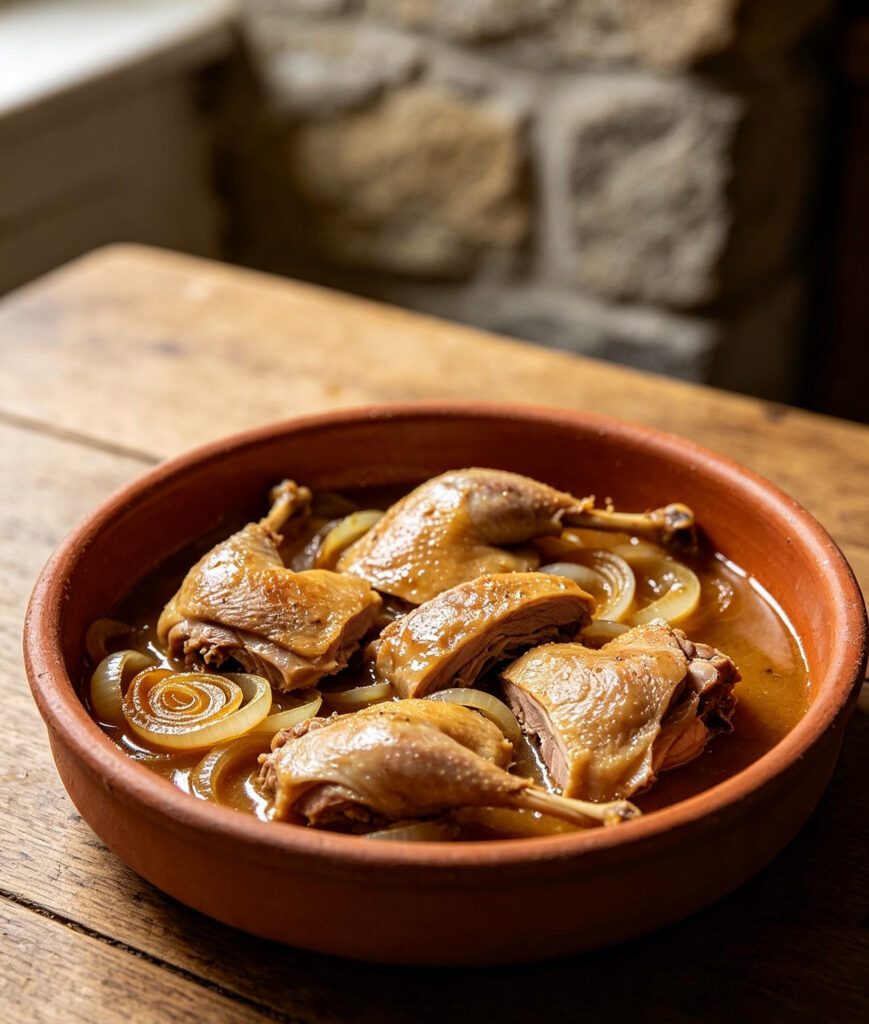
Guinea Fowl Stewed with Onions
The Quirky Foodster Team
Ingredients
- Guinea fowl (or chicken as a widely available substitute), jointed — 1
- Onions, sliced — 2
- Water — 750 ml (3 cups)
- Salt — 1 pinch
Method
- Place the jointed guinea fowl and water in the pot and bring to a simmer.
- Cook for 20 minutes, skimming any foam from the surface.
- Add the sliced onions and continue simmering for a further 25-30 minutes, until the meat is fully tender.
- Season with salt and serve hot.
Introduction: Guinea fowl simmered slowly with onions, drawing on poultry-keeping documented as a livestock practice across the Mali Empire alongside cattle, goats and sheep.
Cultural Background: Poultry is directly documented among the livestock raised within the Mali Empire, both for domestic consumption and trade, and Ibn Battuta separately records being offered chickens among the local foods traded for along his route; the guinea fowl, native to the African savanna, is a strong regional candidate for the poultry described, since it remains a characteristic West African bird today alongside domesticated chicken.
Tips: – Guinea fowl is a leaner meat than chicken and benefits from the gentle, extended simmering in this recipe to stay tender. – Skimming the broth in the early stages of cooking gives a clearer, cleaner-tasting result.
Variations: – Chicken, also directly documented among foods traded for by Ibn Battuta, makes a very reasonable and equally well-attested substitute. – A little shea butter can be stirred in near the end of cooking for extra richness.
Storage: Refrigerate covered for up to 3 days.
Reheating: Reheat gently in a pot over low heat with a splash of water for 8-10 minutes, stirring occasionally.
Nutrition: Per serving (approx.): 250 kcal, 28 g protein, 6 g carbohydrate, 12 g fat.
FAQs:
Q: Is guinea fowl specifically documented in Mali Empire sources?
A: Poultry more broadly is directly documented among the livestock raised within the Mali Empire, and Ibn Battuta separately records chickens among foods traded for along his route; the guinea fowl is included here as a strong regional candidate given its status as a characteristic native West African bird, though the sources do not distinguish specifically between guinea fowl and chicken by name.
Q: Can chicken be used instead?
A: Yes, chicken is directly documented in Ibn Battuta’s own account as a food traded for during his journey, making it an equally well-attested and very practical substitute for guinea fowl.
- Guinea fowl (or chicken as a widely available substitute), jointed — 1
- Onions, sliced — 2
- Water — 750 ml (3 cups)
- Salt — 1 pinch
Please log in to leave a comment.