
Guay Teow Reua (Boat Noodles)
The Quirky Foodster Team
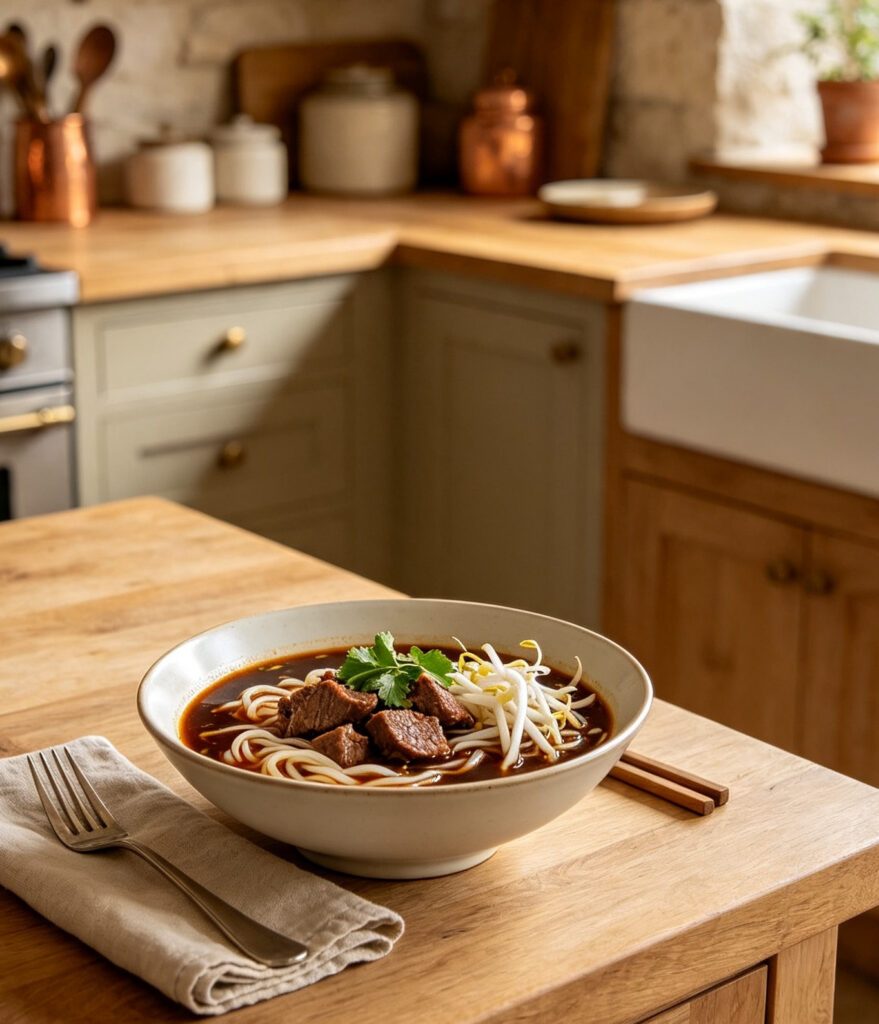
Ingredients
- Beef or pork stock — 1.2 L (5 cups)
- Dark soy sauce — 3 tbsp
- Fermented soybean paste (taochiao) — 2 tbsp
- Cinnamon stick — 1
- Star anise — 2
- Garlic cloves, minced — 3
- Beef or pork, thinly sliced — 300 g (10 oz)
- Beef or pork meatballs — 100 g (3.5 oz)
- Fresh flat rice noodles — 200 g (7 oz)
- Bean sprouts — 100 g (1 1/3 cups)
- Fresh coriander, chopped — 2 tbsp
- Chilli flakes, fried garlic, and lime wedges, to serve
Method
- Combine the stock, dark soy sauce, fermented soybean paste, cinnamon stick, star anise and garlic in a medium pot and bring to a simmer.
- Simmer for 20 minutes to infuse the spices, then taste and adjust seasoning.
- Add the sliced meat and meatballs, and simmer for 8–10 minutes, until cooked through.
- Meanwhile, blanch the rice noodles briefly in boiling water for 30 seconds to warm through, then drain and divide among serving bowls.
- Ladle the hot broth, meat and meatballs over the noodles in each bowl.
- Top with bean sprouts and coriander, and serve with chilli flakes, fried garlic and lime wedges on the side.
Introduction: Boat noodles get their name from the small wooden boats that once sold this deeply flavoured, dark,
spiced broth along Bangkok's canals, historically served in small bowls so vendors could paddle up to
many customers quickly.
Cultural Background: Boat noodles get their name from the small wooden boats that once sold this deeply flavoured, dark,
spiced broth along Bangkok's canals, historically served in small bowls so vendors could paddle up to
many customers quickly. The intensely rich broth, often darkened with pork or beef blood, remains a
beloved, distinctive Bangkok specialty.
Tips: The broth should be deeply savoury and richly spiced — let it simmer long enough for the spices to fully infuse. Traditional versions are served in small bowls, meant to be eaten in several rounds — feel free to adjust portion size to preference.
Variations: Add a splash of pork or beef blood to the broth for the traditional dark colour and deeper flavour, as classic versions do. Adjust the spice blend with a little white pepper for extra warmth. A vegetarian version can be made using vegetable stock, mushrooms and tofu in place of the meat and
meatballs, with the fermented soybean paste checked for a vegetarian preparation.
Vegetarian Boat Noodles: Replace the beef or pork stock with a rich vegetable stock. Omit the sliced meat
and meatballs, replacing with 300 g (3 cups) sliced mushrooms and 200 g (7 oz) cubed firm tofu. Proceed
exactly as directed with the remaining spices and aromatics.
Storage: Refrigerate broth and noodles separately in airtight containers for up to 2 days.
Reheating: Reheat the broth on the stovetop until hot; freshly blanch noodles before assembling bowls.
FAQs:
Q: Why is the broth so dark?
A: Traditional boat noodle broth is often darkened and enriched with pork or beef blood, along with dark soy sauce and warm spices, giving it its distinctive deep colour and flavour.
Q: Where does the name come from?
A: It refers to the small wooden boats that historically sold this dish along Bangkok's canals, serving small, quick bowls to passing customers.
Q: What noodles are used?
A: Fresh flat rice noodles are traditional, though dried rice noodles, cooked according to package instructions, can be substituted.
- Beef or pork stock — 1.2 L (5 cups)
- Dark soy sauce — 3 tbsp
- Fermented soybean paste (taochiao) — 2 tbsp
- Cinnamon stick — 1
- Star anise — 2
- Garlic cloves, minced — 3
- Beef or pork, thinly sliced — 300 g (10 oz)
- Beef or pork meatballs — 100 g (3.5 oz)
- Fresh flat rice noodles — 200 g (7 oz)
- Bean sprouts — 100 g (1 1/3 cups)
- Fresh coriander, chopped — 2 tbsp
- Chilli flakes, fried garlic, and lime wedges, to serve
Please log in to leave a comment.