
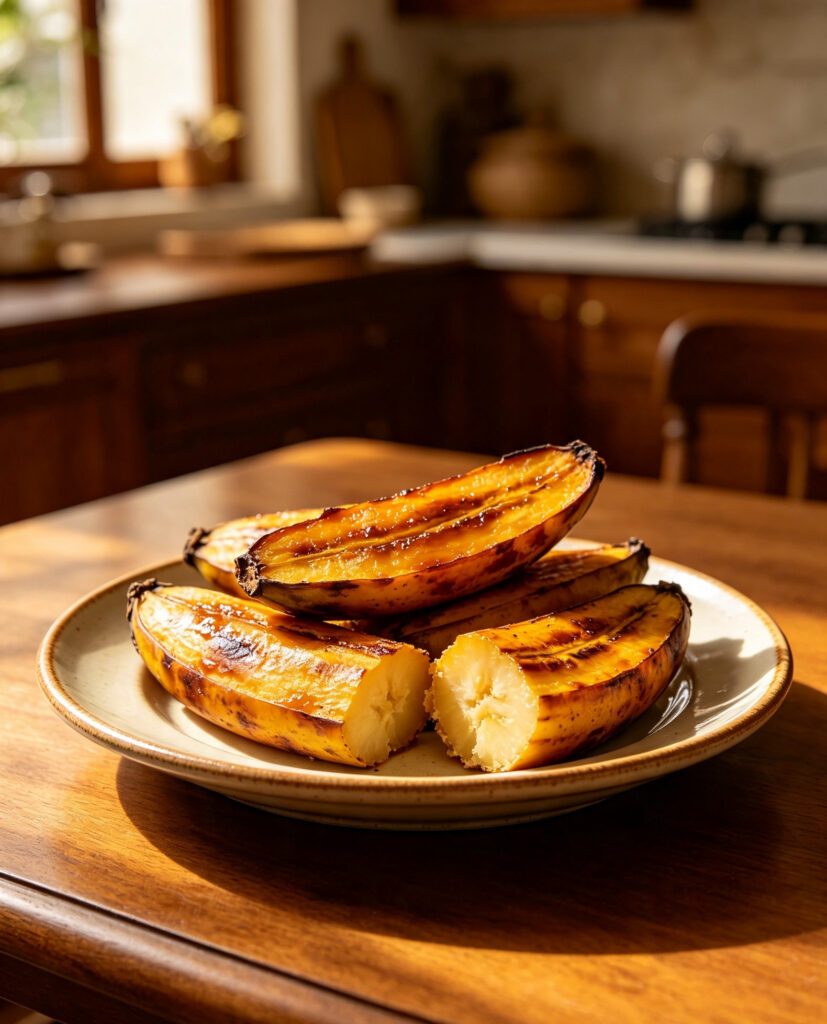
Gonja (Roasted Sweet Plantains)
The Quirky Foodster Team
Ingredients
- Ripe plantains (yellow, not green), unpeeled — 4
- Vegetable oil, for brushing — 1 tbsp
Method
- Trim the ends off each plantain but leave the skin on.
- Brush the skins lightly with oil.
- Grill over hot charcoal or on a griddle pan, turning occasionally, for 12-15 minutes, until the skins are charred and the flesh inside is soft and caramelised.
- Peel and serve hot, either plain or split open and drizzled with a little extra honey if desired.
Introduction: Gonja are ripe, sweet plantains roasted whole over charcoal until caramelised, sold from the same roadside braziers as roasted maize and often eaten as an afternoon snack on the way home from work or school.
Cultural Background: Gonja are ripe, sweet plantains roasted whole over charcoal until caramelised, sold from the same roadside braziers as roasted maize and often eaten as an afternoon snack on the way home from work or school. Their natural sugars turn deeply sweet and slightly smoky over the open flame.
Tips: Choose plantains that are fully yellow, with some black spots, for the best natural sweetness when roasted. Leaving the skin on while roasting helps the flesh steam gently inside, keeping it moist.
Variations: Serve with roasted groundnuts on the side, a popular street food pairing. Split and stuff with a little peanut butter for a richer treat. Naturally vegetarian as written. Naturally vegan as written; contains no animal products.
Storage: Best eaten fresh and hot.
Reheating: Reheat briefly on a hot griddle for 2-3 minutes, though fresh is best.
FAQs:
Q: Can green plantains be used for this recipe?
A: No, this dish specifically relies on ripe, yellow plantains for their natural sweetness; green plantains are used for savoury dishes like matoke instead.
Q: Is gonja the same as fried plantain (kabalagala)?
A: No, gonja is roasted whole over charcoal, giving a smoky, caramelised result, quite different from the mashed, fried kabalagala fritters.
- Ripe plantains (yellow, not green), unpeeled — 4
- Vegetable oil, for brushing — 1 tbsp
Please log in to leave a comment.