
Goi Cuon
The Quirky Foodster Team
Ingredients
- Rice paper wrappers — 8
- Cooked shrimp, peeled and halved lengthways — 200 g (7 oz)
- Pork belly or pork loin, cooked and thinly sliced — 200 g (7 oz)
- Dried rice vermicelli, cooked according to package instructions — 100 g (3.5 oz)
- Fresh lettuce leaves, mint, coriander and Thai basil
- Hoisin sauce — 3 tbsp
- Smooth peanut butter — 1 tbsp
- Water — 1 tbsp
- Rice vinegar — 1 tsp
- Crushed roasted peanuts, to garnish
Method
- Dip a rice paper wrapper into warm water for about 10-15 seconds, until just pliable, then lay flat on a clean kitchen towel.
- Place a lettuce leaf near the bottom third of the wrapper, followed by a small amount of vermicelli, herbs, and a few slices of pork.
- Arrange 2-3 shrimp halves, cut-side up, just above the filling for an attractive presentation.
- Fold the bottom of the wrapper over the filling, fold in the sides, and roll up tightly like a burrito.
- Repeat with the remaining wrappers and filling.
- For the dipping sauce, warm the hoisin sauce, peanut butter, water and rice vinegar in a small saucepan until smooth, stirring well.
- Serve the rolls with the peanut dipping sauce, garnished with crushed roasted peanuts.
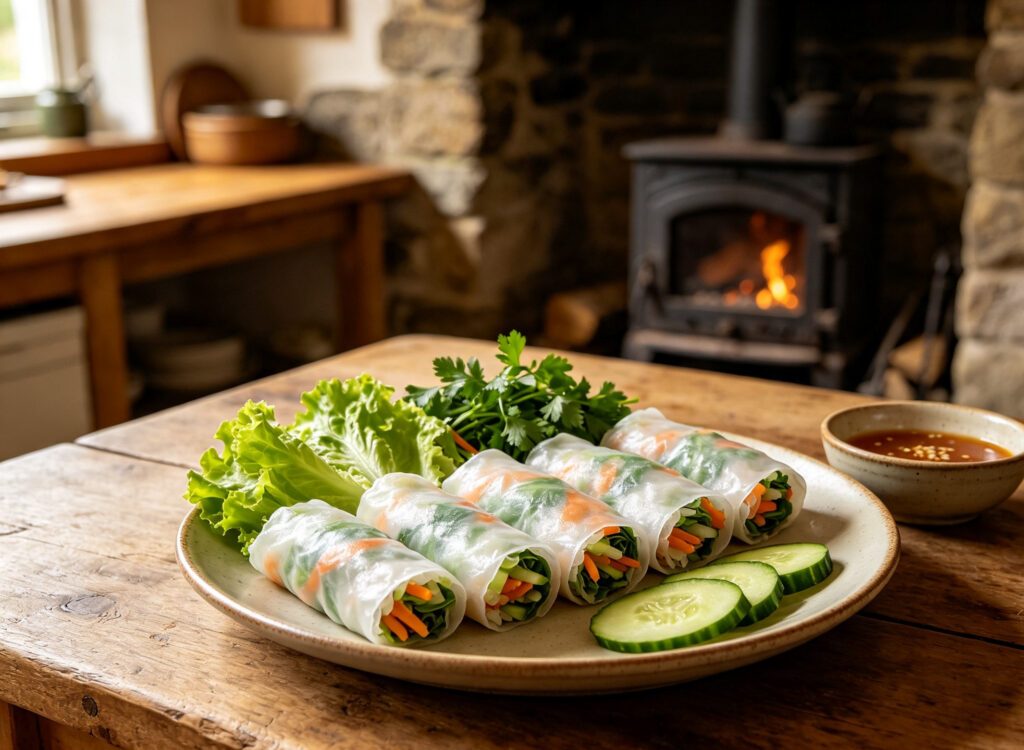
Introduction: Unlike their fried counterparts, goi cuon are fresh, translucent rice paper rolls filled with shrimp, pork, herbs and vermicelli noodles, served with a rich peanut hoisin dipping sauce.
Cultural Background: Unlike their fried counterparts, goi cuon are fresh, translucent rice paper rolls filled with shrimp, pork, herbs and vermicelli noodles, served with a rich peanut hoisin dipping sauce. Light, refreshing and colourful, they're a favourite starter across Vietnam and internationally.
Tips: Don't over-soak the rice paper — it should be just pliable, as it will continue to soften slightly as you roll. Roll tightly but gently to avoid tearing the delicate wrapper. Arrange the shrimp attractively facing outward near the top of the roll for a beautiful, professional presentation.
Variations: Use grilled tofu in place of shrimp and pork for a vegetarian version. Add thin slices of mango or cucumber for extra freshness. Serve with a classic nuoc cham dipping sauce instead of peanut sauce for variety. A vegetarian and vegan version can use marinated tofu and extra vegetables in place of shrimp and pork.
Storage: Best eaten fresh, ideally within a few hours of rolling; refrigerate briefly wrapped in a damp cloth if needed.
Reheating: Not applicable — these rolls are served fresh and cold, and are not reheated.
FAQs:
Q: Why is my rice paper tearing?
A: This usually happens if the wrapper is soaked too long and becomes overly soft — soak just until pliable, not fully soft.
Q: Can I make these ahead of a party?
A: Yes, but they're best eaten within a few hours; wrap tightly in a damp cloth and refrigerate briefly if needed.
Q: What's the difference between these and fried spring rolls?
A: Goi cuon are fresh and unfried, wrapped in soft rice paper, while fried spring rolls (cha gio) use a crisper wrapper and are deep-fried.
- Rice paper wrappers — 8
- Cooked shrimp, peeled and halved lengthways — 200 g (7 oz)
- Pork belly or pork loin, cooked and thinly sliced — 200 g (7 oz)
- Dried rice vermicelli, cooked according to package instructions — 100 g (3.5 oz)
- Fresh lettuce leaves, mint, coriander and Thai basil
- Hoisin sauce — 3 tbsp
- Smooth peanut butter — 1 tbsp
- Water — 1 tbsp
- Rice vinegar — 1 tsp
- Crushed roasted peanuts, to garnish
Please log in to leave a comment.