
Ginjinha
The Quirky Foodster Team
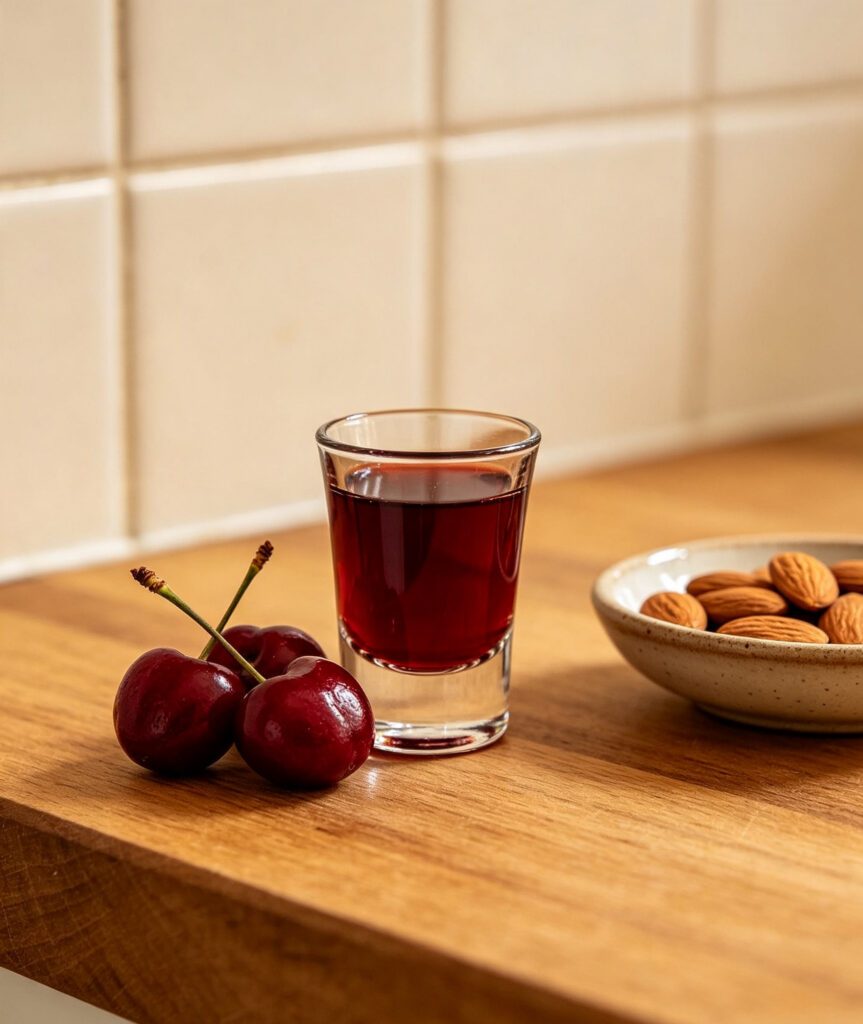
Ingredients
- Sour cherries (ginja), pitted — 500 g (1 lb 2 oz)
- Aguardente (Portuguese grape spirit) or vodka — 480 ml (16 fl oz)
- Sugar — 200 g (7 oz)
- Cinnamon stick — 1
- Cloves — 4
Method
- Combine the pitted sour cherries, aguardente or vodka, sugar, cinnamon stick and cloves in a large sterilised jar.
- Seal and store in a cool, dark place for at least 2 months, shaking gently every week or so to help dissolve the sugar.
- After the infusion period, strain the liqueur through a fine sieve into a clean bottle, discarding the spices (the cherries can be reserved and eaten as a boozy treat).
- Serve chilled or at room temperature in small glasses, traditionally in a small chocolate cup in Óbidos.
Introduction: A sweet, sour cherry liqueur, traditionally served in a small chocolate cup, a beloved Portuguese specialty especially associated with Lisbon and Óbidos.
Cultural Background: Ginjinha, made by infusing sour cherries (ginja) in alcohol with sugar and spices, has been a treasured Portuguese liqueur for generations, sold from tiny, historic bars in Lisbon and closely associated with the walled town of Óbidos.
Tips: Patience is essential — a longer infusion time develops a deeper, more complex flavour. Shake the jar gently each week to help the sugar dissolve fully and distribute the flavours evenly.
Variations: Serve in a small chocolate shot cup, a specialty particularly associated with the town of Óbidos. Include a cherry or two in the glass when serving, a traditional touch.
Storage: Store the finished liqueur in a sealed bottle in a cool, dark place for up to 1 year.
Reheating: This drink is served cold or at room temperature and is not heated.
FAQs:
Q: What town is especially known for ginjinha?
A: Óbidos, a historic walled town, is particularly famous for its ginjinha, often served in a small chocolate cup.
Q: How long does ginjinha need to infuse?
A: At least 2 months for good flavour development, though longer infusion times produce an even richer result.
- Sour cherries (ginja), pitted — 500 g (1 lb 2 oz)
- Aguardente (Portuguese grape spirit) or vodka — 480 ml (16 fl oz)
- Sugar — 200 g (7 oz)
- Cinnamon stick — 1
- Cloves — 4
Please log in to leave a comment.