
Ghraybeh Ardaniyah
The Quirky Foodster Team
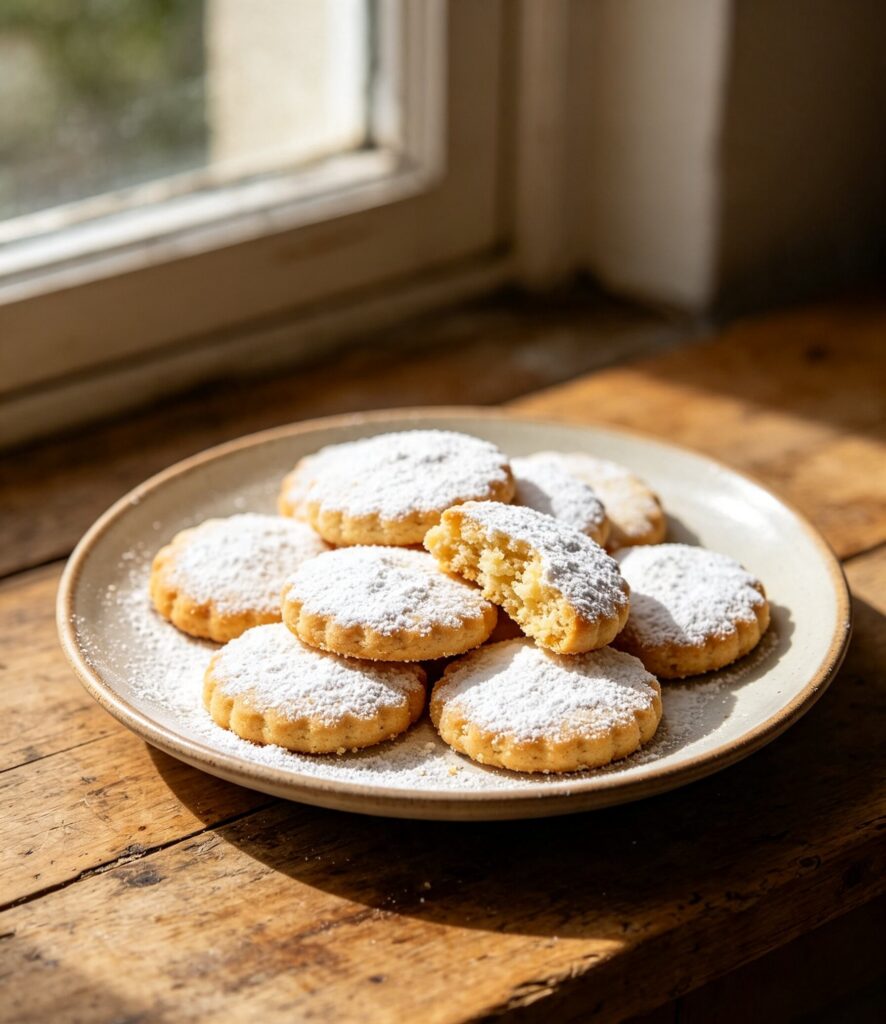
Ingredients
- Ghee or clarified butter, softened (8.75 oz) — 250 g (1 cup)
- Icing sugar, sifted, plus extra for dusting (7 oz) — 200 g (1.5 cups)
- Plain flour, sifted (10.5 oz) — 300 g (2.5 cups)
- Salt — 1/4 tsp
- Whole blanched almonds, for decoration — 24
Method
- Preheat the oven to 160°C (320°F).
- Beat the ghee and icing sugar together until light and creamy, about 4 minutes.
- Gradually fold in the flour and salt until a soft, smooth dough forms; do not overmix.
- Rest the dough for 15 minutes at room temperature.
- Shape into small balls, about the size of a walnut, and place on the lined tray, pressing an almond gently into the centre of each.
- Bake for 15-18 minutes until set but still pale - ghraybeh should not brown.
- Cool completely on the tray, as they are very fragile while warm.
- Dust generously with icing sugar before serving.
Introduction: These delicate, snow-white shortbread cookies made from ghee or clarified butter melt on the tongue, and are a fixture of Eid celebrations and coffee visits across Jordan, often stacked on ornate trays for guests.
Cultural Background: These delicate, snow-white shortbread cookies made from ghee or clarified butter melt on the tongue, and are a fixture of Eid celebrations and coffee visits across Jordan, often stacked on ornate trays for guests.
Tips: These cookies should stay pale, not golden – watch closely near the end of baking as ghraybeh burns easily due to its high fat content.
Variations: Some versions use ground pistachios pressed on top instead of an almond. A pinch of mahlab (ground cherry pit spice) is sometimes added for a subtle floral note.
Storage: Store in an airtight container at room temperature for up to 2 weeks.
Reheating: Not applicable – served at room temperature.
FAQs:
Q: Can I substitute butter for ghee?
A: Yes, though ghee gives the traditional flavour and finer, more crumbly texture.
Q: Why does the dough need to rest?
A: It firms up the fat slightly, making the dough easier to shape.
- Ghee or clarified butter, softened (8.75 oz) — 250 g (1 cup)
- Icing sugar, sifted, plus extra for dusting (7 oz) — 200 g (1.5 cups)
- Plain flour, sifted (10.5 oz) — 300 g (2.5 cups)
- Salt — 1/4 tsp
- Whole blanched almonds, for decoration — 24
Please log in to leave a comment.