
Fulacht Fiadh Pit-Boiled Beef
The Quirky Foodster Team
Ingredients
- Beef, in one or two large joints — 1 kg (2.2 lb)
- Water, enough to fill the trough or a large pot
- Salt — 1 pinch
Method
- If using the traditional method: heat a quantity of fist-sized stones in a hot fire until glowing.
- Fill the trough with water and add the beef joint.
- Using tongs, carefully drop the heated stones into the water a few at a time, replacing them with freshly heated stones as they cool, until the water reaches and maintains a rolling boil.
- Continue this process, maintaining a steady boil, for approximately 3-4 hours for a large joint, until the meat is fully tender.
- As a practical modern substitute, the same joint can be simmered in a large pot of salted water on a conventional stove for the same duration, achieving a comparable slow-boiled result.
- Remove the meat, rest briefly, and carve to serve.
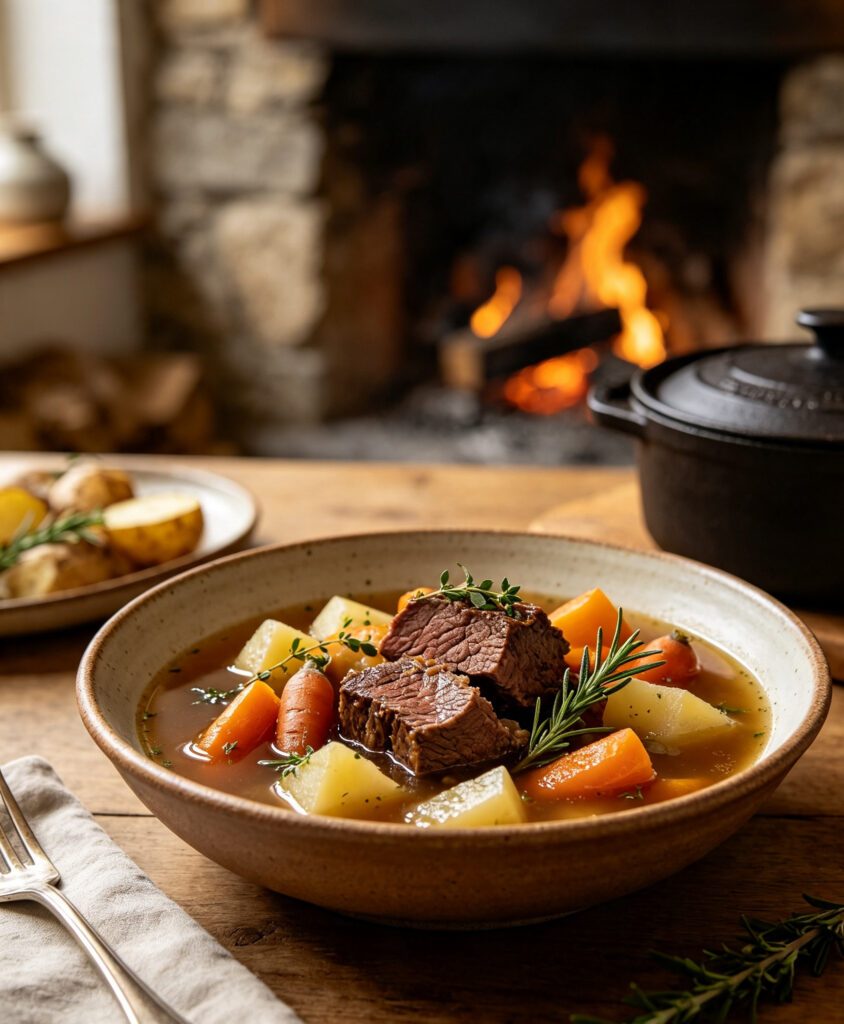
Introduction: Beef cooked by the fulacht fiadh method: heated stones dropped into a water-filled trough to bring it to a rolling boil, one of the most archaeologically distinctive cooking techniques of ancient Ireland.
Cultural Background: Fulacht fiadh sites – stone-lined troughs surrounded by mounds of fire-cracked stone – are among the most numerous archaeological monument types in Ireland, numbering in the thousands, and experimental archaeology has repeatedly demonstrated that heated stones dropped into water-filled troughs can bring the water to a rolling boil and maintain it at cooking temperature for meat, though the exact scale and social context of their use (everyday cooking versus specialised or occasional use) remains debated among archaeologists.
Tips: The stone-boiling method requires a steady supply of well-heated stones and careful handling with tongs; experimental archaeology projects have found this method genuinely effective at reaching and sustaining boiling point. Whichever method is used, long slow cooking is essential for a large, tougher cut of meat to become tender.
Variations: Mutton or pork can be substituted for beef using the same method. Wild herbs can be added to the boiling water for extra flavour, though this is a plausible enhancement rather than a specifically attested addition.
Storage: Refrigerate cooked meat covered for up to 3 days.
Reheating: Reheat gently in a little of the cooking liquid or water over low heat for 8-10 minutes until hot throughout.
Nutrition: Per serving (approx.): 280 kcal, 30 g protein, 0 g carbohydrate, 17 g fat.
FAQs:
Q: What is a fulacht fiadh?
A: A stone-lined water trough, usually surrounded by a mound of fire-cracked stone debris, that is among the most common archaeological monument types found in Ireland, with cooking by stone-boiling as the leading explanation for their use.
Q: Is stone-boiling really effective for cooking meat?
A: Yes, experimental archaeology has repeatedly confirmed that dropping sufficiently heated stones into a water-filled trough can bring the water to a rolling boil and sustain cooking temperature for several hours.
Q: Is the everyday-cooking explanation for fulacht fiadh certain?
A: It is the leading explanation, but archaeologists continue to debate whether these sites were used for regular daily cooking, occasional feasting, or other purposes such as bathing or textile processing.
- Beef, in one or two large joints — 1 kg (2.2 lb)
- Water, enough to fill the trough or a large pot
- Salt — 1 pinch
Please log in to leave a comment.