
Street Food
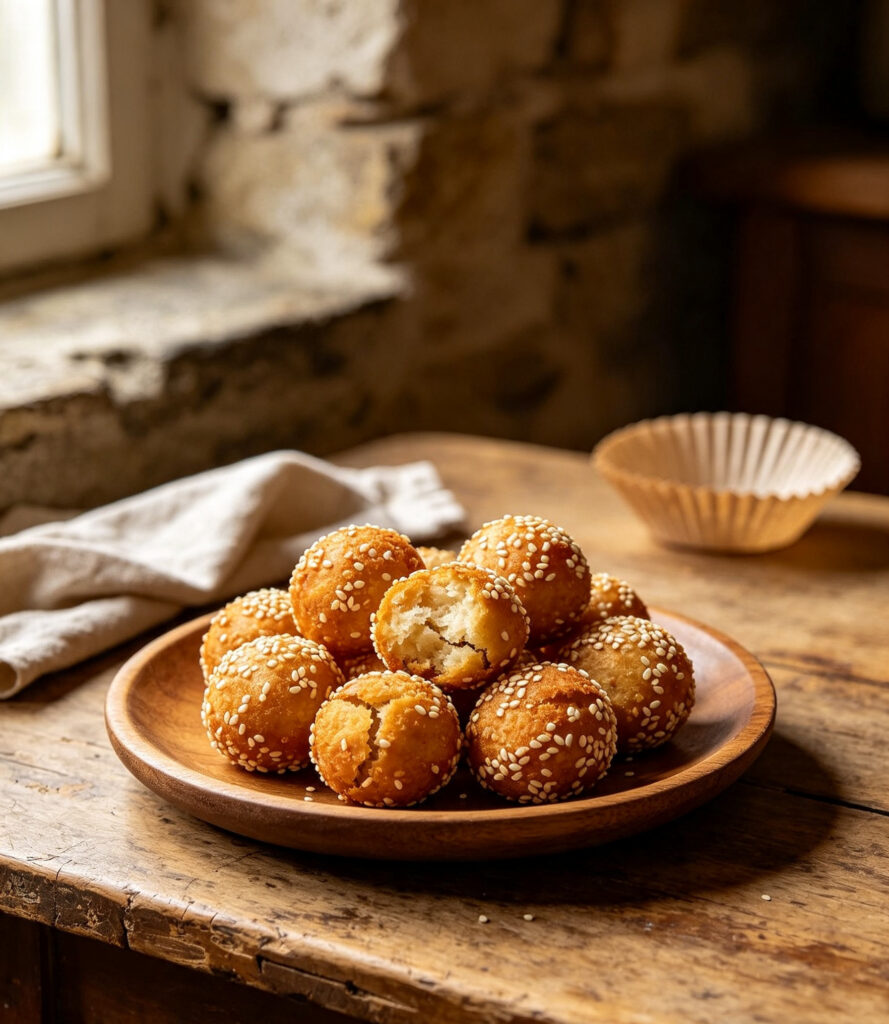
Fried Sesame Balls (煎堆 (Jiānduī))
sjfegan
Ingredients
- 280g (2 cups) Glutinous rice flour
- 65g (1/3 cup) Sugar
- 240ml (1 cup) Warm water
- 140g (1 cup) Sesame seeds, for coating
- Oil for deep frying
Method
- Combine the glutinous rice flour and sugar, then gradually add the warm water, kneading into a smooth, soft dough.
- Divide into small balls.
- Roll each ball in sesame seeds, pressing gently to help them adhere.
- Heat oil to 160°C (325°F) in a deep pan (a lower temperature helps the balls cook through evenly).
- Fry the balls, turning and gently pressing with a spoon to encourage even puffing, for 8–10 minutes until golden and cooked through.
- Drain on paper towels before serving warm.
Introduction: Small, chewy fried dough balls coated in sesame seeds, a beloved sweet street snack with a long history in Chinese food culture.
Cultural Background: Fried sesame balls have been enjoyed as a festive and everyday treat for many centuries in China, their crisp, sesame-studded exterior and chewy interior making them a favourite at markets and celebrations alike.
Tips: Fry at a lower, steady temperature so the dough cooks through fully before the sesame coating over-browns. Gently press and turn the balls as they fry, as this helps them puff evenly.
Variations: Fill with a small amount of sweet bean paste before shaping for a more traditional version. Adjust the sugar to taste.
Storage: Best eaten fresh and warm; leftovers can be stored in an airtight container for up to 1 day.
Reheating: Reheat briefly in an oven at 180°C (350°F) for 5 minutes to restore some texture.
Nutrition: Per serving (approx., 2 balls): 240 kcal, 5 g protein, 8 g fat, 40 g carbohydrate.
FAQs:
Q: How long have sesame balls been made in China?
A: They have a documented history stretching back many centuries, remaining a beloved treat at markets and festivals throughout Chinese history.
Q: Why fry at a lower temperature?
A: This allows the dense, glutinous dough to cook through fully at the same rate the sesame coating browns, preventing a raw centre.
Please log in to leave a comment.