
Street Food
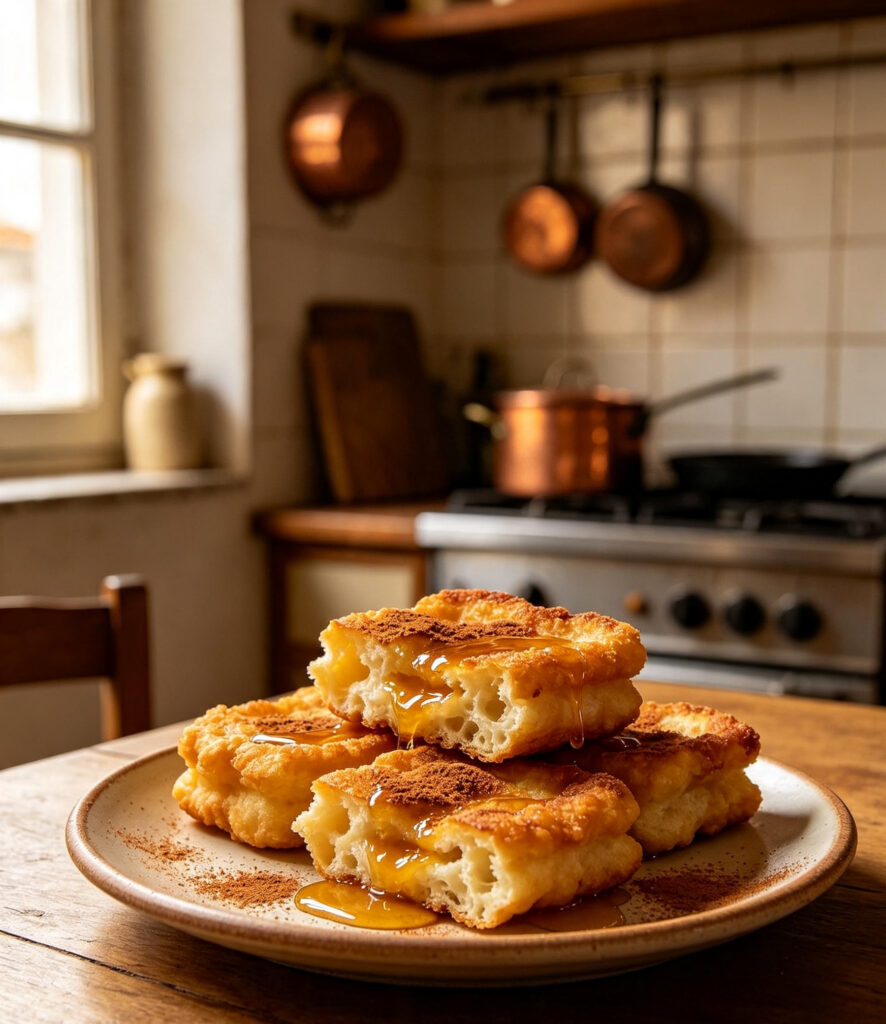
Fried Dough with Honey (Filhos)
sjfegan
Ingredients
- 250g (2 cups) Flour
- 2 eggs
- 60ml (1/4 cup) Olive oil
- 120ml (1/2 cup) Orange juice
- 1/2 tsp salt
- Oil for deep frying
- 170g (1/2 cup) Honey, warmed
Method
- Combine the flour, eggs, olive oil, orange juice and salt into a smooth, firm dough; rest for 30 minutes.
- Roll the dough out thinly and cut into strips or rounds.
- Heat oil to 175°C (350°F) in a deep pan.
- Fry the dough pieces in batches for 2–3 minutes per side until golden and crisp.
- Drain briefly, then drizzle generously with warmed honey before serving warm.
Introduction: Crisp fried dough drizzled with honey, a popular sweet street treat sold at markets and fairs throughout Iberian towns during this era.
Cultural Background: Fried dough sweets have long roots across Iberian and wider Mediterranean cuisine, and this simple, accessible treat would have been a familiar and beloved sight at markets and festivals throughout the Age of Exploration.
Tips: Roll the dough thin for the crispest, lightest result. Fry in small batches to keep the oil temperature steady.
Variations: Dust with a little ground cinnamon alongside the honey. Adjust the size and shape of the dough pieces to preference.
Storage: Best eaten fresh and warm; leftovers can be stored for up to 1 day.
Reheating: Best made fresh; reheating is not typically recommended for this fried treat.
Nutrition: Per serving (approx.): 240 kcal, 5 g protein, 7 g fat, 40 g carbohydrate.
FAQs:
Q: Were fried dough sweets common at Iberian markets during this era?
A: Yes, such treats had deep roots across the region’s culinary tradition, remaining a popular, accessible sweet sold at fairs and markets throughout the Age of Exploration.
Q: Is this dish still made in Portugal today?
A: Yes, filhós remain a traditional treat in Portuguese cooking, particularly associated with festive occasions, carrying forward this era’s culinary customs.
Please log in to leave a comment.