
Street Food
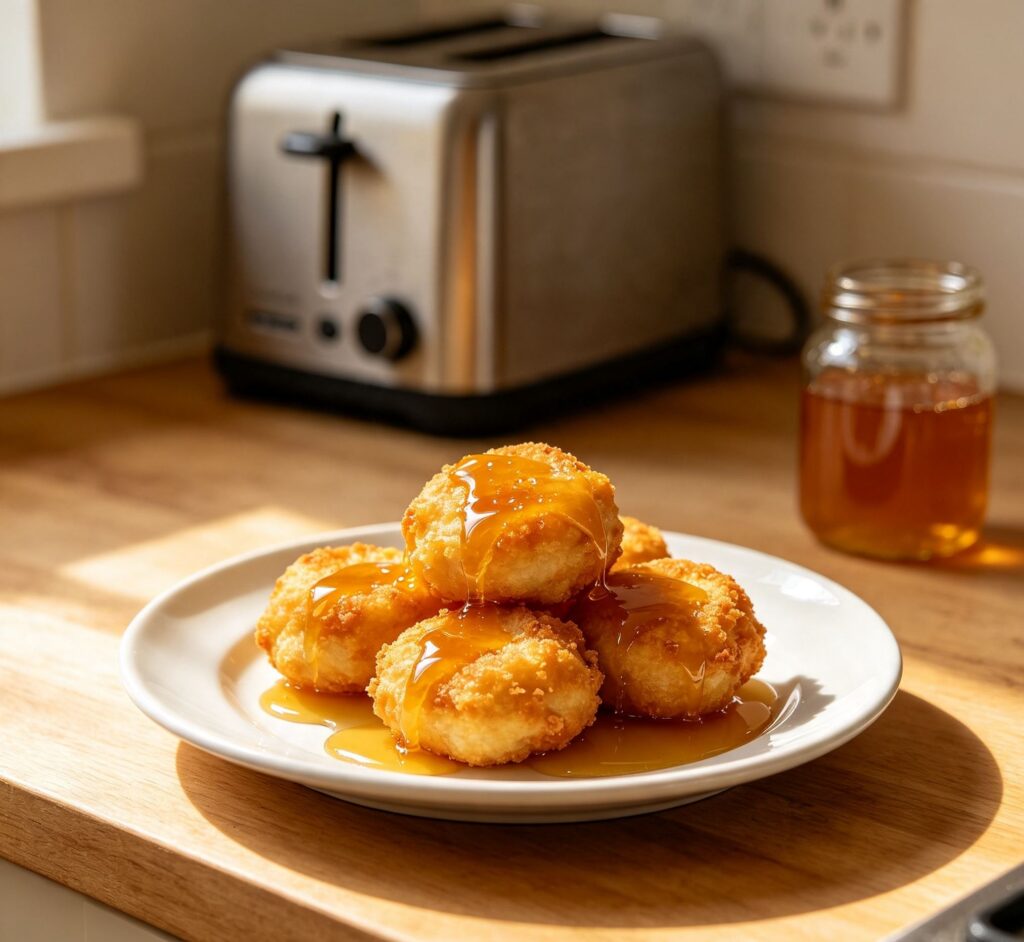
Fried Dough Balls in Honey
The Quirky Foodster Team
Ingredients
- 300 g (2 1/2 cups) emmer wheat flour (spelt flour may be substituted)
- 200ml (3/4 cup plus 1 tablespoon) Warm water
- 1 teaspoon active dry yeast
- 1/2 teaspoon salt
- Sesame oil, for deep frying
- 4 tablespoons honey, for serving
Method
- Dissolve the yeast in the warm water and let stand for 5 minutes until foamy.
- Combine the flour and salt in a bowl, then stir in the yeast mixture to form a soft, slightly sticky dough.
- Cover and let prove in a warm place for 1 hour, until roughly doubled.
- Heat 4-5 cm (about 2 inches) of sesame oil in a deep pot to 175°C (350°F).
- Using an oiled spoon, drop small balls of dough into the hot oil in batches, frying for 2-3 minutes per batch until golden and puffed, turning as needed.
- Drain on a clean cloth, drizzle generously with warmed honey, and serve immediately.
Native/Reconstructed Name: Benet Djeret (reconstructed; fried sweet dough)
Cultural Background: Fried sweet dough, enriched with honey, would have offered vendors along Nile Valley market streets a quick,
appealing treat to sell to festival crowds and passersby. Its simple ingredients — flour, water, honey, and fat for
frying — kept it affordable and portable, an early ancestor of sweet fried dough treats still popular across the
Eastern Mediterranean and Middle East today.
Tips:
– Test the oil temperature with a small piece of dough first — it should sizzle and rise immediately without
– burning.
– Fry in small batches to keep the oil temperature steady.
Variations:
– Roll the warm fried dough balls in crushed toasted sesame seeds after honey-glazing for extra texture.
– Add a pinch of ground coriander to the dough for a subtle aromatic note.
Storage: Best eaten fresh and warm on the day they are made.
Reheating: Warm briefly in a low oven; texture is best enjoyed fresh.
Nutrition: Approx. 240 kcal, 5 g protein, 38 g carbohydrate, 8 g fat per serving.
FAQs:
Q: Can these be baked instead of fried?
A: Frying is closer to the likely historical method and gives the characteristic texture; baking will produce a drier,
bread-like result.
Q: Is this the ancestor of modern honey dough treats like loukoumades?
A: It shares the same basic concept — fried dough with honey — that spread widely across the Eastern
Mediterranean over time.
Please log in to leave a comment.