
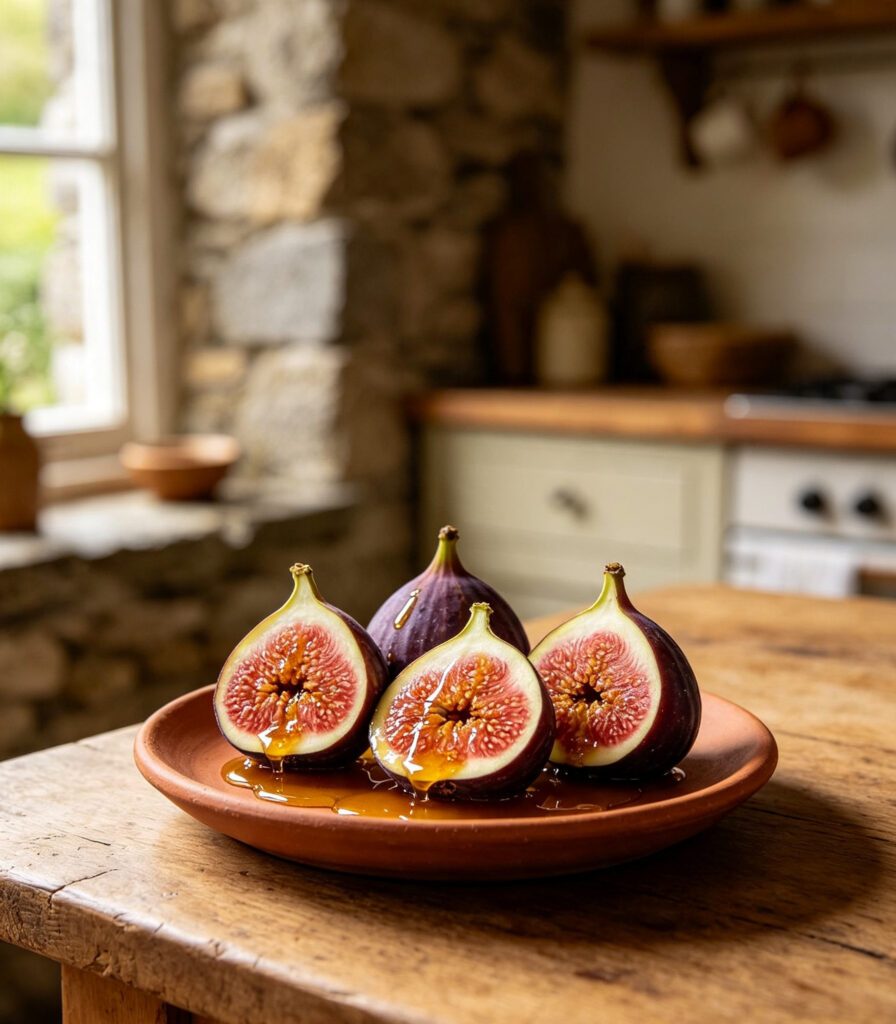
Fresh Figs with Honey
The Quirky Foodster Team
Ingredients
- Ripe figs, halved — 6
- Honey — 2 tbsp
Method
- Halve the ripe figs.
- Arrange cut-side up on a plate.
- Drizzle generously with honey.
- Serve at room temperature.
Introduction: Ripe figs served simply with a drizzle of honey, a naturally sweet dish from two of Mesopotamia’s well-documented orchard and apiary products.
Cultural Background: Figs are attested among the fruit crops cultivated in ancient Mesopotamian orchards alongside dates and pomegranates, and beekeeping and honey, while somewhat less centrally documented than in some neighbouring regions, are nonetheless attested in Mesopotamian textual sources; combining the two as a simple sweet dish reflects genuinely available produce rather than one specifically named period recipe.
Tips: – Use fully ripe, soft figs for the best natural sweetness. – A little chopped pistachio scattered over adds pleasant texture, drawing on nuts attested elsewhere in Mesopotamian cuisine.
Variations: – Naturally vegan as written if a plant-based syrup is substituted for honey; as written with honey it is vegetarian. – Date syrup can be substituted for honey, reflecting the more prominently documented Mesopotamian sweetener.
Storage: Best eaten fresh; refrigerate covered for up to 1 day if needed.
Reheating: Not applicable; served fresh, cold or at room temperature.
Nutrition: Per serving (approx.): 110 kcal, 1 g protein, 28 g carbohydrate, 0.3 g fat, 3 g fibre.
FAQs:
Q: Were figs common in ancient Mesopotamia?
A: Yes, they are attested among the fruit crops grown in Mesopotamian orchards alongside dates and pomegranates, forming part of a genuinely varied ancient fruit supply.
Q: Was honey or date syrup the more common Mesopotamian sweetener?
A: Date syrup is generally the more prominently and consistently documented sweetener in Mesopotamian sources, though honey is also attested, making both reasonable choices for this dish.
- Ripe figs, halved — 6
- Honey — 2 tbsp
Please log in to leave a comment.