
Soups
Fish and Rice Soup (Sopa de Peixe e Arroz)
sjfegan
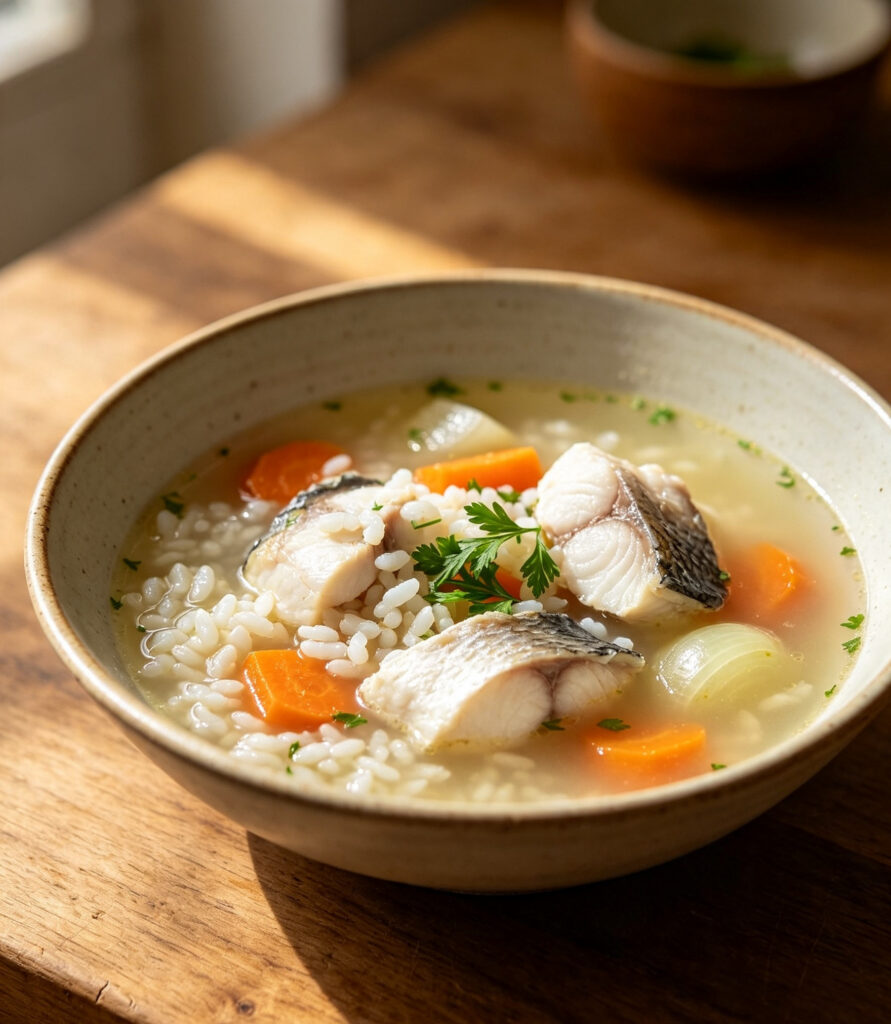
Ingredients
- 400g Firm white fish, cut into pieces
- 90g (1/2 cup) Rice
- 1 onion, chopped
- 2 tbsp olive oil
- 6 cups water or fish stock (1.4 litres / 48 fl oz)
- Salt to taste
- Chopped parsley, to garnish
Method
- Heat the olive oil in a large pot and sauté the onion until softened.
- Add the rice and water or stock, and bring to a boil.
- Reduce to a simmer and cook for 15 minutes until the rice is nearly tender.
- Add the fish pieces and simmer for a further 8–10 minutes until cooked through.
- Season with salt, and garnish with chopped parsley before serving hot.
Introduction: A warming soup of fish and rice, a substantial dish reflecting the maritime provisioning that sustained Iberian coastal communities and sailors alike during this expansive era.
Cultural Background: With Portugal and Spain both deeply invested in maritime exploration, fish remained a central protein for coastal populations, and combining it with rice, a grain increasingly cultivated in parts of Iberia, made for a filling, practical soup.
Tips: Add the fish only once the rice is nearly cooked, so it doesn’t overcook while the grain finishes. Use a firm fish that holds together well during simmering.
Variations: Add a pinch of saffron for extra colour and fragrance, if available. Adjust the rice quantity for a thicker or thinner soup.
Storage: Refrigerate in an airtight container for up to 2 days.
Reheating: Reheat gently on the stovetop over low heat until warmed through.
Nutrition: Per serving (approx.): 240 kcal, 20 g protein, 6 g fat, 26 g carbohydrate.
FAQs:
Q: Was fish central to Iberian coastal diets during this period?
A: Yes, with such strong maritime traditions and Portugal and Spain’s deep investment in ocean exploration, fish remained a vital protein source for coastal communities throughout this era.
Q: Was rice widely grown in Iberia at this time?
A: Rice cultivation had been established in parts of Iberia, particularly Valencia, since earlier centuries, and it continued as a valued grain during the Age of Exploration.
Please log in to leave a comment.