
Drinks
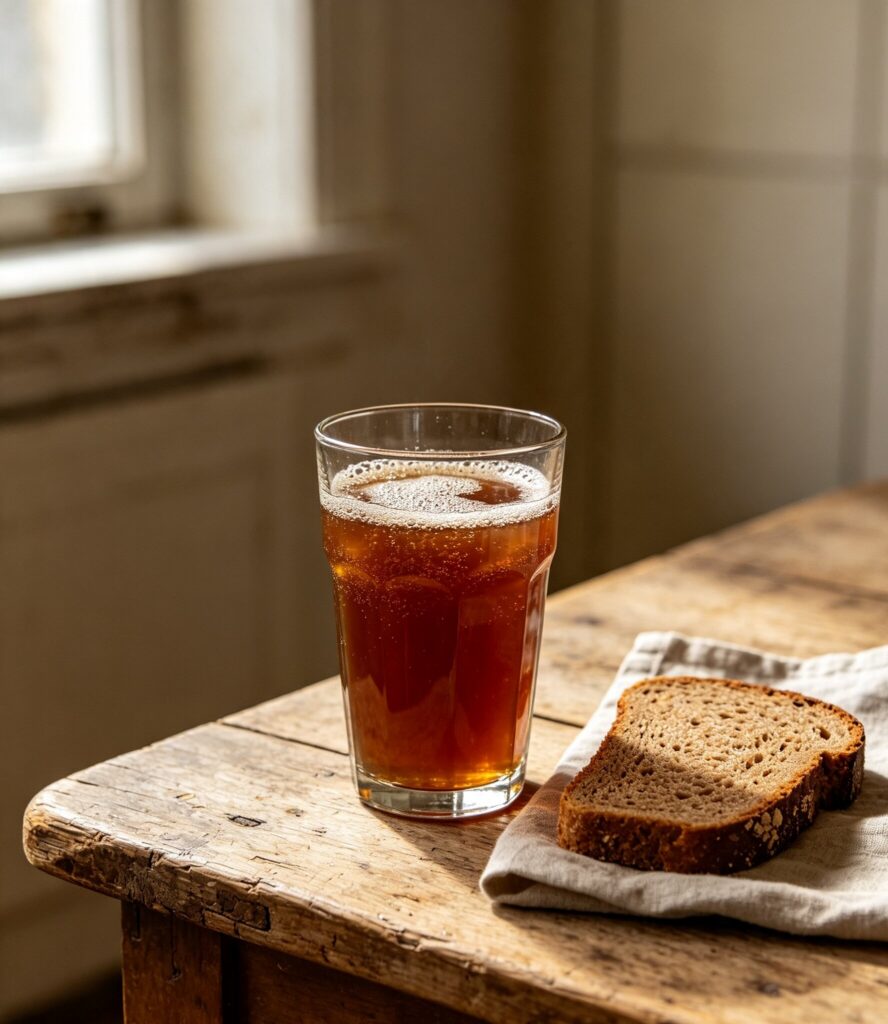
Fermented Rye Bread Drink (Kvass)
Ingredients
- 500 g (1.1 lb) dark rye bread, cut into cubes and dried in the oven
- 3 litres (12 cups) water
- 150 g (3/4 cup) sugar
- 10 g (2 tsp) fresh yeast, or 3 g dry yeast
- A handful of raisins
- 1 tbsp fresh mint leaves (optional)
Method
- Toast the dried rye bread cubes in the oven at 180°C (350°F) for 15-20 minutes until dark and crisp, but not burnt.
- Boil the water, pour it over the toasted bread cubes in a large fermentation vessel, and leave to steep and cool to lukewarm, about 4 hours.
- Strain the liquid through cheesecloth into a clean vessel, pressing the bread to extract all the liquid; discard the solids.
- Stir in the sugar and yeast, then add the raisins and mint if using.
- Cover loosely with cheesecloth and leave to ferment at room temperature for 8-12 hours, tasting periodically until pleasantly tangy and lightly fizzy.
- Strain again, bottle, and refrigerate to slow further fermentation before serving chilled.
Introduction: Made by fermenting stale rye bread with water, sugar and a touch of yeast, kvass is a lightly effervescent, mildly sour drink enjoyed across Latvia and the wider Baltic and Eastern European region, especially prized as a refreshing, low-alcohol drink during summer.
Cultural Background: Made by fermenting stale rye bread with water, sugar and a touch of yeast, kvass is a lightly effervescent, mildly sour drink enjoyed across Latvia and the wider Baltic and Eastern European region, especially prized as a refreshing, low-alcohol drink during summer.
Tips: Keep fermentation time on the shorter side in warm weather, as kvass can turn quite sour and alcoholic if left too long.
Variations: A honey-sweetened version replaces some of the sugar with local honey for a rounder flavour.
Storage: Refrigerate in sealed bottles for up to 5 days, opening carefully to release pressure.
Reheating: Not applicable — served chilled.
FAQs:
Q: Does kvass contain alcohol?
A: It contains a very small amount, typically under 1%, from the brief natural fermentation, similar to some kombucha.
Q: Can kvass be made without yeast?
A: A slower, purely wild-fermented version is possible but less reliable; a small amount of added yeast gives a more consistent result at home.
Please log in to leave a comment.