
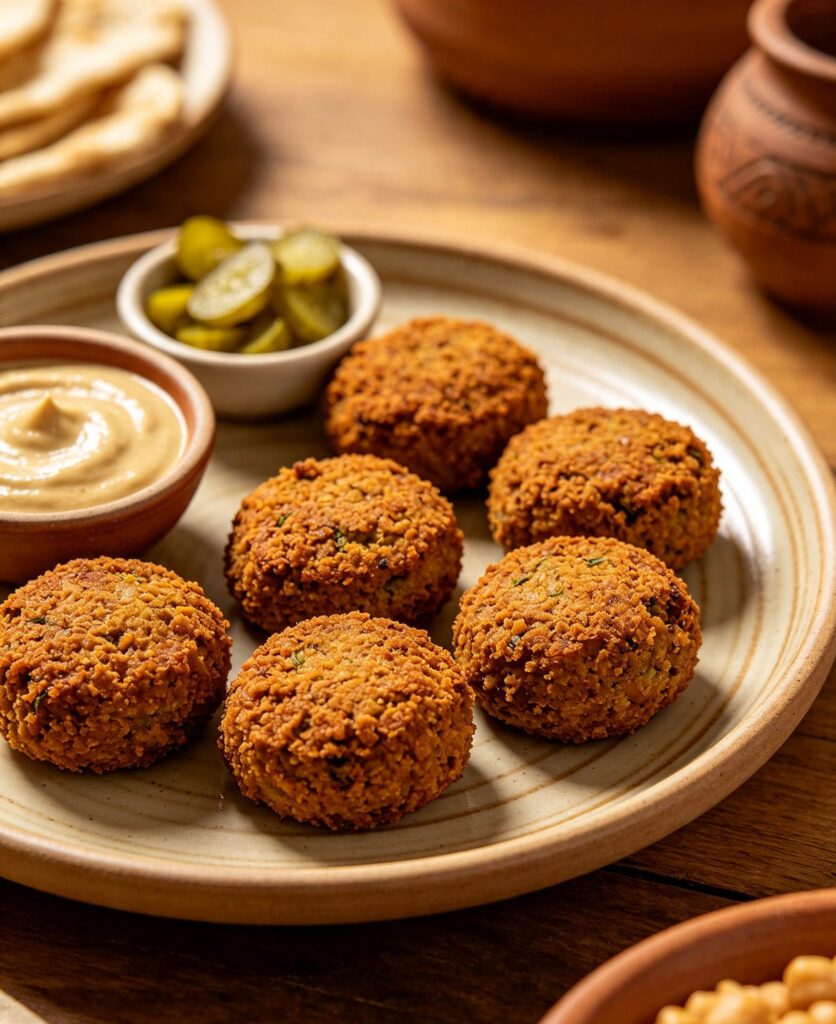
Falafel (Fried Chickpea Fritters)
The Quirky Foodster Team
Ingredients
- Dried chickpeas, soaked overnight in plenty of water — 400 g (2 cups)
- Medium onion, roughly chopped — 1
- Garlic cloves — 4
- Fresh parsley, roughly chopped — 1 cup
- Fresh cilantro, roughly chopped — 1/2 cup
- Ground cumin — 1.5 tsp
- Ground coriander — 1.5 tsp
- Baking powder — 1/2 tsp
- Salt and black pepper, — to taste
- Sesame seeds (optional) — 2 tbsp
- Vegetable oil, for frying — 1 L (4 cups)
Method
- Drain the soaked chickpeas thoroughly (do not cook them; raw soaked chickpeas are traditional for falafel's characteristic texture).
- In a food processor, combine the chickpeas, onion, garlic, parsley, and cilantro. Pulse until finely ground but not pureed into a paste, scraping down the sides as needed.
- Transfer the mixture to a bowl and stir in the cumin, coriander, baking powder, salt, and pepper until evenly combined.
- Cover and refrigerate the mixture for at least 30 minutes to firm up, making it easier to shape.
- Shape the mixture into small balls or patties, about 4 cm (1.5 inches) wide, pressing sesame seeds onto the outside if using.
- Heat the oil in a large deep pan to 175°C (345°F).
- Fry the falafel in batches for 3–4 minutes until deep golden brown and crisp on the outside.
- Remove with a slotted spoon and drain on paper towels. Serve hot, in flatbread with tahini sauce, pickles, and salad, or on their own as an appetizer.
Introduction: Falafel, crisp fried patties made from ground chickpeas and fresh herbs, are a hugely popular street food and quick snack across the UAE, commonly served in flatbread with pickles, salad, and tahini sauce.
Cultural Background: Falafel, crisp fried patties made from ground chickpeas and fresh herbs, are a hugely popular street food and quick snack across the UAE, commonly served in flatbread with pickles, salad, and tahini sauce. Though originating elsewhere in the region, falafel has become a firmly embedded and beloved part of everyday Emirati street food culture, offering a satisfying vegetarian option amid the many meat-forward dishes.
Tips: Use dried chickpeas that have been soaked but not cooked; cooked or canned chickpeas produce a mushier falafel that falls apart during frying. Chilling the mixture before shaping helps the falafel hold together better once fried. Fry in small batches to keep the oil at a steady temperature for the crispest results.
Variations: Add a pinch of chili flakes to the mixture for a spicier falafel. Some versions include a small amount of fava beans mixed with the chickpeas for a different traditional texture. This recipe is naturally vegan as written.
Storage: Store cooked falafel in an airtight container in the refrigerator for up to 3 days, or freeze uncooked shaped falafel for up to 2 months.
Reheating: Reheat in an oven at 190°C (375°F) for 8–10 minutes until warmed through and crisp again. Avoid microwaving, as this makes them soggy.
FAQs:
Q: Why do I need to use dried, soaked chickpeas rather than canned?
A: Dried, soaked (but uncooked) chickpeas give falafel its proper texture and help it hold together during frying; canned, pre-cooked chickpeas result in a mushier mixture that tends to fall apart.
Q: Can falafel be baked instead of fried?
A: Yes, for a lighter version, brush with oil and bake at 200°C (390°F) for 20–25 minutes, flipping halfway, though the texture will be less crisp than fried.
Q: What is falafel traditionally served with?
A: It's commonly served in flatbread with tahini sauce, pickles, and fresh salad, or as a stand-alone appetizer with dips.
- Dried chickpeas, soaked overnight in plenty of water — 400 g (2 cups)
- Medium onion, roughly chopped — 1
- Garlic cloves — 4
- Fresh parsley, roughly chopped — 1 cup
- Fresh cilantro, roughly chopped — 1/2 cup
- Ground cumin — 1.5 tsp
- Ground coriander — 1.5 tsp
- Baking powder — 1/2 tsp
- Salt and black pepper, — to taste
- Sesame seeds (optional) — 2 tbsp
- Vegetable oil, for frying — 1 L (4 cups)
Please log in to leave a comment.