
Appetizers
Epityrum (Olive Tapenade)
The Quirky Foodster Team
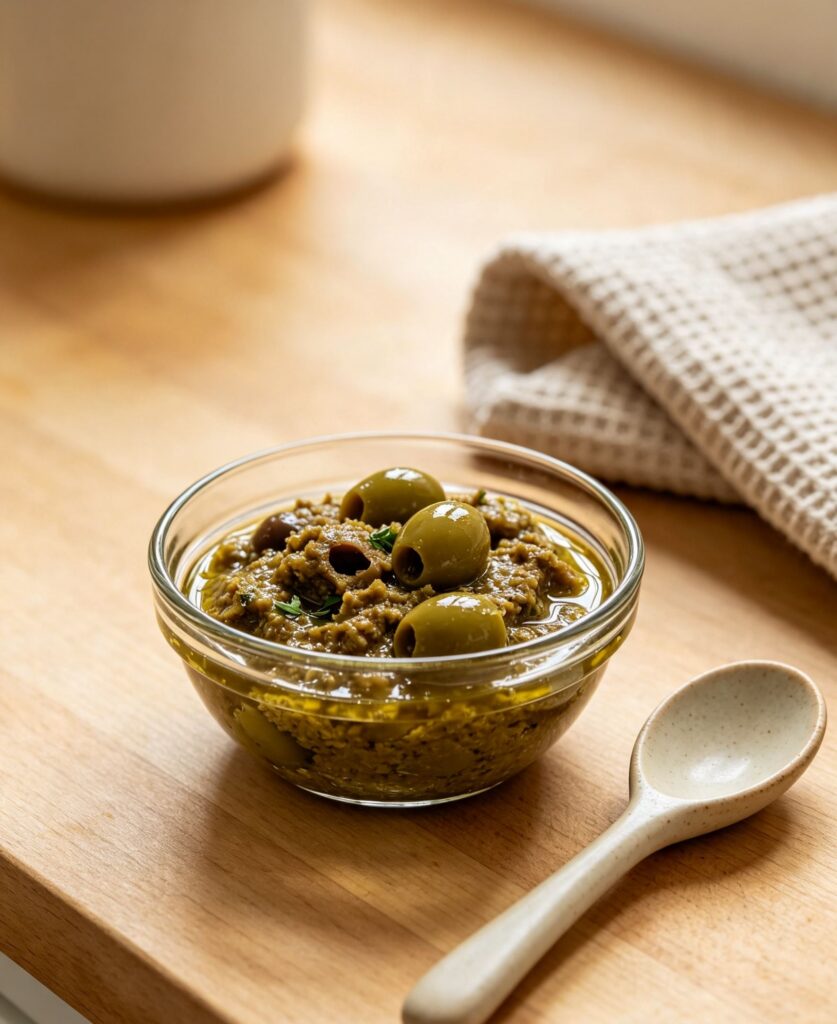
Ingredients
- 200g Mixed pitted olives, green and black
- 1 tbsp fresh coriander, chopped
- 1 tbsp fresh fennel fronds or dill, chopped
- 1/2 tsp cumin seeds, toasted and crushed
- 30ml Olive oil
- 15ml White wine vinegar
Method
- Pound or pulse the olives with the coriander and fennel until roughly chopped and combined.
- Stir in the crushed cumin.
- Work in the olive oil to loosen the mixture to a coarse, spreadable paste.
- Stir through the vinegar and taste, adjusting the herbs to preference.
- Serve at room temperature with bread as a starter.
Native Name: Epityrum
Cultural Background: Cato the Elder gives a recipe for epityrum in his treatise on farming, mixing green, black and mottled olives with herbs, oil and vinegar – a working olive-grower's relish meant to accompany plain meals, and a clear ancestor of the tapenade eaten across the Mediterranean today.
Tips: Keep the texture coarse rather than smooth – Cato's original is closer to a rough relish than a fine paste.
Variations: Cato's own notes mention adding a little rue or mint depending on what was available; either works well here.
Vegetarian / Vegan Note: Naturally vegan.
Storage: Store covered in the refrigerator for up to 1 week.
Reheating: Not applicable – served cold or at room temperature.
Nutrition: Approx. 110 kcal, 1 g protein, 3 g carbohydrate, 11 g fat per serving.
FAQs:
Q: Where does this recipe come from?
A: It's recorded by Cato the Elder in his 2nd-century BC farming manual, one of the oldest surviving Roman recipes.
Q: Can I use just one type of olive?
A: Yes, though the mix of green and black gives a more balanced flavour closer to the original.
Please log in to leave a comment.