
Egusi Sauce
The Quirky Foodster Team
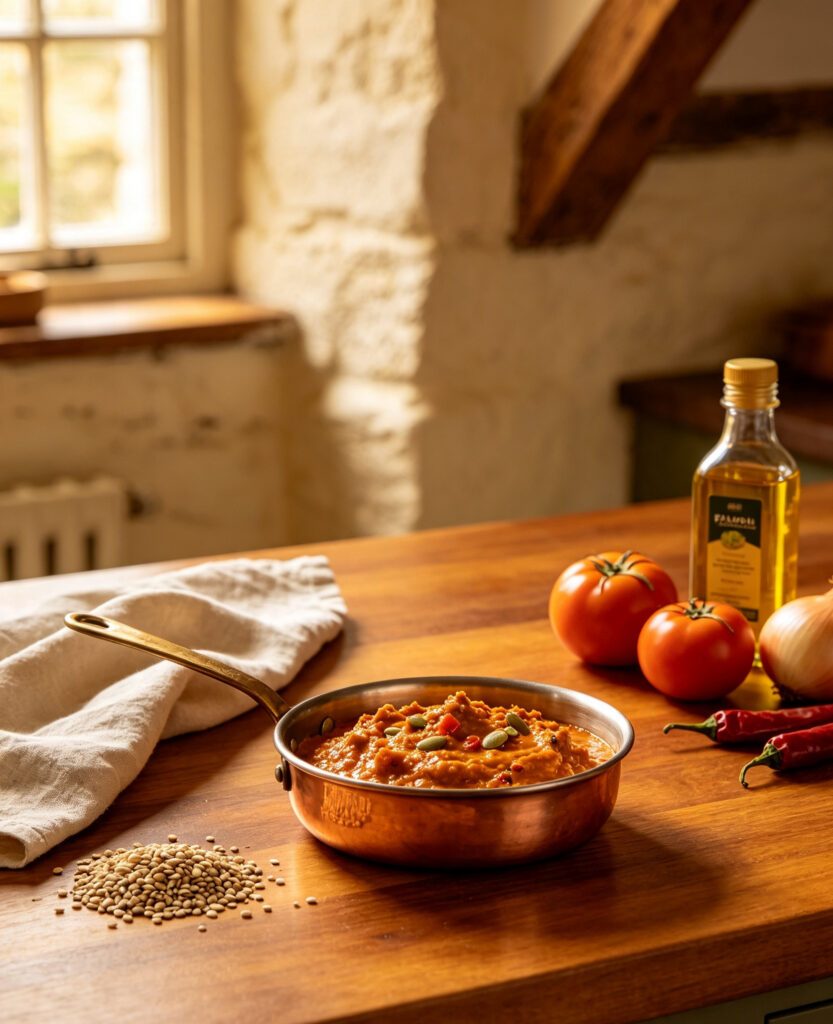
Ingredients
- Ground egusi (melon) seeds — 250 g (2 cups)
- Red palm oil — 100 ml (1/3 cup + 1 tbsp)
- Onion, chopped — 1 large
- Ground crayfish — 20 g (2 tbsp)
- Scotch bonnet pepper, minced — 1
- Assorted meat or fish stock — 400 ml (1 2/3 cups)
- Fresh spinach or bitter leaf, chopped — 250 g (9 oz)
- Bouillon cube and salt — to taste
Method
- Heat palm oil in a heavy-bottomed pot over medium heat; sauté onion until softened, about 5 minutes.
- Add ground egusi seeds, stirring constantly to toast lightly and form small clumps, about 5 minutes.
- Gradually add stock, stirring to break up the egusi clumps into a thick paste.
- Add crayfish, scotch bonnet and bouillon cube; simmer 20-25 minutes, stirring occasionally, until the sauce thickens
- and the oil rises to the surface.
- Add chopped leafy greens, cook 5 minutes until wilted; season with salt to taste.
Cultural Background: A thick, nutty sauce built on ground melon seeds, egusi is a beloved Nigerian and wider West African stew, its seeds toasted and ground to form a rich base that's simmered with leafy greens, meat and palm oil, especially popular across Igbo and Yoruba households.
Tips: • Stir frequently, especially in the early stages, to prevent the ground egusi from sticking and burning at the bottom of the pot. • The sauce should be quite thick, almost porridge-like, once fully cooked.
Variations: • Add assorted meats, stockfish or dried fish for a traditional heartier version. • Use bitter leaf (washed to reduce bitterness) instead of spinach for a more traditional Igbo-style version.
Storage: Refrigerate up to 3 days, or freeze up to 2 months.
Reheating: Reheat gently over low heat, stirring frequently, adding stock if too thick. Nutrition (per serving) Approx. 160 kcal, 5 g protein, 14 g fat, 4 g carbohydrate per 100 g serving.
FAQs: What is egusi sauce traditionally served with? Pounded yam, fufu, or eba, as a hearty, filling main dish. Where can I find egusi (melon) seeds? African and international grocery stores typically carry ground or whole egusi seeds; whole seeds can be ground at home if needed.
- Ground egusi (melon) seeds — 250 g (2 cups)
- Red palm oil — 100 ml (1/3 cup + 1 tbsp)
- Onion, chopped — 1 large
- Ground crayfish — 20 g (2 tbsp)
- Scotch bonnet pepper, minced — 1
- Assorted meat or fish stock — 400 ml (1 2/3 cups)
- Fresh spinach or bitter leaf, chopped — 250 g (9 oz)
- Bouillon cube and salt — to taste
Please log in to leave a comment.