
Appetizers
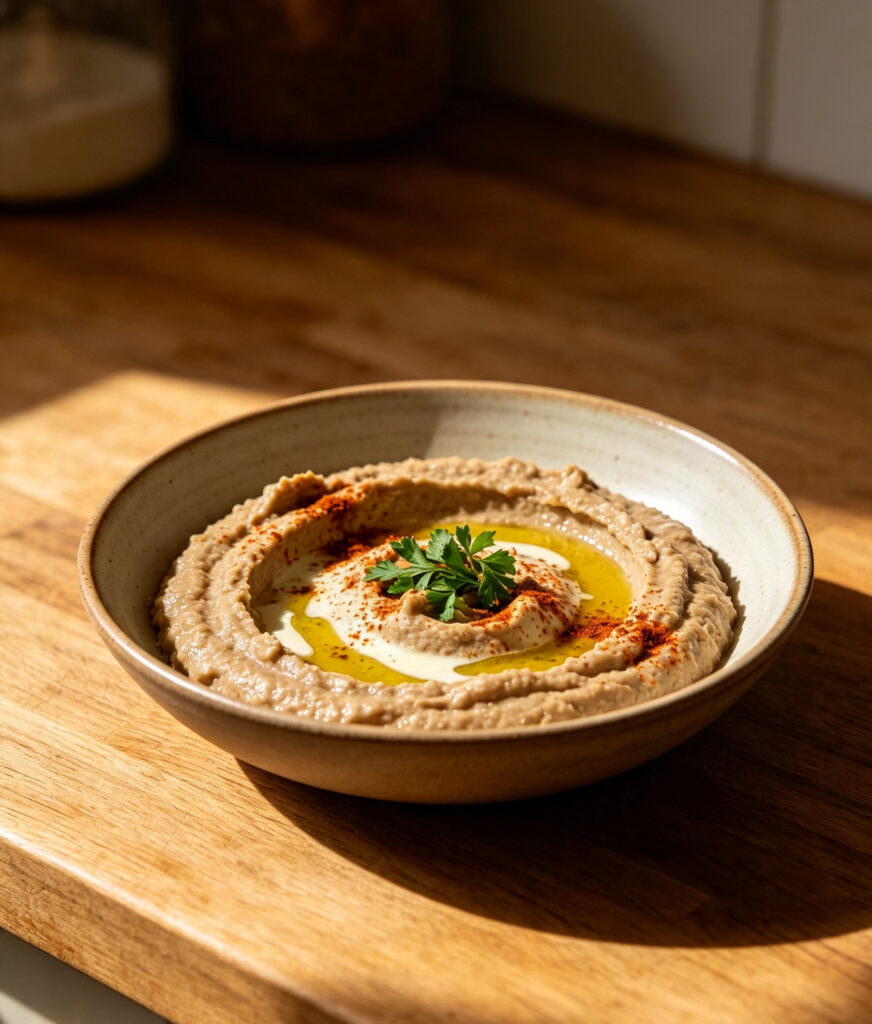
Eggplant Dip with Tahini (Baba Ghanoush al-Baghdadi)
sjfegan
Ingredients
- 3 large eggplants
- 60g (1/4 cup) Tahini
- 2 cloves garlic, minced
- 2 tbsp lemon substitute: vinegar or pomegranate molasses, to taste
- 2 tbsp olive oil, plus extra to serve
- Salt to taste
- Chopped parsley, to garnish
Method
- Char the whole eggplants over an open flame or under a hot grill, turning occasionally, until the skin is blackened and the flesh is very soft, about 20–25 minutes.
- Let cool slightly, then peel off the charred skin.
- Drain the flesh briefly, then mash or blend with the tahini, garlic, vinegar or pomegranate molasses and olive oil until smooth.
- Season with salt.
- Garnish with chopped parsley and a drizzle of olive oil before serving.
Introduction: Smoky roasted eggplant blended with tahini and garlic, a beloved starter reflecting Abbasid Baghdad’s sophisticated vegetable cookery.
Cultural Background: Eggplant held a treasured place in Abbasid cuisine, celebrated in period poetry and cookbooks alike, and this smoky, creamy preparation represents one of the era’s most enduring and beloved culinary contributions.
Tips: Char the eggplant thoroughly, as the smoky flavour from well-blackened skin is essential to this dish’s character. Drain the flesh briefly before blending to remove excess liquid.
Variations: Use pomegranate molasses for a distinctly tangy, fruity note characteristic of the wider region’s cuisine. Serve with warm flatbread for dipping.
Storage: Store covered in the refrigerator for up to 3 days.
Reheating: This dish is served cold or at room temperature and is not reheated.
Nutrition: Per serving (approx.): 140 kcal, 4 g protein, 10 g fat, 10 g carbohydrate.
FAQs:
Q: Was eggplant especially celebrated in Abbasid cuisine?
A: Yes, eggplant was highly regarded and even celebrated in Abbasid-era poetry, reflecting its important and beloved place in the period’s vegetable cookery.
Q: What is tahini?
A: A paste made from ground sesame seeds, widely used across Abbasid and Middle Eastern cuisine for its rich, nutty flavour.
Please log in to leave a comment.