
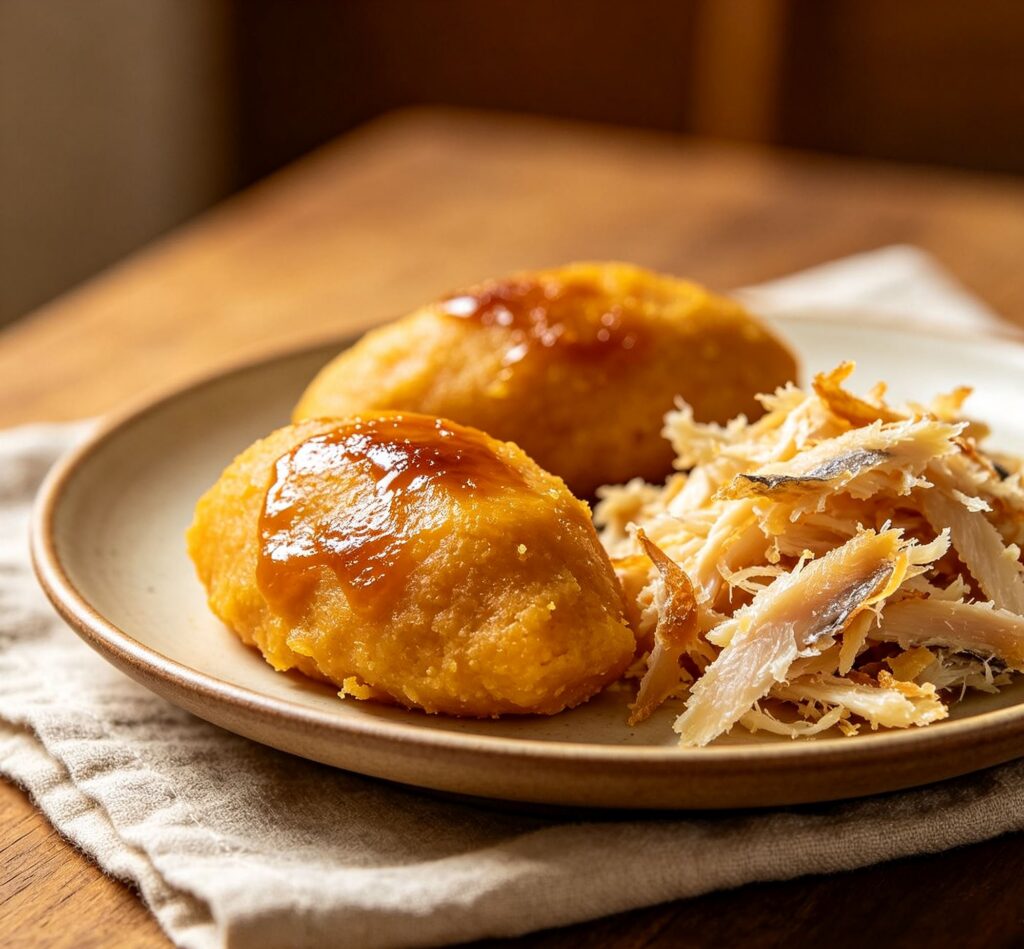
Ducana and Saltfish (Ducana)
The Quirky Foodster Team
Ingredients
- Ducana:
- Sweet potato, peeled and finely grated — 600 g (1.3 lb)
- Desiccated coconut — 150 g (1 1/4 cups)
- All-purpose flour or cornmeal — 100 g (3/4 cup)
- Brown sugar — 80 g (1/3 cup)
- Ground cinnamon — 1/2 tsp (1/2 tsp)
- Ground nutmeg — 1/4 tsp (1/4 tsp)
- Of salt — pinch
- Banana leaves or aluminium foil, for wrapping
- Kitchen twine
- Saltfish:
- Salted cod — 300 g (10 oz)
- Vegetable oil — 1 tbsp (1 tbsp)
- Small onion, sliced — 1
- Garlic, minced — 2 cloves
- Medium tomatoes, chopped — 2
- Whole scotch bonnet pepper, left whole — 1
- Black pepper, — to taste
Method
- In a large bowl, combine grated sweet potato, coconut, flour or cornmeal, brown sugar, cinnamon, nutmeg and salt. Mix well until an even, moist dough forms.
- Divide the mixture into 8–10 portions. Wrap each portion tightly in a piece of banana leaf or foil, folding into a small parcel and securing with twine if using leaves.
- Bring a large pot of water to a boil. Add the wrapped parcels and simmer, covered, for 45–50 minutes until firm to the touch.
- Meanwhile, soak the saltfish in cold water for at least 8 hours, changing the water twice, then simmer in fresh water for 15 minutes. Drain, remove skin and bones, and flake.
- Heat oil in a skillet, sauté onion and garlic for 3 minutes, add tomatoes and whole scotch bonnet, and cook for 5 minutes until softened.
- Stir in the flaked saltfish and black pepper, cooking for a further 5 minutes. Remove the scotch bonnet before serving.
- Unwrap the ducana and serve alongside the saltfish.
Introduction: Ducana is a sweet, steamed dumpling made primarily from grated sweet potato and coconut, wrapped in banana or plantain leaf and gently simmered until firm.
Cultural Background: Ducana is a sweet, steamed dumpling made primarily from grated sweet potato and coconut, wrapped in banana or plantain leaf and gently simmered until firm. Rooted in West African culinary traditions carried across the Atlantic, ducana became a Caribbean staple valued for its use of locally grown sweet potato and coconut. In Antigua and Barbuda, ducana is most often paired with a well-seasoned saltfish preparation, creating a satisfying contrast between the dumpling’s natural sweetness and the fish’s salty, savoury depth — a combination eaten as a full meal at any time of day.
Tips: Wrap the parcels tightly to prevent water from seeping in during steaming, which would make the dumplings soggy. Test doneness by unwrapping one parcel; the ducana should be firm and hold together, not wet in the centre.
Variations: Raisins can be added to the ducana mixture for extra sweetness. Some cooks use pumpkin in addition to sweet potato for a slightly different texture and colour.
Vegetarian/Vegan: Ducana on its own is vegan. For a full vegetarian or vegan meal, serve it with fried plantain or a vegetable side instead of saltfish.
Storage: Store wrapped, cooked ducana and the saltfish separately in the refrigerator for up to 3 days.
Reheating: Re-steam wrapped ducana for 10–15 minutes, or microwave unwrapped for 1–2 minutes; reheat saltfish gently in a covered skillet.
Nutrition: Calories: 480 kcal | Protein: 22 g | Carbohydrates: 62 g | Fat: 16 g | Fibre: 6 g | Sodium: 740 mg
FAQs:
Q: Can ducana be made without banana leaves?
A: Yes, aluminium foil is a widely used substitute and produces the same steamed texture.
Q: Why is ducana sweet if it’s served with savoury fish?
A: The contrast between the sweet dumpling and salty fish is intentional and is one of the dish’s most loved characteristics.
- Ducana:
- Sweet potato, peeled and finely grated — 600 g (1.3 lb)
- Desiccated coconut — 150 g (1 1/4 cups)
- All-purpose flour or cornmeal — 100 g (3/4 cup)
- Brown sugar — 80 g (1/3 cup)
- Ground cinnamon — 1/2 tsp (1/2 tsp)
- Ground nutmeg — 1/4 tsp (1/4 tsp)
- Of salt — pinch
- Banana leaves or aluminium foil, for wrapping
- Kitchen twine
- Saltfish:
- Salted cod — 300 g (10 oz)
- Vegetable oil — 1 tbsp (1 tbsp)
- Small onion, sliced — 1
- Garlic, minced — 2 cloves
- Medium tomatoes, chopped — 2
- Whole scotch bonnet pepper, left whole — 1
- Black pepper, — to taste
Please log in to leave a comment.