
Breakfast
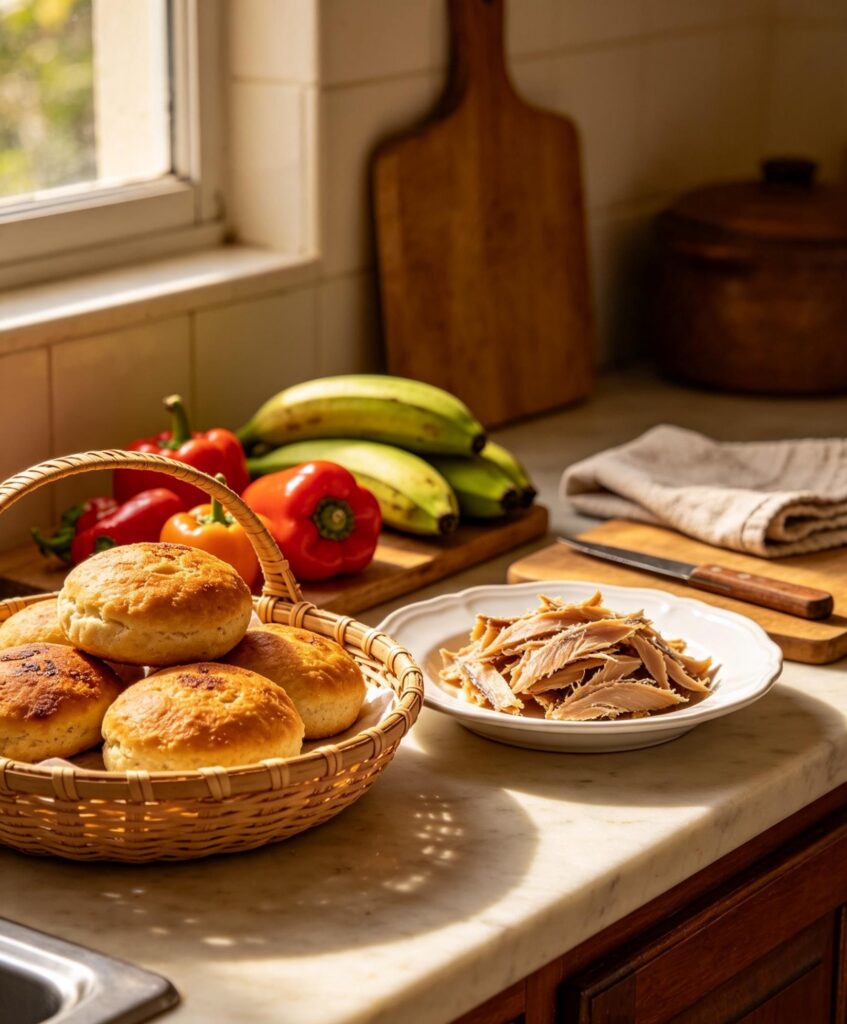
Dominican Bakes and Saltfish
The Quirky Foodster Team
Ingredients
- 500 g all-purpose flour
- 15 g baking powder
- 5 g salt
- 10 g granulated sugar
- 30 g butter, softened
- 250 ml water
- 500 ml vegetable oil, for frying
- 300 g boneless salt cod (saltfish)
- 1 medium onion, sliced
- 1 medium tomato, chopped
- 1 sweet pepper, sliced
- 2 cloves garlic, minced
- 1 scotch bonnet pepper (optional)
- 30 ml vegetable oil, for sautéing
Method
- Soak the salt cod in water for at least 2 hours, changing the water once, to remove excess salt; drain and flake into pieces, discarding skin and bones.
- In a bowl, combine flour, baking powder, salt and sugar. Rub in the butter until the mixture resembles breadcrumbs.
- Gradually add water, mixing to form a soft, non-sticky dough. Knead lightly for 3-4 minutes, cover, and rest for 20 minutes.
- Divide the dough into 8 balls and roll each into a flat disc about 1 cm (1/2 in) thick.
- Heat oil in a deep pan to 170°C (340°F) and fry the bakes in batches for 3-4 minutes per side until golden and puffed. Drain on paper towels.
- For the saltfish: heat 2 tbsp oil in a saucepan, sauté onion, garlic, sweet pepper and scotch bonnet until softened.
- Add tomato and flaked saltfish, cook for 8-10 minutes, stirring occasionally, until well combined and heated through.
- Serve the warm bakes split open with the saltfish spooned inside or alongside.
Introduction: Fried bakes served with seasoned saltfish is the cornerstone of a Dominican breakfast, eaten in homes across the island every weekend and often for a quick weekday start.
Cultural Background: Fried bakes served with seasoned saltfish is the cornerstone of a Dominican breakfast, eaten in homes across the island every weekend and often for a quick weekday start. The dish reflects the island’s shared West African and colonial heritage: salt cod arrived through the Atlantic trade and was paired with simple fried dough made from flour introduced by European settlers, creating a hearty, portable meal that has stayed largely unchanged for generations.
Tips: Rest the dough fully before rolling; skipping this step makes the bakes tough. Keep the oil temperature steady so the bakes cook through without burning on the outside.
Variations: Some households add grated coconut to the dough for a slightly sweet, textured bake. A meat-free version substitutes sautéed callaloo or ackee for the saltfish.
Storage: Store cooked bakes in an airtight container at room temperature for up to 2 days, or refrigerate the saltfish separately for up to 3 days.
Reheating: Reheat bakes in a dry skillet or oven at 160°C (320°F) for 5 minutes; warm saltfish gently in a covered pan over low heat.
Nutrition: Calories: 410 kcal | Protein: 18 g | Carbs: 48 g | Fat: 16 g | Fibre: 2 g
FAQs
Q: Is Dominican saltfish the same as Jamaican saltfish?
A: The salt cod itself is the same imported ingredient used across the Caribbean, but Dominica’s preparation leans on sweet pepper and tomato with lighter seasoning than Jamaica’s typically spicier ackee and saltfish.
Q: Can I use fresh fish instead of salt cod?
A: Traditional bakes and saltfish specifically uses dried salted cod for its distinctive texture and flavour, though a light pan-fried white fish can be substituted in a pinch.
Please log in to leave a comment.