
Soups
Corbo
The Quirky Foodster Team
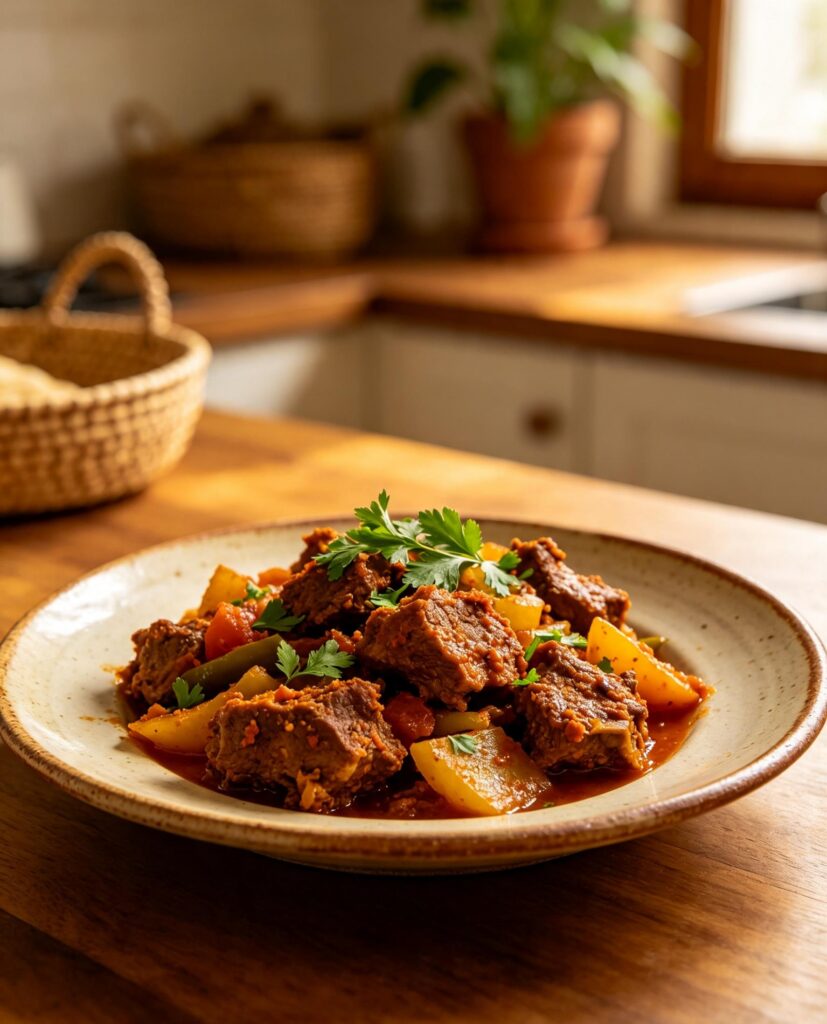
Ingredients
- 600 g (1.3 lb) Cleaned beef tripe, cut into strips
- 1.5 litres (6 cups) Water
- 1 large Red onion, chopped
- 4 Garlic cloves, minced
- 1 tbsp Fresh ginger, minced
- 1.5 tbsp Berbere spice blend
- 2 tbsp Tomato paste
- 45 ml (3 tbsp) Vegetable oil
- 1.5 tsp Salt
Method
- Rinse the tripe thoroughly and place in a large pot with the water. Bring to a boil, skimming any foam.
- Reduce heat and simmer for 60–75 minutes until tender, then remove the tripe, reserving the broth.
- In the same pot, heat the oil and sauté the onion until golden, about 8 minutes.
- Add the garlic and ginger and cook for 1 minute, then stir in the berbere and tomato paste.
- Return the reserved broth and tripe to the pot and simmer together for a further 20 minutes.
- Season with salt to taste and serve hot in bowls with kicha or injera.
Introduction: Corbo is a hearty, slow-simmered soup made from offal (commonly tripe) and is traditionally prepared for celebrations and gatherings where a whole animal has been slaughtered, reflecting a nose-to-tail approach to festive cooking in Eritrean households.
Cultural Background: Corbo is a hearty, slow-simmered soup made from offal (commonly tripe) and is traditionally prepared for celebrations and gatherings where a whole animal has been slaughtered, reflecting a nose-to-tail approach to festive cooking in Eritrean households.
Storage: Refrigerate for up to 3 days; freezes well for up to 2 months.
Reheating: Reheat gently on the stovetop until piping hot throughout.
Tips: Simmering the tripe separately first, then combining with the spiced base, keeps the broth clear and well-seasoned. Trim excess fat from the tripe before cooking for a cleaner-tasting soup.
Variations: Add cubed potato for a heartier, stew-like variation. Use lamb offal in place of tripe in some regional versions. Not naturally vegetarian; a mushroom and root vegetable broth is a reasonable non-authentic substitute if needed.
Nutrition: Calories: 265 kcal · Protein: 24 g · Carbs: 8 g · Fat: 15 g · Fiber: 2 g
FAQs:
Q: Can I use a different cut of offal?
A: Yes — tripe is most common, but some households use a mix of offal cuts depending on what’s available after a slaughter.
Q: Why is this soup served at celebrations specifically?
A: It traditionally makes use of offal from an animal slaughtered for a festive occasion, so little goes to waste.
Please log in to leave a comment.