
Soups
Conchicla (Lentil and Leek Soup)
The Quirky Foodster Team
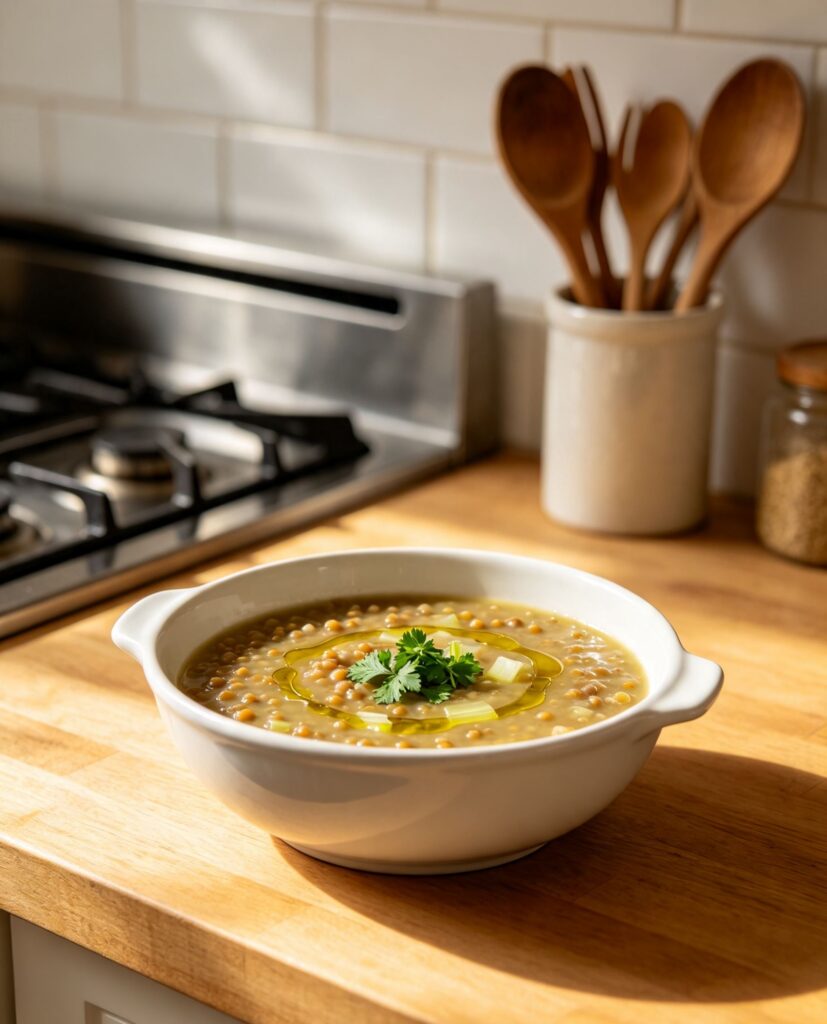
Ingredients
- 250g Brown or green lentils, rinsed
- 1.2 litres water or vegetable stock (5 cups water or vegetable stock)
- 2 leeks, sliced
- 2 tbsp fresh coriander, chopped, plus extra to serve
- 1 tsp ground cumin
- 45ml Olive oil
- 30ml White wine vinegar
- Salt, to taste
Method
- Heat half the olive oil in a large saucepan over medium heat and soften the sliced leeks for 5 minutes.
- Add the lentils and water or stock, bring to the boil, then reduce to a simmer.
- Cook for 25-30 minutes, until the lentils are tender, stirring occasionally.
- Stir in the cumin and coriander and simmer for a further 5 minutes.
- Off the heat, stir through the remaining olive oil and the vinegar, season with salt, and serve hot with extra coriander scattered over.
Native Name: Conchicla
Cultural Background: Lentils were a Roman staple, cheap and filling, and this style of lentil pottage appears across Roman agricultural and culinary writing. Leeks, coriander and a generous hand with vinegar were the typical seasonings that lifted a humble bowl of pulses into something worth serving.
Tips: Add the vinegar off the heat and just before serving – simmering it too long dulls its brightness against the earthy lentils.
Variations: Stir in shredded cooked pork belly for a heartier, non-vegetarian version, closer to how meat scraps were often used to enrich pottages.
Vegetarian / Vegan Note: Naturally vegan when made with vegetable stock.
Storage: Store covered in the refrigerator for up to 4 days, or freeze for up to 3 months.
Reheating: Reheat gently in a saucepan over medium heat, adding a splash of water if it has thickened too much.
Nutrition: Approx. 260 kcal, 14 g protein, 33 g carbohydrate, 9 g fat per serving.
FAQs:
Q: Can I use red lentils instead?
A: Brown or green lentils hold their shape better and give the right rustic texture; red lentils will cook faster and break down more.
Q: Why so much vinegar?
A: Vinegar was a key seasoning in Roman cooking, used the way we might use lemon juice today, to brighten rich or earthy dishes.
Please log in to leave a comment.