
Desserts
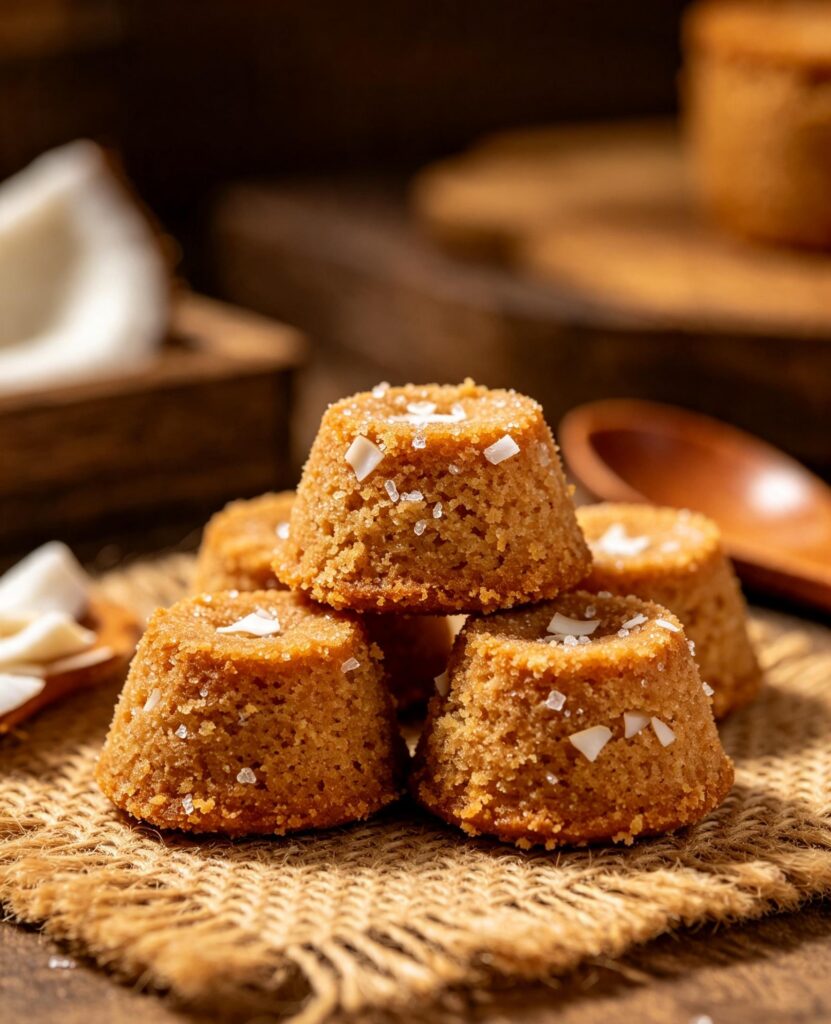
Dominica Coconut Sugar Cake
The Quirky Foodster Team
Ingredients
- 400 g fresh coconut, grated
- 300 g granulated sugar
- 120 ml water
- 1 cinnamon stick
- 2 whole cloves
- few drops red food colouring (optional, traditional)
- 5 ml vanilla essence
Method
- In a heavy-bottomed saucepan, combine sugar and water and heat gently until the sugar dissolves.
- Add the cinnamon stick, cloves and grated coconut, stirring to combine.
- Cook over medium-low heat, stirring frequently, for 15-20 minutes until the mixture thickens and pulls away from the sides of the pan.
- Stir in the vanilla essence and a few drops of red food colouring if using, mixing until evenly distributed.
- Remove the cinnamon stick and cloves. Spread the mixture onto a parchment-lined tray, pressing down firmly to an even thickness of about 1.5 cm.
- Allow to cool completely, then cut into squares or diamonds before serving.
Introduction: Made from freshly grated coconut cooked down with sugar and spices, sugar cake is a chewy, dense sweet found at markets and school fairs across Dominica, showcasing the island’s plentiful coconut harvest.
Cultural Background: Made from freshly grated coconut cooked down with sugar and spices, sugar cake is a chewy, dense sweet found at markets and school fairs across Dominica, showcasing the island’s plentiful coconut harvest.
Tips: Stir constantly in the final stages of cooking, as the sugar and coconut mixture can catch and burn quickly once thickened.
Variations: A pink and white layered version is traditional for festive occasions, made by dividing the mixture and colouring only one portion.
Storage: Store in an airtight container at room temperature for up to 2 weeks.
Reheating: This confection is served at room temperature and is not reheated.
Nutrition: Calories: 160 kcal | Protein: 1 g | Carbs: 20 g | Fat: 9 g | Fibre: 2 g
FAQs
Q: Can desiccated coconut be used instead of fresh?
A: Fresh grated coconut gives the best chewy texture; desiccated coconut can be used with a little extra water added to compensate for the lost moisture.
Q: Why is the colouring traditional?
A: The pink and white colouring is a festive touch common at celebrations and markets, though the plain uncoloured version is equally traditional and authentic.
Please log in to leave a comment.