
Coconut Crab (Uga)
The Quirky Foodster Team
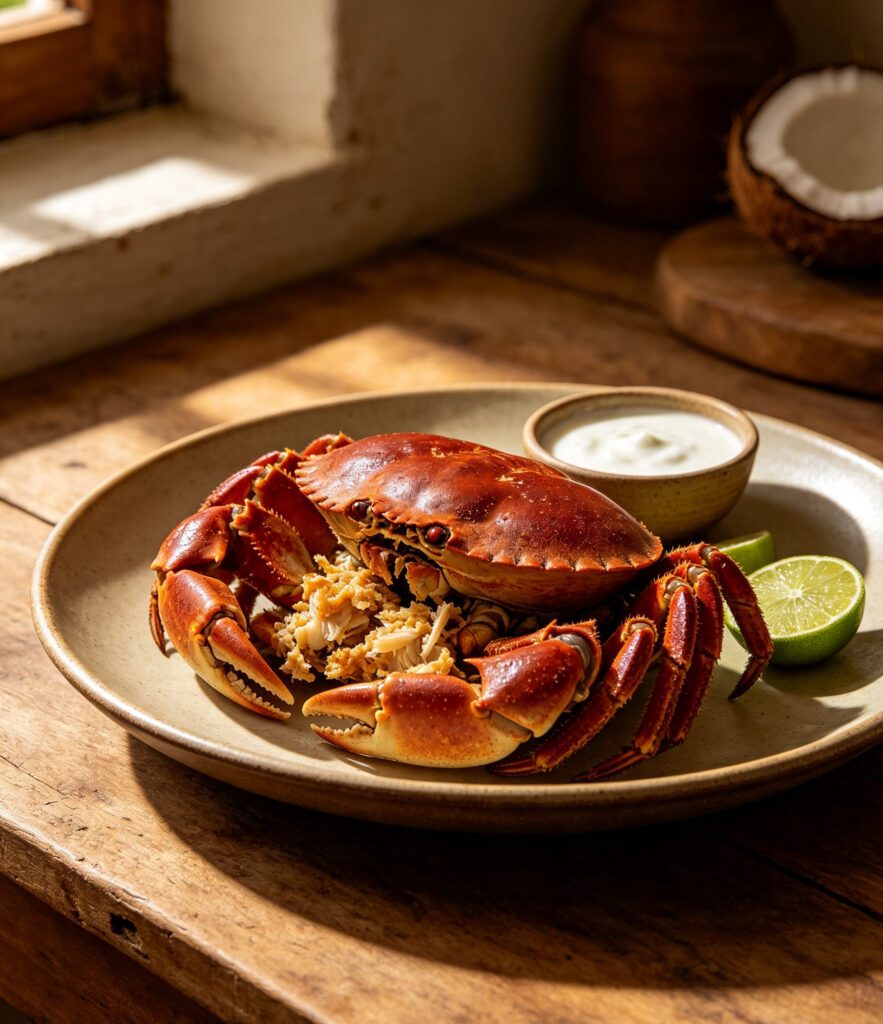
Ingredients
- Coconut crabs, cleaned — 4
- Water, for boiling — 2 L (8 1/2 cups)
- Fine salt — 2 tbsp
- Coconut cream, warmed, to serve — 150 ml (2/3 cup)
- Lime wedges, to serve
Method
- Bring the water to a rolling boil in a very large pot and add the salt.
- Carefully add the coconut crabs and cover.
- Boil for 15-20 minutes, until the shells turn a deep orange-red and the meat is opaque and firm.
- Remove the crabs and allow to cool slightly before handling.
- Crack the shells and claws to expose the meat, and arrange on a serving platter.
- Serve warm with a little warmed coconut cream for dipping and fresh lime wedges on the side.
Introduction: Coconut crab, a large land crab famous for its ability to crack open coconuts, is considered a genuine
delicacy in Tuvalu, prized for its rich, sweet, naturally oily meat.
Cultural Background: Coconut crab, a large land crab famous for its ability to crack open coconuts, is considered a genuine
delicacy in Tuvalu, prized for its rich, sweet, naturally oily meat. It is often reserved for special
occasions and celebratory meals, and is typically prepared simply so its distinctive flavour, developed
from a diet of coconut, can shine through.
Tips: Boil in small batches if your pot is not large enough to submerge the crabs fully, to ensure even cooking. Take care handling the crab's claws, which are strong enough to crack coconuts, even after cooking.
Variations: Steam instead of boiling for a slightly firmer texture. Roast whole over an open fire for a smokier flavour, a traditional alternative preparation. No vegetarian version exists for this specific dish. Not applicable.
Storage: Best eaten fresh; refrigerate cooked, cracked meat in an airtight container for up to 1 day.
Reheating: Best served freshly cooked; if needed, reheat gently by steaming for 3-4 minutes.
FAQs:
Q: Is coconut crab sustainable to eat?
A: Coconut crab populations are protected in many parts of the Pacific due to slow growth rates, so it is worth checking local size and season restrictions before harvesting or ordering.
Q: What does coconut crab taste like?
A: It has a rich, distinctly sweet flavour often compared to a cross between crab and lobster, influenced by its diet of coconut flesh.
- Coconut crabs, cleaned — 4
- Water, for boiling — 2 L (8 1/2 cups)
- Fine salt — 2 tbsp
- Coconut cream, warmed, to serve — 150 ml (2/3 cup)
- Lime wedges, to serve
Please log in to leave a comment.