
Chirimoya Fruit Preparation
The Quirky Foodster Team
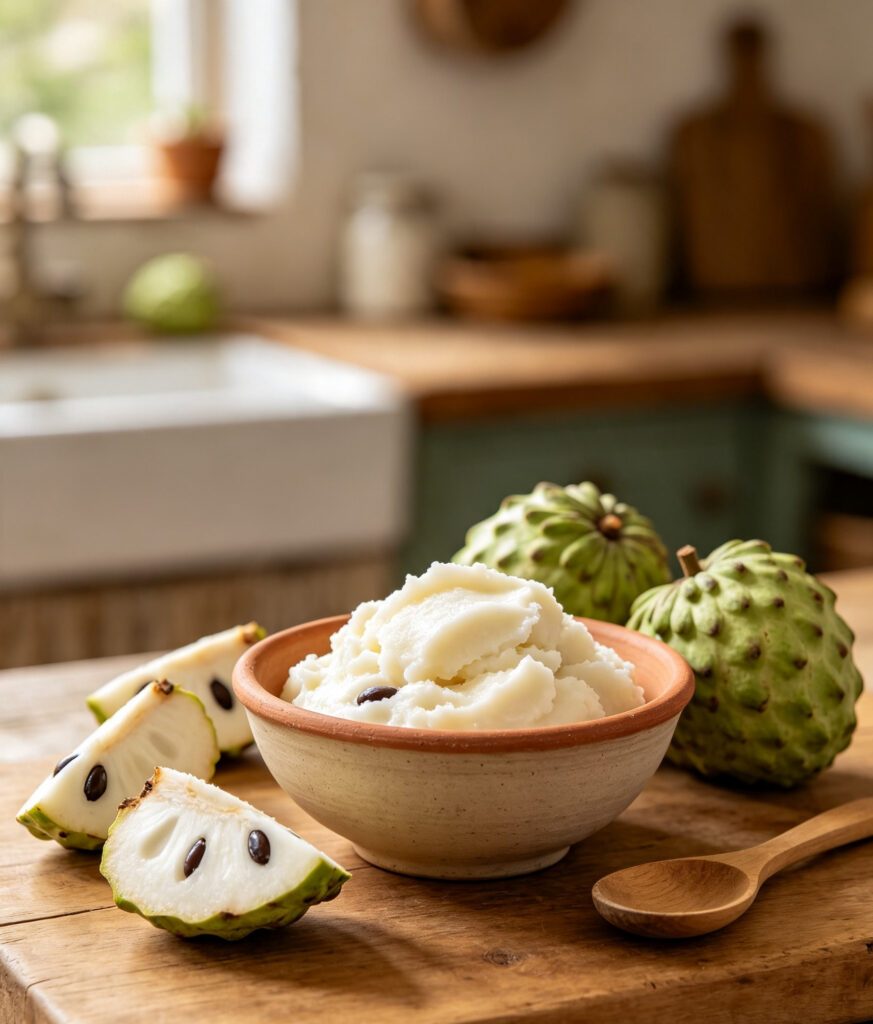
Ingredients
- Ripe chirimoya fruit — 2
Method
- Chill the ripe chirimoya fruit if possible.
- Halve each fruit lengthwise.
- Serve with a small spoon so the sweet white flesh can be scooped directly, discarding the large black seeds as you go.
Introduction: Ripe chirimoya, its custard-like flesh simply scooped and served chilled, needing nothing more than the fruit itself to make a satisfying sweet course.
Cultural Background: Chirimoya (Annona cherimola) is native to the Andean valleys and was cultivated well before the Inca period; Spanish chroniclers noted its exceptional sweetness and texture on contact, and it remains prized across the Andes today with essentially the same simple preparation of eating it fresh and chilled.
Tips: – Ripeness is everything: the fruit should yield gently to pressure, similar to a ripe avocado, before serving. – The seeds are inedible and should be removed as you eat rather than swallowed.
Variations: – Naturally vegan as written, with no additions needed. – The scooped flesh can be gently mashed and mixed with a little lucuma for a combined fruit dessert.
Storage: Ripe, cut chirimoya should be eaten the same day; whole unripe fruit can be left at room temperature for a few days to ripen.
Reheating: Not applicable; served cold or at room temperature only.
Nutrition: Per serving (approx.): 120 kcal, 2 g protein, 30 g carbohydrate, 0.5 g fat, 4 g fibre.
FAQs:
Q: How do I know when a chirimoya is ripe?
A: It should yield slightly to gentle pressure, similar to testing a ripe avocado or peach.
Q: Are the seeds toxic?
A: The seeds are not intended to be eaten and are simply discarded; they are not part of the traditional preparation.
- Ripe chirimoya fruit — 2
Please log in to leave a comment.