
Salads
Chickpea and Herb Salad (Salatat Hummus)
sjfegan
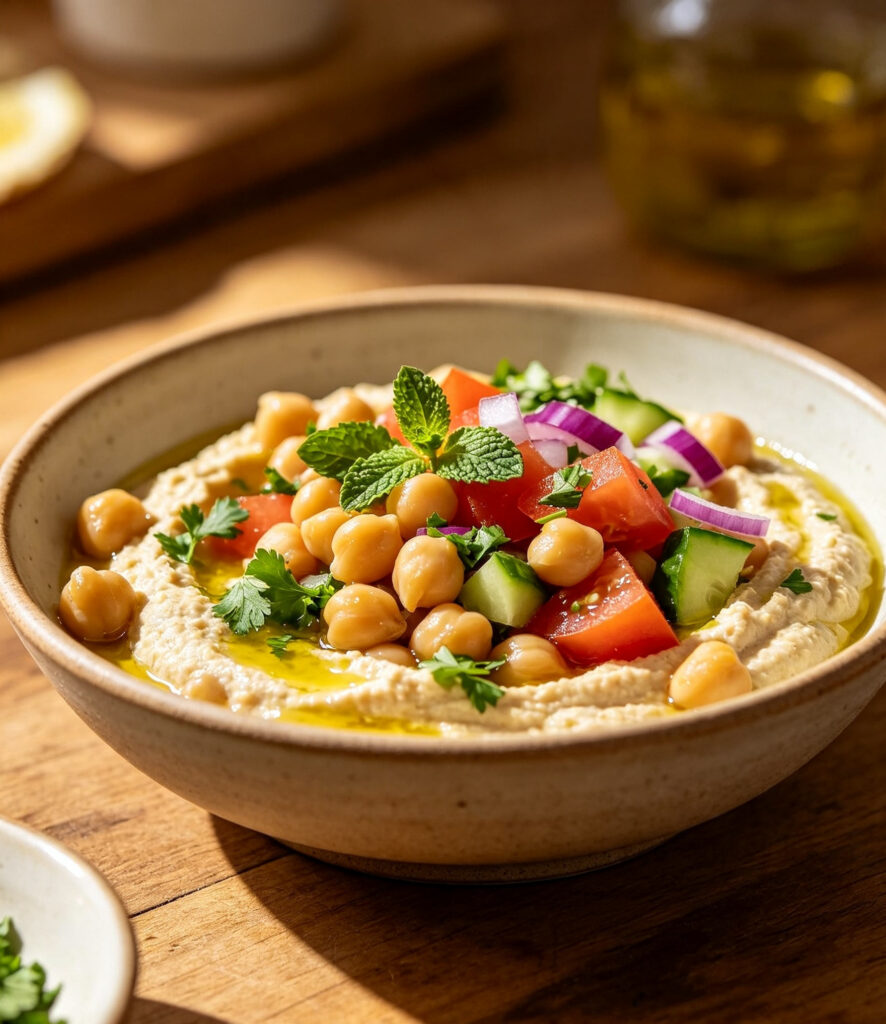
Ingredients
- 500g (3 cups) Cooked chickpeas
- 30g (1/2 cup) Fresh parsley, chopped
- 15g (1/4 cup) Fresh mint, chopped
- 1 onion, finely diced
- 3 tbsp olive oil
- 2 tbsp vinegar
- Salt to taste
Method
- Combine the chickpeas, parsley, mint and onion in a bowl.
- Whisk together the olive oil, vinegar and salt.
- Pour the dressing over the salad and toss well.
- Let sit for 15 minutes before serving to allow the flavours to meld.
Introduction: Cooked chickpeas tossed with fresh herbs and a tangy dressing, a satisfying salad reflecting Abbasid cuisine’s fondness for legumes.
Cultural Background: Chickpeas were a fundamental legume across the Abbasid Caliphate, and this simple herbed salad reflects the practical, flavourful ways they were incorporated into everyday meals throughout the region.
Tips: Chop the herbs finely for the best distribution of flavour throughout the salad. Let the salad rest briefly before serving, as the flavours deepen.
Variations: Add a little ground cumin to the dressing for extra warmth. Include a few chopped tomatoes for additional freshness.
Storage: Store covered in the refrigerator for up to 3 days.
Reheating: This is a cold salad and is not reheated.
Nutrition: Per serving (approx.): 220 kcal, 9 g protein, 10 g fat, 26 g carbohydrate.
FAQs:
Q: Were chickpeas widely eaten across the Abbasid Caliphate?
A: Yes, chickpeas and other legumes formed a fundamental part of the diet across the vast territories of the caliphate, valued for their affordability and versatility.
Q: What herbs were commonly used in Abbasid cooking?
A: Parsley, mint and coriander were among the widely used fresh herbs found throughout the region’s cuisine.
Please log in to leave a comment.