
Drinks
Chibwantu
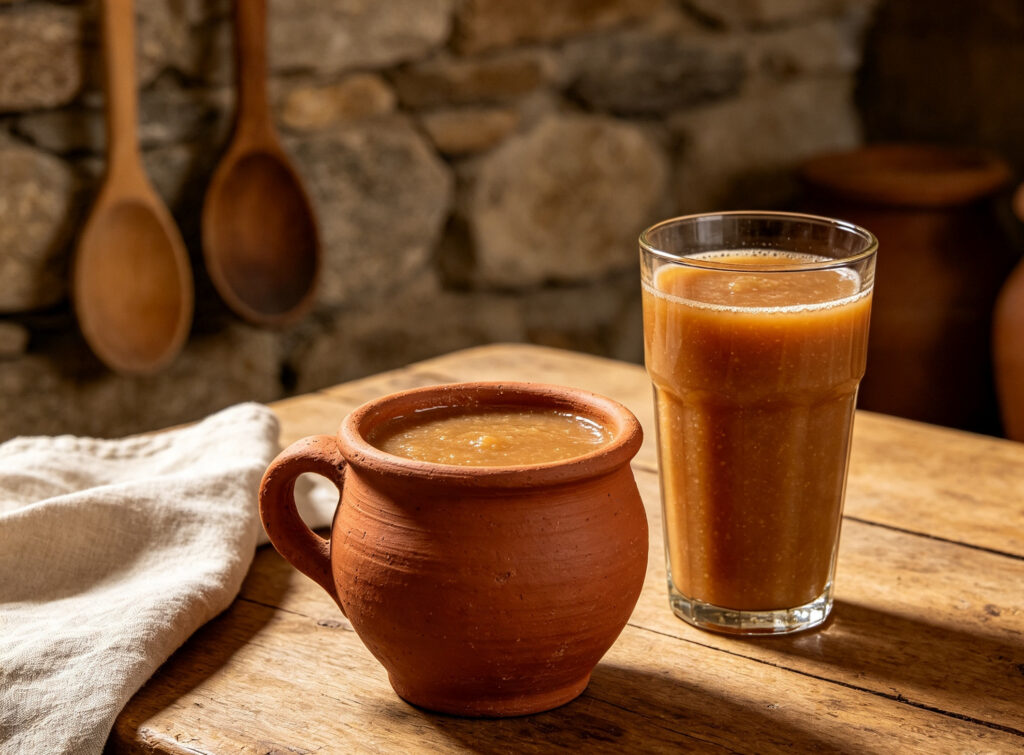
Ingredients
- 250 g (2 cups) sorghum meal
- 1.5 litres (6 cups) water, divided
- 100 g (1/2 cup) sugar, or to taste
- 2 tbsp plain flour (optional, to help kick-start fermentation)
Method
- Mix the sorghum meal with 500 ml of the water to form a smooth paste.
- Bring the remaining 1 litre of water to a boil in a saucepan, then whisk in the sorghum paste. Cook for 5-6 minutes, stirring, until slightly thickened. Remove from heat and cool to room temperature.
- Stir in the plain flour, if using, to help encourage fermentation.
- Pour into a large glass jar or jug and cover loosely with a clean cloth to allow fermentation gases to escape.
- Leave at room temperature for 24-48 hours, tasting periodically, until it develops a pleasantly tangy flavour.
- Strain through a fine sieve into a clean jug, stir in sugar to taste, chill well, and serve cold.
Introduction: Chibwantu is a traditional fermented drink made from sorghum, popular particularly in Southern Zambia among Tonga-speaking communities.
Cultural Background: Chibwantu is a traditional fermented drink made from sorghum, popular particularly in Southern Zambia among Tonga-speaking communities. Lightly sweet and tangy, it’s a refreshing beverage enjoyed at gatherings and during the sorghum harvest season.
Tips: Fermentation time depends on room temperature — warmer conditions ferment faster. Taste periodically after the first 24 hours to catch your preferred level of tanginess. Always use clean equipment throughout to encourage safe, proper fermentation.
Variations: Add a cinnamon stick during cooking for a warm spice note. Adjust fermentation time for a milder or tangier result to taste. Serve with a squeeze of lemon for extra brightness. Naturally vegan as written; no conversion needed.
Storage: Refrigerate in a covered jug for up to 4 days; fermentation continues slowly even when chilled.
Reheating: Not applicable — this is a cold fermented beverage and is not reheated.
Nutrition: Per serving (approx.): 95 kcal, 2 g protein, 22 g carbohydrates, 0 g fat, 2 g fibre.
FAQs:
Q: Is chibwantu alcoholic?
A: No, the fermentation is mild and short, producing a tangy, lightly effervescent non-alcoholic drink.
Q: Can I use maize meal instead of sorghum?
A: Sorghum is traditional to chibwantu and gives it its distinct flavour; maize meal produces a different drink (munkoyo or mahewu-style).
Q: How do I know when it’s ready?
A: It should taste pleasantly tangy rather than sour or ‘off’ — trust your taste rather than a strict timer.
Please log in to leave a comment.