
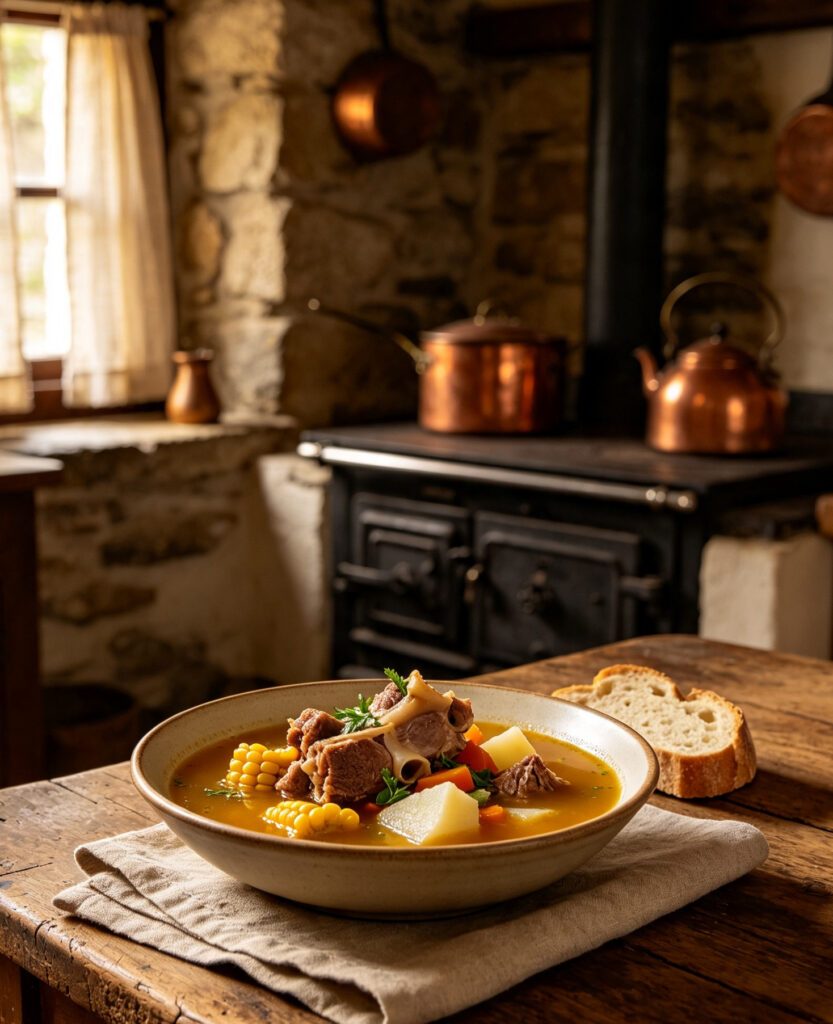
Caldo de Pata
The Quirky Foodster Team
Ingredients
- Beef trotters, cleaned and cut into pieces — 1 kg (2.2 lb)
- Beef tripe, cleaned and cut into pieces — 500 g (1 lb 2 oz)
- Onion, chopped — 1
- Garlic, minced — 2 cloves
- Tomatoes, chopped — 2
- Corn cob, cut into pieces — 1
- Cassava, peeled and cubed — 1
- Water — 2.4 L (80 fl oz)
- Paprika — 1 tsp
- Salt and pepper — to taste
- Chopped parsley, to garnish
Method
- Place the trotters and tripe in a large pot with the water and bring to a boil.
- Skim any foam, then reduce to a simmer and cook for 2.5–3 hours until very tender.
- Add the onion, garlic, tomato and paprika, and continue simmering for 30 minutes.
- Add the corn and cassava, and simmer for a further 25–30 minutes until tender.
- Season with salt and pepper, and garnish with chopped parsley before serving hot.
Introduction: A rich, slow-simmered soup made from beef trotters, tripe and vegetables, a hearty and celebrated Paraguayan specialty.
Cultural Background: Caldo de pata reflects Paraguay's resourceful, no-waste cooking tradition, transforming beef trotters and offal into a deeply flavourful, gelatinous soup, especially popular as a restorative dish and after a night out.
Tips: A long, slow simmer is essential for the trotters and tripe to become properly tender and release their rich, gelatinous flavour. Skim the surface periodically during cooking for the cleanest-tasting broth.
Variations: Add a piece of squash for extra heartiness. Adjust the paprika for a deeper colour and flavour.
Storage: Refrigerate in an airtight container for up to 3 days.
Reheating: Reheat gently on the stovetop over medium heat until warmed through.
FAQs:
Q: What does caldo de pata contain?
A: Beef trotters and tripe, simmered for hours with vegetables into a rich, gelatinous soup.
Q: Is this soup considered a hangover remedy?
A: Yes, it's popularly enjoyed as a restorative dish, similar to how similar rich soups are used across Latin America.
- Beef trotters, cleaned and cut into pieces — 1 kg (2.2 lb)
- Beef tripe, cleaned and cut into pieces — 500 g (1 lb 2 oz)
- Onion, chopped — 1
- Garlic, minced — 2 cloves
- Tomatoes, chopped — 2
- Corn cob, cut into pieces — 1
- Cassava, peeled and cubed — 1
- Water — 2.4 L (80 fl oz)
- Paprika — 1 tsp
- Salt and pepper — to taste
- Chopped parsley, to garnish
Please log in to leave a comment.