
Cajun Dark Roux
The Quirky Foodster Team
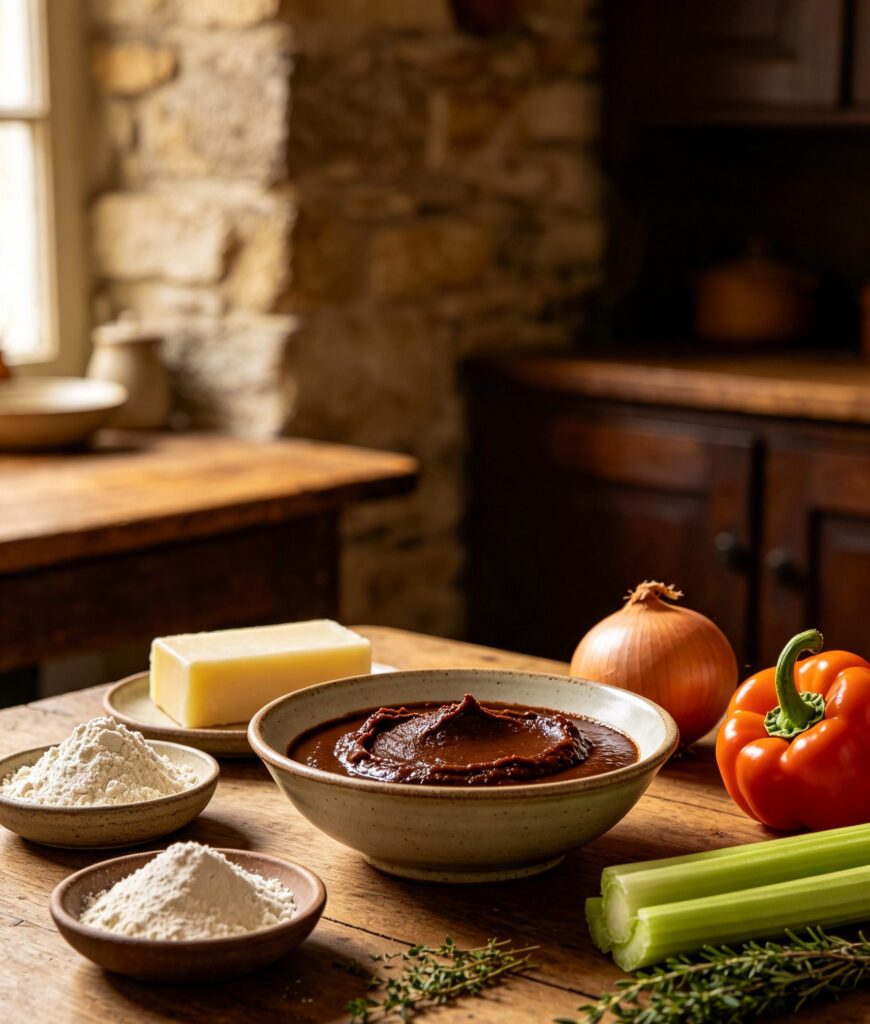
Ingredients
- Flour
- Fat, traditionally oil
Method
- Flour cooked slowly in fat (traditionally oil) while constantly stirred, taken to a dark brown, almost chocolate color — considerably darker than the pale roux used in French mother sauces, and the foundational thickening-and-flavoring base of Cajun and Creole cooking.
Origin: Louisiana (Cajun and Creole cuisine). Flour cooked slowly in fat (traditionally oil) while constantly stirred, taken to a dark brown, almost chocolate color — considerably darker than the pale roux used in French mother sauces, and the foundational thickening-and-flavoring base of Cajun and Creole cooking.
Flavor Profile: Deeply nutty and toasted, with the dark color contributing significant flavor complexity beyond simple thickening power.
Culinary Uses: Base thickener and flavor foundation for gumbo and many other Cajun and Creole dishes.
Regional Variations: Roux darkness (blond, peanut butter, chocolate) is a named spectrum in Cajun cooking, with darker roux providing more flavor but less thickening power than lighter versions — a direct tradeoff cooks manage deliberately.
Storage: Made fresh for each dish typically, given how central and quick the process is; a batch-made extra portion keeps a few weeks refrigerated in a sealed container.
Notes: A genuine structural outlier — dark roux is valued as much or more for flavour as for its technical thickening function, an inversion of roux’s role in classical French cooking.
- Flour
- Fat, traditionally oil
Please log in to leave a comment.