
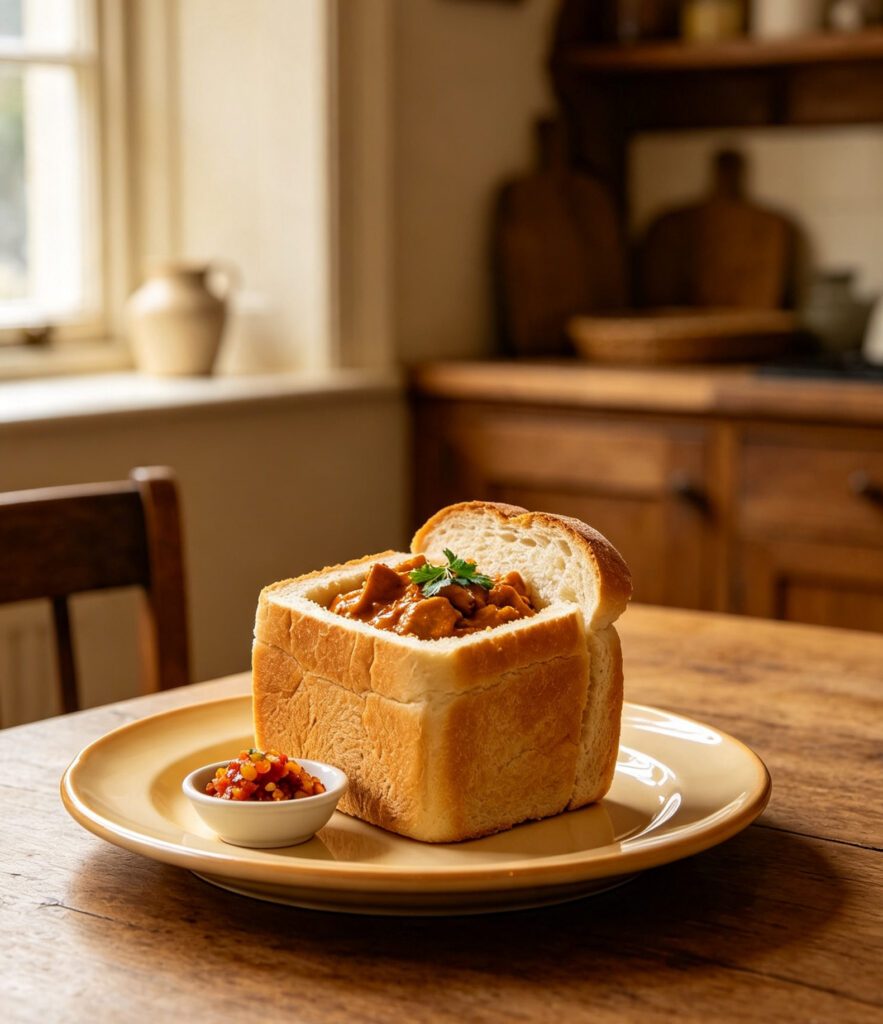
Bunny Chow (Durban Curry in Bread)
The Quirky Foodster Team
Ingredients
- Vegetable oil — 3 tbsp
- Medium onion, finely chopped — 2
- Garlic, crushed — 3 cloves
- Fresh ginger, grated — 1 tbsp
- Curry powder — 3 tbsp
- Ground turmeric — 1/2 tsp
- Ground cumin — 1 tsp
- Lamb or beef, cubed — 700 g (1.5 lb)
- Tinned chopped tomatoes — 400 g (14 oz)
- Water or stock — 500 ml (2 cups)
- Medium potatoes, cubed — 2
- Salt, — to taste
- Fresh coriander, chopped — 2 tbsp
- Small unsliced white loaves, quartered — 1-2
Method
- Heat the oil in a large pot and soften the onion for 6 minutes, then add the garlic and ginger and cook for 1 minute.
- Stir in the curry powder, turmeric and cumin and cook for 1 minute until fragrant.
- Add the meat and brown on all sides, about 8 minutes.
- Pour in the chopped tomatoes and water or stock, bring to a simmer, then cover and cook gently for 45 minutes, stirring occasionally.
- Add the potatoes in the last 20 minutes of cooking and simmer until the meat is tender and the potatoes are cooked through, adding more water if the curry becomes too dry.
- The World Cookbook Project — South Africa — Full Recipes Page 52
- Season with salt and stir in the coriander.
- Cut the bread loaves into quarters and hollow out the centre of each quarter, reserving the bread removed.
- Spoon the hot curry generously into each bread cavity, top with the reserved bread piece, and serve immediately with your hands.
Introduction: Bunny chow originated among the Indian community in Durban in the early-to-mid 20th century, believed to have developed as a portable meal for workers, made by hollowing out a quarter loaf of bread and filling it with curry.
Cultural Background: Bunny chow originated among the Indian community in Durban in the early-to-mid 20th century, believed to have developed as a portable meal for workers, made by hollowing out a quarter loaf of bread and filling it with curry. It has since become one of South Africa's most iconic street foods, sold from takeaway counters across Durban and beyond.
Tips: Bunny chow is traditionally eaten by hand, tearing off pieces of the hollowed bread to scoop up the curry. Choose a curry that's thick rather than soupy, so it doesn't soak straight through the bread before serving.
Variations: Bean or vegetable curry fillings are popular vegetarian versions, especially common in Durban's Indian community. Substitute the meat with chickpeas and extra potato for a widely available and authentic vegetarian bunny chow.
Storage: Store the curry (without bread) in an airtight container in the fridge for up to 3 days; assemble fresh bread just before serving.
Reheating: Reheat the curry in a saucepan over low heat, adding a splash of water if needed, then spoon into fresh bread.
Nutrition: Approx. 520 kcal, 30 g protein, 48 g carbohydrate, 22 g fat per serving.
FAQs:
Q: What bread is traditionally used?
A: A small, dense unsliced white loaf, often called a 'quarter loaf', is traditional; a small crusty white boule is a good substitute.
Q: Can bunny chow be made vegetarian?
A: Yes, a chickpea and potato curry is a very popular and authentic vegetarian filling.
- Vegetable oil — 3 tbsp
- Medium onion, finely chopped — 2
- Garlic, crushed — 3 cloves
- Fresh ginger, grated — 1 tbsp
- Curry powder — 3 tbsp
- Ground turmeric — 1/2 tsp
- Ground cumin — 1 tsp
- Lamb or beef, cubed — 700 g (1.5 lb)
- Tinned chopped tomatoes — 400 g (14 oz)
- Water or stock — 500 ml (2 cups)
- Medium potatoes, cubed — 2
- Salt, — to taste
- Fresh coriander, chopped — 2 tbsp
- Small unsliced white loaves, quartered — 1-2
Please log in to leave a comment.