
Bouillie de Mil au Lait (Millet Porridge with Milk)
The Quirky Foodster Team
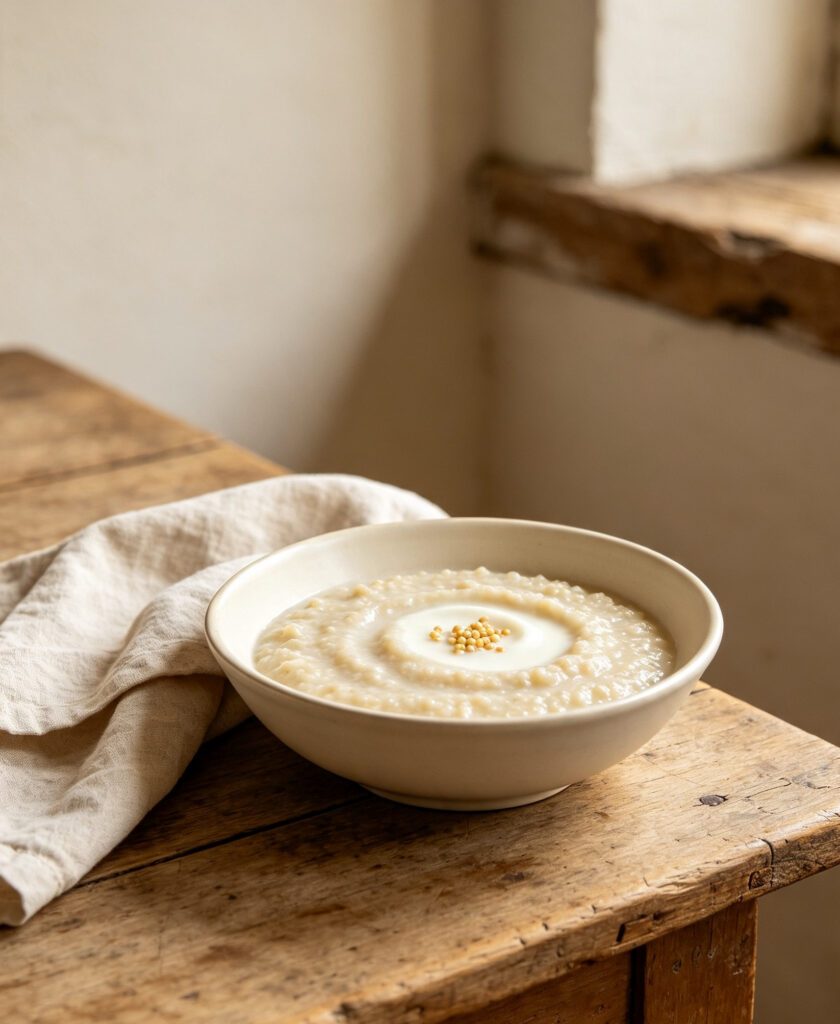
Ingredients
- Millet flour — 150 g (1¼ cups)
- Water — 750 ml (3 cups)
- Whole milk — 500 ml (2 cups)
- Sugar, or to taste — 60 g (¼ cup)
- Ground ginger — 3 g (½ tsp)
- Ground cinnamon — 2 g (¼ tsp)
- Of salt — pinch
Method
- In a small bowl, whisk millet flour with 250 ml (1 cup) cold water to form a smooth, lump-free slurry.
- Bring the remaining 500 ml (2 cups) water to a boil in a saucepan.
- Gradually whisk in the millet slurry, stirring constantly to prevent lumps from forming.
- Reduce heat to medium-low and cook, stirring frequently, for 10–12 minutes until thickened and the raw millet taste has cooked out.
- Stir in milk, sugar, ginger, cinnamon, and salt, and continue cooking for 5 minutes more, stirring often, until smooth and creamy (internal temperature at least 85°C/185°F).
- Adjust sweetness to taste and thin with a little extra warm milk if a lighter consistency is preferred.
- Ladle into bowls and serve warm.
Introduction: Bouillie de mil is a warm, spiced millet porridge eaten across northern Togo, where millet is a staple grain.
Cultural Background: Bouillie de mil is a warm, spiced millet porridge eaten across northern Togo, where millet is a staple grain. Cooked with milk and warm spices, it’s a filling breakfast especially popular in the drier savanna regions of the country, often prepared for children and travelers alike.
Tips: Toasting the millet flour lightly in a dry pan for 2–3 minutes before making the slurry deepens the flavour and removes any raw, starchy taste.
Variations: Ground peanuts or a spoonful of peanut butter can be stirred in for a richer, more filling version favoured in some northern households.
Storage: Refrigerate in an airtight container for up to 2 days; the porridge will thicken considerably when cold.
Reheating: Reheat gently on the stovetop over low heat, whisking in a splash of milk or water to restore a smooth, pourable consistency.
FAQs:
Q: Can I use sorghum instead of millet?
A: Yes, sorghum flour makes a very similar, equally traditional porridge in northern Togo.
Q: Is this porridge vegan?
A: Not as written, but it can be made vegan using a plant-based milk in place of whole milk.
Q: Why is my porridge lumpy?
A: The flour was likely added directly to hot liquid rather than mixed into a cold slurry first — always dissolve the flour in cold water before adding to the boiling liquid.
- Millet flour — 150 g (1¼ cups)
- Water — 750 ml (3 cups)
- Whole milk — 500 ml (2 cups)
- Sugar, or to taste — 60 g (¼ cup)
- Ground ginger — 3 g (½ tsp)
- Ground cinnamon — 2 g (¼ tsp)
- Of salt — pinch
Please log in to leave a comment.