
Bosnian Coffee
The Quirky Foodster Team
Ingredients
- Heaped tsp finely ground coffee (Turkish grind) — 2
- Cold water — 150 ml (2/3 cup)
- Sugar (optional, per taste) — 1 tsp
- Small piece rahat lokum (Turkish delight), to serve — 1
Method
- Pour the cold water into the džezva.
- Add sugar if using, and bring to a gentle simmer over low heat.
- Once warm, spoon a small amount of the hot water into the coffee cup to warm it, then return it to the
- pot.
- Add the ground coffee to the džezva without stirring.
- Return to low heat and watch closely as foam begins to rise to the surface.
- Just as the foam rises to the rim, remove from heat and spoon a little foam into the cup.
- Return briefly to heat to build the foam once more, then pour the coffee slowly into the cup.
- Let the grounds settle for a minute before drinking, and serve with rahat lokum on the side.
Introduction:
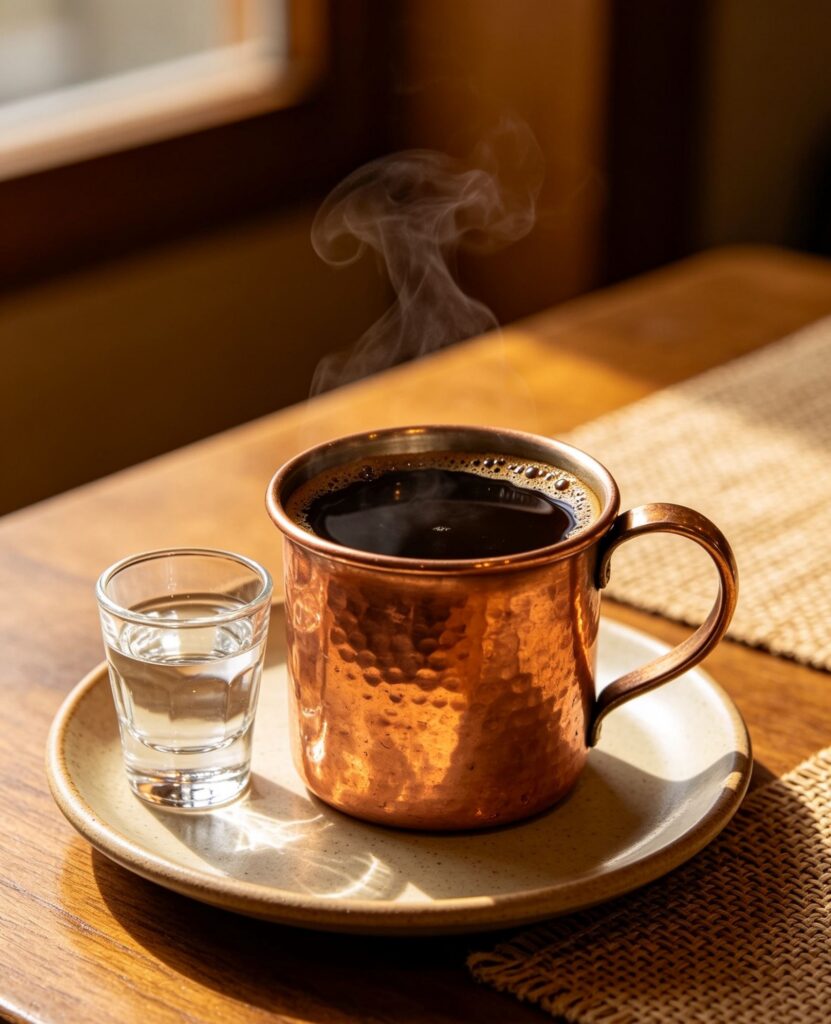
Bosnian coffee, brewed in a small copper džezva and served with a piece of Turkish delight (rahat lokum),
is a central ritual of daily and social life in Bosnia, taken slowly in unhurried company rather than as a quick
caffeine fix.
Cultural Background:
Bosnian coffee, brewed in a small copper džezva and served with a piece of Turkish delight (rahat lokum), is a central ritual of daily and social life in Bosnia, taken slowly in unhurried company rather than as a quick caffeine fix.
Tips:
Never let the coffee reach a full rolling boil, or the delicate foam will be lost. Use a very fine, Turkish-style grind for the proper texture and flavour extraction.
Variations:
Add a cardamom pod to the water for a fragrant variation. Serve alongside a small glass of cold water, as is traditional.
Vegetarian/Vegan:
Fully vegan as written.
Storage:
Best brewed and consumed fresh; not suitable for storing.
Reheating:
Not applicable; always brewed fresh.
Nutrition:
Approx. 5 kcal, 0 g protein, 1 g carbohydrate, 0 g fat per serving (without sugar or lokum).
FAQs:
Q: What if I don’t have a džezva?
A: A small saucepan can work in a pinch, though the classic long-handled shape helps control the foam.
Q: Why shouldn’t the coffee boil fully?
A: Boiling destroys the foam and can make the coffee taste bitter and over-extracted.
Q: Is Bosnian coffee the same as Turkish coffee?
A: They are very closely related, differing mainly in small ritual and grind details specific to each region.
- Heaped tsp finely ground coffee (Turkish grind) — 2
- Cold water — 150 ml (2/3 cup)
- Sugar (optional, per taste) — 1 tsp
- Small piece rahat lokum (Turkish delight), to serve — 1
Please log in to leave a comment.