
Boiled Pulaka with Coconut Cream (Pulaka mo lolo)
The Quirky Foodster Team
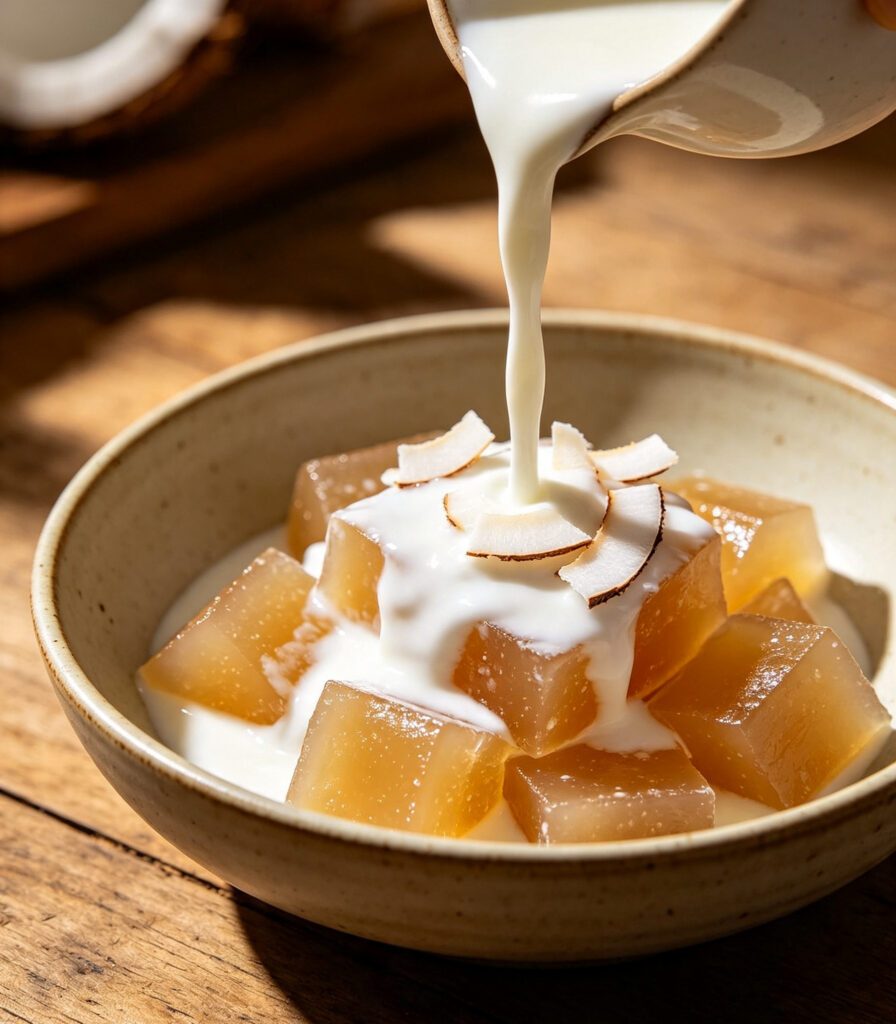
Ingredients
- Pulaka (swamp taro), peeled and cut into thick pieces — 800 g (1 3/4 lb)
- Water, for boiling — 1.5 L (6 1/3 cups)
- Fine salt — 1 tsp
- Fresh coconut cream — 250 ml (1 cup)
- Pinch of salt, for the coconut cream — 1 pinch
Method
- Place the pulaka pieces in a large saucepan, cover with the water, and add the salt.
- Bring to a boil, then reduce to a simmer, cover, and cook for 35-40 minutes, until completely tender when pierced with a knife.
- Drain well and arrange the pulaka pieces on a serving plate.
- Season the coconut cream with a small pinch of salt and warm gently if desired, without boiling.
- Spoon the coconut cream generously over the hot pulaka just before serving.
Introduction: Pulaka, or swamp taro, is Tuvalu's national staple, traditionally grown in deep composted pits dug
down to the freshwater table on the coral atolls.
Cultural Background: Pulaka, or swamp taro, is Tuvalu's national staple, traditionally grown in deep composted pits dug
down to the freshwater table on the coral atolls. A simple breakfast of boiled pulaka drizzled with fresh
coconut cream is one of the most everyday ways it is enjoyed, offering a filling start to the day using
ingredients grown right on the island.
Tips: Cut the pulaka into similarly sized pieces so it cooks through evenly. Use fresh, unsweetened coconut cream if available, as it is noticeably richer than thinner canned varieties.
Variations: Serve with a little kaleve (coconut toddy) drizzled over instead of coconut cream for extra natural sweetness. Mash the boiled pulaka lightly before topping with coconut cream, moving toward a tulolo-style texture. Naturally vegetarian as written. Naturally vegan as written; contains no animal products.
Storage: Refrigerate boiled pulaka in an airtight container for up to 2 days; store coconut cream separately.
Reheating: Reheat pulaka by steaming for 5-6 minutes, or in a covered dish in the microwave for 2-3 minutes.
FAQs:
Q: What does pulaka taste like compared to regular taro?
A: It has a coarser, starchier texture and a slightly more earthy, occasionally bitter flavour than common taro, which the sweetness of coconut cream helps balance.
Q: Can regular taro be substituted for pulaka?
A: Yes, standard taro root is a reasonable substitute where pulaka is unavailable, though the texture will be a little smoother.
- Pulaka (swamp taro), peeled and cut into thick pieces — 800 g (1 3/4 lb)
- Water, for boiling — 1.5 L (6 1/3 cups)
- Fine salt — 1 tsp
- Fresh coconut cream — 250 ml (1 cup)
- Pinch of salt, for the coconut cream — 1 pinch
Please log in to leave a comment.