
Bissara
The Quirky Foodster Team
Ingredients
- Dried split fava beans, soaked overnight — 2 cups (400 g / 14 oz)
- Garlic — 4 cloves
- Water — 6 cups (1.4 litres / 48 fl oz)
- Olive oil, plus extra for serving — 1/4 cup (60 ml / 2 fl oz)
- Ground cumin, plus extra for serving — 1 tsp
- Paprika, for serving — 1 tsp
- Salt — to taste
- Crusty bread, to serve
Method
- Drain the soaked fava beans and place in a large pot with the garlic and water.
- Bring to a boil, then reduce to a simmer and cook for 1–1.5 hours until the beans are completely soft.
- Blend the mixture until smooth, adding a little more water if needed to reach a thick, soup-like consistency.
- Stir in the olive oil and cumin, and season with salt.
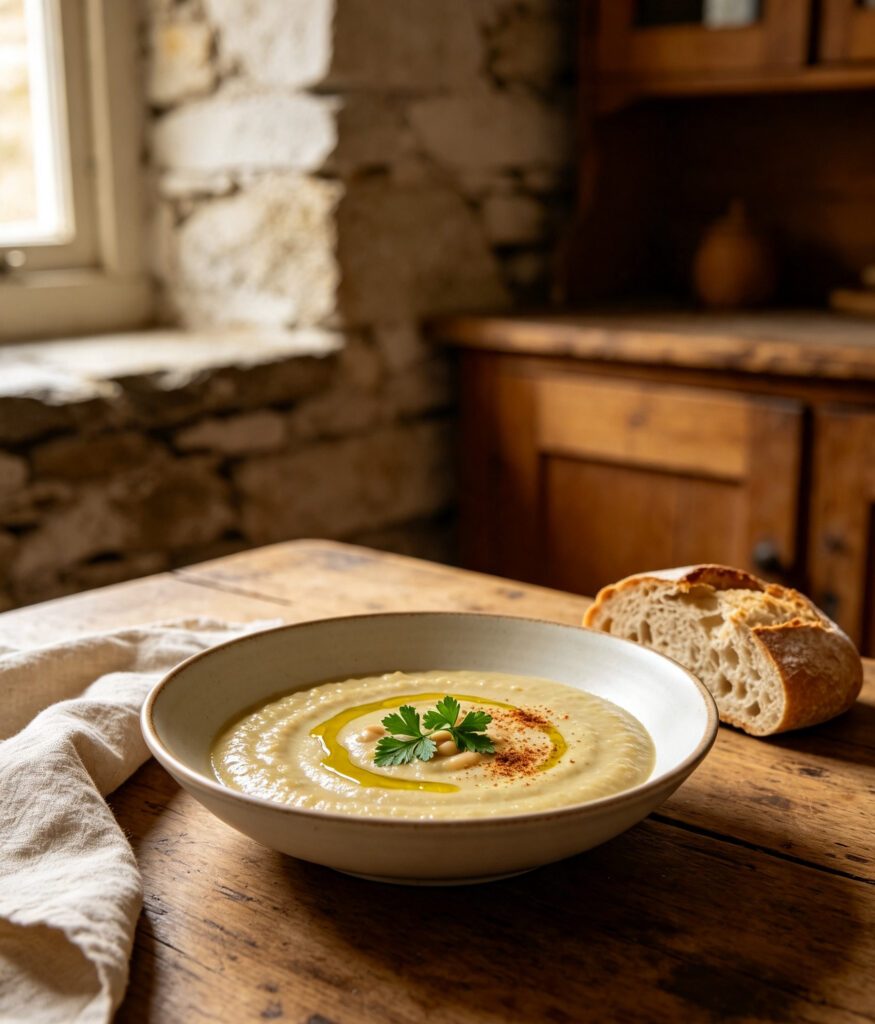
- Ladle into bowls and drizzle with extra olive oil, a sprinkle of cumin and paprika.
- Serve hot with crusty bread.
Introduction: A warming, smooth fava bean soup drizzled with olive oil and dusted with cumin and paprika, a filling breakfast especially popular in winter.
Cultural Background: Bissara has long been a working-class breakfast staple in Morocco, particularly in the north, offering an inexpensive, protein-rich start to cold mornings and traditionally sold from small street stalls at dawn.
Tips: Soaking the beans overnight significantly shortens the cooking time and helps them break down smoothly. Blend thoroughly for the classic velvety texture bissara is known for.
Variations: Add a pinch of cayenne for extra heat. Some versions include a diced potato cooked alongside the beans for extra body.
Storage: Refrigerate in an airtight container for up to 3 days.
Reheating: Reheat gently on the stovetop with a splash of water, stirring, until warmed through.
Nutrition: Per serving (approx.): 260 kcal, 12 g protein, 10 g fat, 32 g carbohydrate.
FAQs:
Q: Can I use canned or pre-cooked fava beans?
A: Fresh dried beans, soaked and simmered from
Q: Is bissara only eaten for breakfast?
A: It’s most associated with breakfast, though it’s also enjoyed
- Dried split fava beans, soaked overnight — 2 cups (400 g / 14 oz)
- Garlic — 4 cloves
- Water — 6 cups (1.4 litres / 48 fl oz)
- Olive oil, plus extra for serving — 1/4 cup (60 ml / 2 fl oz)
- Ground cumin, plus extra for serving — 1 tsp
- Paprika, for serving — 1 tsp
- Salt — to taste
- Crusty bread, to serve
Please log in to leave a comment.