
Mains
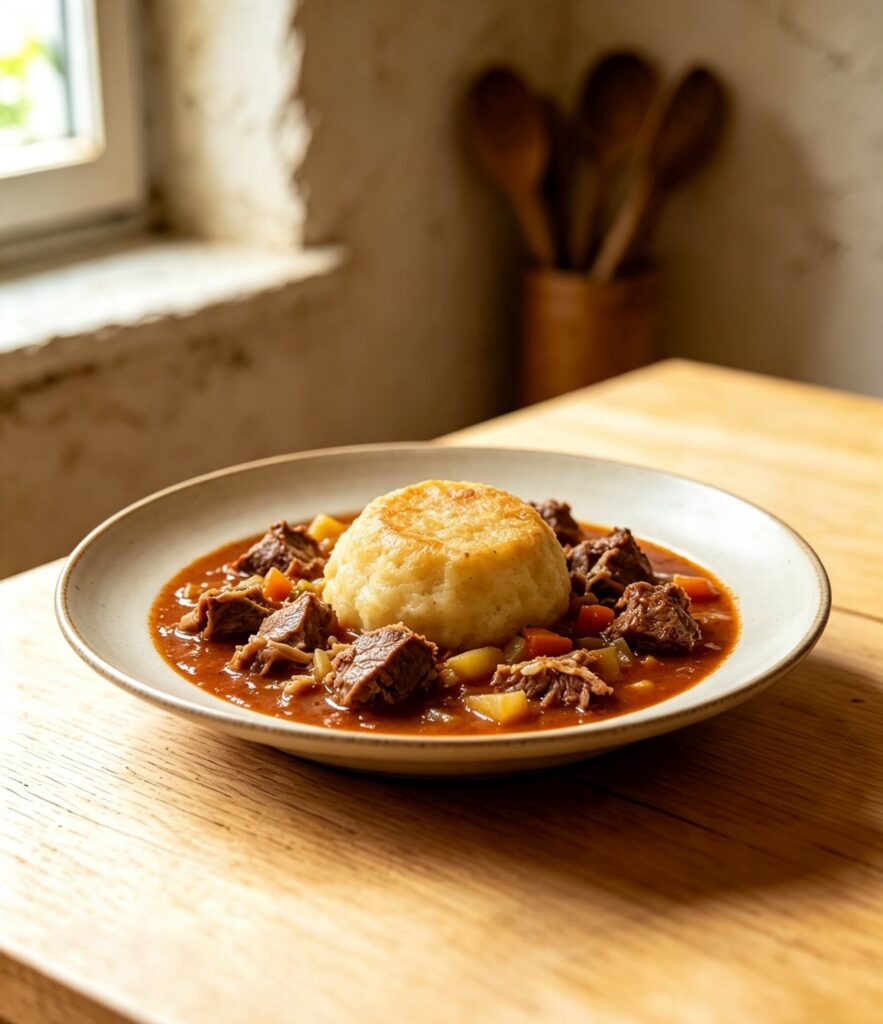
Bazin (Libyan National Dumpling with Lamb Stew)
Ingredients
- 400 g (3 cups) barley flour
- 1 tsp salt
- 700 ml (3 cups) water, plus extra as needed
- 500 g (1.1 lb) lamb, cut into chunks
- 2 tbsp olive oil
- 1 onion, chopped
- 3 garlic cloves, minced
- 3 medium potatoes, halved
- 400 g (14 oz) canned chopped tomatoes
- 2 tbsp tomato paste
- 1 tsp turmeric
- 1 tsp paprika
- 4 hard-boiled eggs
- Salt and pepper, to taste
Method
- For the stew, heat olive oil in a large pot and brown the lamb chunks on all sides, about 8 minutes.
- Add the onion and cook until softened, then add garlic and cook 1 minute more.
- Stir in tomato paste, chopped tomatoes, turmeric and paprika, and cook for 5 minutes.
- Add enough water to cover the meat, bring to a boil, then reduce heat and simmer covered for 45 minutes.
- Add the halved potatoes and continue simmering for 20-25 minutes until the meat and potatoes are tender.
- Season with salt and pepper.
- Meanwhile, prepare the bazin dough: bring the water to a boil in a separate pot, gradually whisk in the barley flour and salt, and cook over low heat, beating continuously with the magraf or a sturdy wooden spoon for 15-20 minutes until it forms a smooth, very firm, elastic dough that pulls away from the sides of the pot.
- Wet your hands with cold water and shape the dough into a smooth dome, placing it in the center of a large serving platter.
- Pour the lamb and potato stew around the dome, and arrange the halved hard-boiled eggs on top or around the dish.
- Serve immediately while hot, with diners tearing pieces from the dome to dip into the stew.
Introduction: Bazin is widely regarded as Libya's national dish: a firm, unleavened dome of boiled barley flour dough, beaten smooth with a special forked stick called a magraf, and served at the center of a shared platter surrounded by a rich lamb, potato and egg stew.
Cultural Background: Bazin is widely regarded as Libya's national dish: a firm, unleavened dome of boiled barley flour dough, beaten smooth with a special forked stick called a magraf, and served at the center of a shared platter surrounded by a rich lamb, potato and egg stew. Diners traditionally eat communally, tearing off pieces of the dough to dip into the surrounding sauce, making it as much a social ritual as a meal.
Tips: The bazin dough should be firm enough to hold its shape when domed – continue beating if it looks too loose. Keep your hands wet with cold water when shaping the dough, as it is very sticky.
Variations: A version made with wheat flour instead of barley is called Assida in some regions and is softer in texture, typically reserved for celebratory occasions rather than everyday bazin.
Storage: Refrigerate stew and bazin separately in airtight containers for up to 3 days.
Reheating: Reheat the stew gently on the stovetop; slice the cooled bazin dome and warm briefly in a covered pan with a little stew liquid, as it hardens when cold.
FAQs:
Q: Why is the dough so firm?
A: Bazin's firm dough is intentional, meant to be torn and dipped rather than eaten like bread.
Q: Can I make bazin dough in a stand mixer?
A: A dough hook can help toward the end, but the dense mixture is traditionally worked by hand with a sturdy stick.
Please log in to leave a comment.