
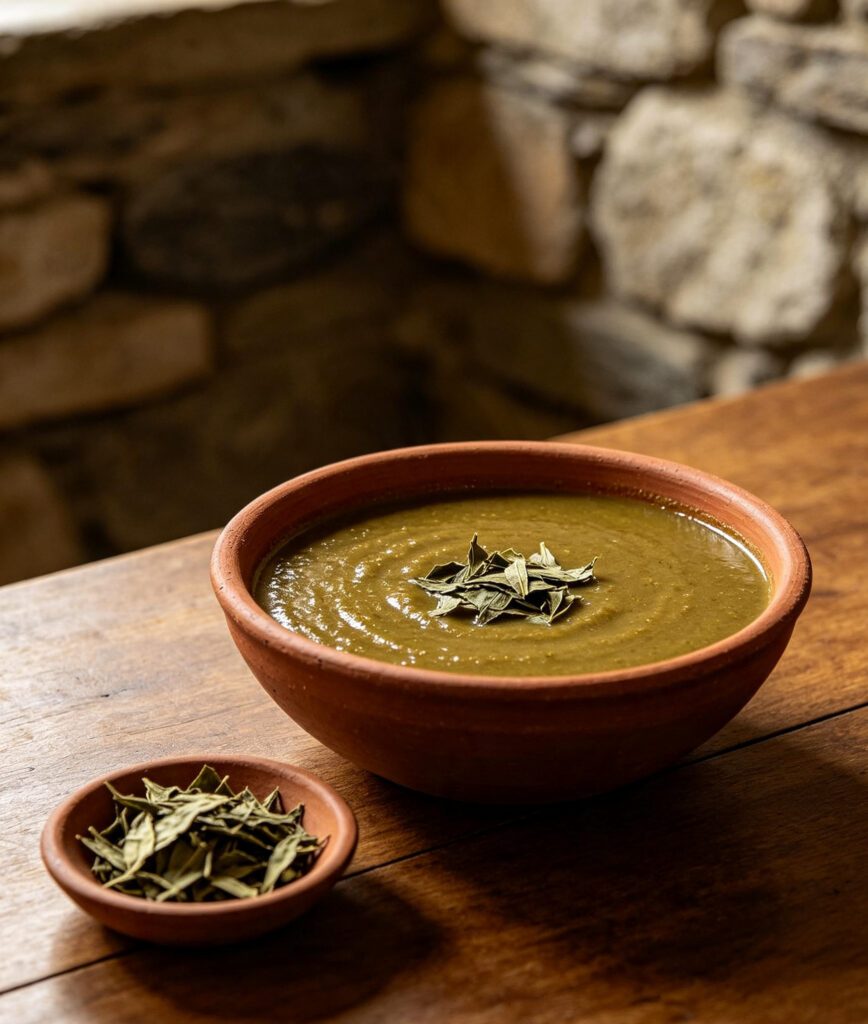
Baobab Leaf Soup (Lalo)
The Quirky Foodster Team
Ingredients
- Dried, ground baobab leaf powder — 3 tbsp
- Water or light broth — 750 ml (3 cups)
- Onion, chopped — 1
- Salt — 1 pinch
Method
- Bring the water or broth to a simmer in the pot and add the chopped onion.
- Cook for 5 minutes, until softened.
- Whisk in the baobab leaf powder, stirring continuously to avoid lumps.
- Simmer gently for 8-10 minutes, stirring occasionally, until thickened to a soft, slightly mucilaginous soup.
- Season with salt and serve hot.
Introduction: A thick, slightly mucilaginous soup made from dried, ground baobab leaves, one of the oldest and most enduring uses of a tree deeply woven into Sahelian food culture.
Cultural Background: The baobab tree is native to the African savanna and its leaves have been used as a food source across the Sahel for a very long history, with the dried, ground-leaf soup or sauce known widely across the region today under names such as lalo continuing a food tradition of considerable antiquity; while no Mali Empire-period text specifically names this dish, the baobab’s deep ecological and cultural presence across the exact geography of the empire makes this one of the more strongly grounded reconstructions in this collection.
Tips: – Whisk the baobab leaf powder in gradually to prevent clumping. – The soup’s natural mucilaginous texture, similar to okra, is characteristic of the dish rather than a sign of anything gone wrong.
Variations: – Naturally vegan as written. – Dried or fresh fish can be added, following the well-documented importance of fish in the wider Niger River diet.
Storage: Refrigerate covered for up to 3 days.
Reheating: Reheat gently in a pot over low heat with a splash of water for 5-6 minutes, stirring.
Nutrition: Per serving (approx.): 70 kcal, 3 g protein, 10 g carbohydrate, 1 g fat, 3 g fibre.
FAQs:
Q: Is lalo a genuinely old dish?
A: The baobab tree’s use as a food source across the Sahel has a very long history, and dried leaf soups of this general kind, known widely today under names such as lalo, represent a continuation of that old tradition, even though no single Mali Empire-period text specifically names this exact dish.
Q: Where can baobab leaf powder be found today?
A: It is increasingly available from West African and specialty grocers, and from health food suppliers, as baobab products have gained wider international recognition in recent years.
- Dried, ground baobab leaf powder — 3 tbsp
- Water or light broth — 750 ml (3 cups)
- Onion, chopped — 1
- Salt — 1 pinch
Please log in to leave a comment.