
Bangladeshi Shorshe (Mustard) Sauce
The Quirky Foodster Team
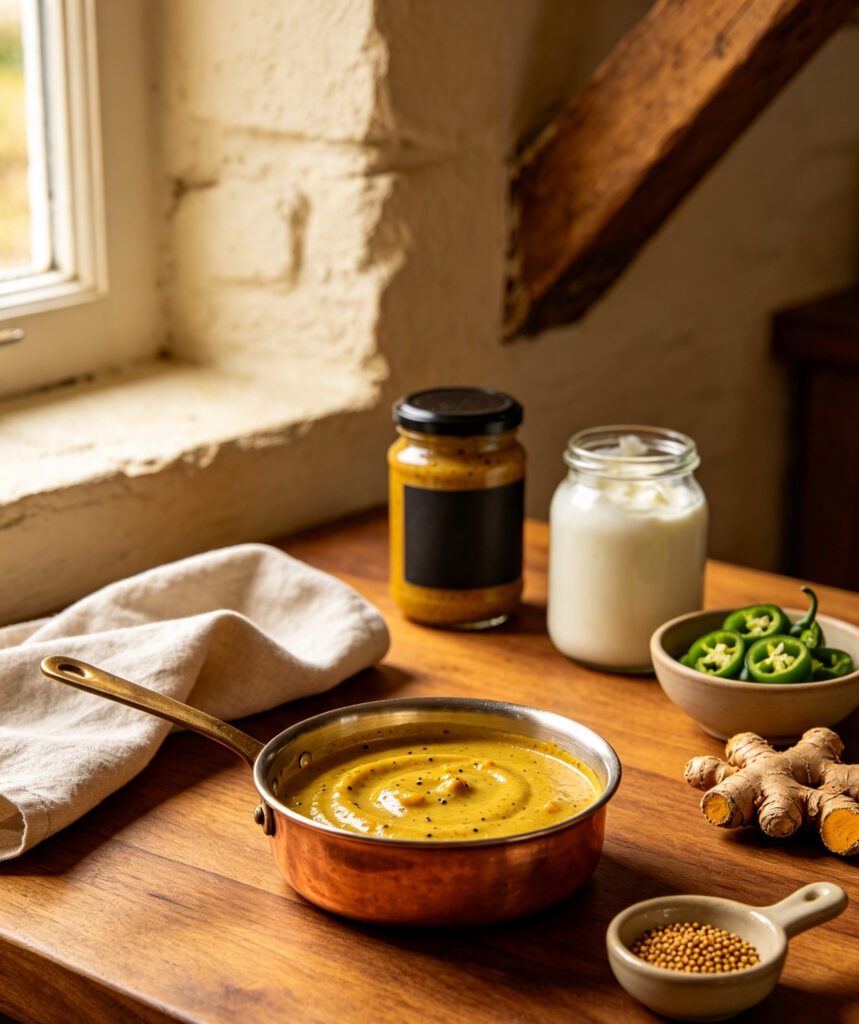
Ingredients
- Yellow and black mustard seeds — 60 g (1/3 cup)
- Green chiles — 3
- Water — 100 ml (1/3 cup + 1 tbsp)
- Turmeric powder — 5 g (1.5 tsp)
- Mustard oil — 45 ml (3 tbsp)
- Salt — 5 g (1 tsp)
Method
- Soak mustard seeds in water for at least 2 hours, or overnight, to soften and reduce bitterness.
- Drain and blend soaked mustard seeds with green chiles and a little fresh water to a smooth paste.
- Strain through a fine sieve if a very smooth texture is desired, though some texture is traditional.
- Stir in turmeric, mustard oil and salt.
- Use immediately as a sauce base for fish or vegetables, traditionally simmered together.
Cultural Background: A pungent mustard seed paste, shorshe bata is a cornerstone of Bengali and Bangladeshi cuisine, most famously used in shorshe ilish (hilsa fish in mustard sauce), its sharp intensity a defining regional flavour.
Tips: • Soaking the mustard seeds properly is essential — insufficient soaking results in an overly bitter, harsh paste. • A small amount of raw mustard oil stirred in at the end adds characteristic pungent aroma.
Variations: • Adjust the ratio of yellow to black mustard seeds for a milder or sharper final flavour. • Traditionally used with hilsa fish (ilish), also works well with other firm fish or vegetables.
Storage: Refrigerate the paste up to 3 days; best used fresh due to its raw, pungent nature.
Reheating: Not applicable; used as a base sauce, cooked with fish or vegetables when the final dish is prepared. Nutrition (per serving) Approx. 60 kcal, 1.5 g protein, 5 g fat, 2 g carbohydrate per 15 g serving.
FAQs: What is shorshe bata traditionally used for? The signature sauce for shorshe ilish (hilsa fish in mustard sauce), a beloved Bengali delicacy, and other fish and vegetable dishes. Why does mustard paste taste bitter sometimes? Insufficient soaking time is the most common cause; soak seeds for at least 2 hours, or overnight for best results.
- Yellow and black mustard seeds — 60 g (1/3 cup)
- Green chiles — 3
- Water — 100 ml (1/3 cup + 1 tbsp)
- Turmeric powder — 5 g (1.5 tsp)
- Mustard oil — 45 ml (3 tbsp)
- Salt — 5 g (1 tsp)
Please log in to leave a comment.