
Baltic Dill Sauce
The Quirky Foodster Team
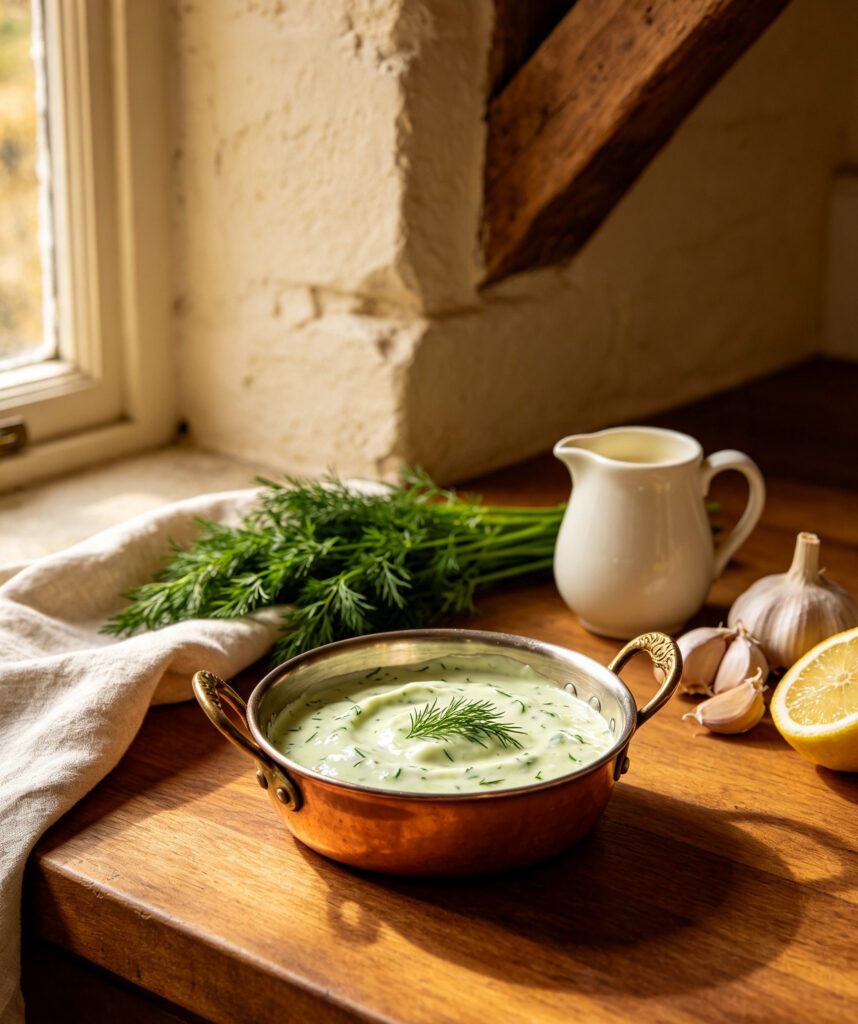
Ingredients
- Unsalted butter — 30 g (2 tbsp)
- All-purpose flour — 20 g (2.5 tbsp)
- Fish or vegetable stock — 250 ml (1 cup)
- Whole milk — 100 ml (1/3 cup + 1 tbsp)
- Fresh dill, finely chopped — 30 g (1/2 cup)
- Fresh lemon juice — 10 ml (2 tsp)
- Salt and white pepper — to taste
Method
- Melt butter in a saucepan over medium heat; whisk in flour, cook 2 minutes to form a light roux.
- Gradually whisk in stock and milk, stirring continuously to avoid lumps.
- Simmer gently 8-10 minutes, stirring often, until thickened.
- Off the heat, stir in most of the fresh dill (reserving some for garnish) and lemon juice.
- Season with salt and white pepper to taste.
Cultural Background: A creamy dill-forward sauce found across Estonia, Latvia and Lithuania, Baltic dill sauce reflects the region's deep culinary reliance on fresh dill, traditionally served with poached fish, boiled potatoes and spring vegetables.
Tips: • Add the fresh dill off direct heat to preserve its bright colour and aroma. • Using fish stock when serving with fish gives the most cohesive flavour.
Variations: • Stir in a spoonful of sour cream for extra richness. • Add capers for a briny variation common in some coastal households.
Storage: Refrigerate up to 2 days in an airtight container.
Reheating: Reheat gently over low heat, whisking occasionally. Nutrition (per serving) Approx. 55 kcal, 1 g protein, 3.5 g fat, 4 g carbohydrate per 60 ml serving.
FAQs: What is Baltic dill sauce traditionally served with? Poached or boiled fish, new potatoes, and spring vegetables, especially in Estonian, Latvian and Lithuanian cooking. Can I use dried dill instead of fresh? Fresh dill is strongly preferred for its bright aroma; dried dill lacks the same vibrant flavour.
- Unsalted butter — 30 g (2 tbsp)
- All-purpose flour — 20 g (2.5 tbsp)
- Fish or vegetable stock — 250 ml (1 cup)
- Whole milk — 100 ml (1/3 cup + 1 tbsp)
- Fresh dill, finely chopped — 30 g (1/2 cup)
- Fresh lemon juice — 10 ml (2 tsp)
- Salt and white pepper — to taste
Please log in to leave a comment.