
Desserts
Lebanese Baklava
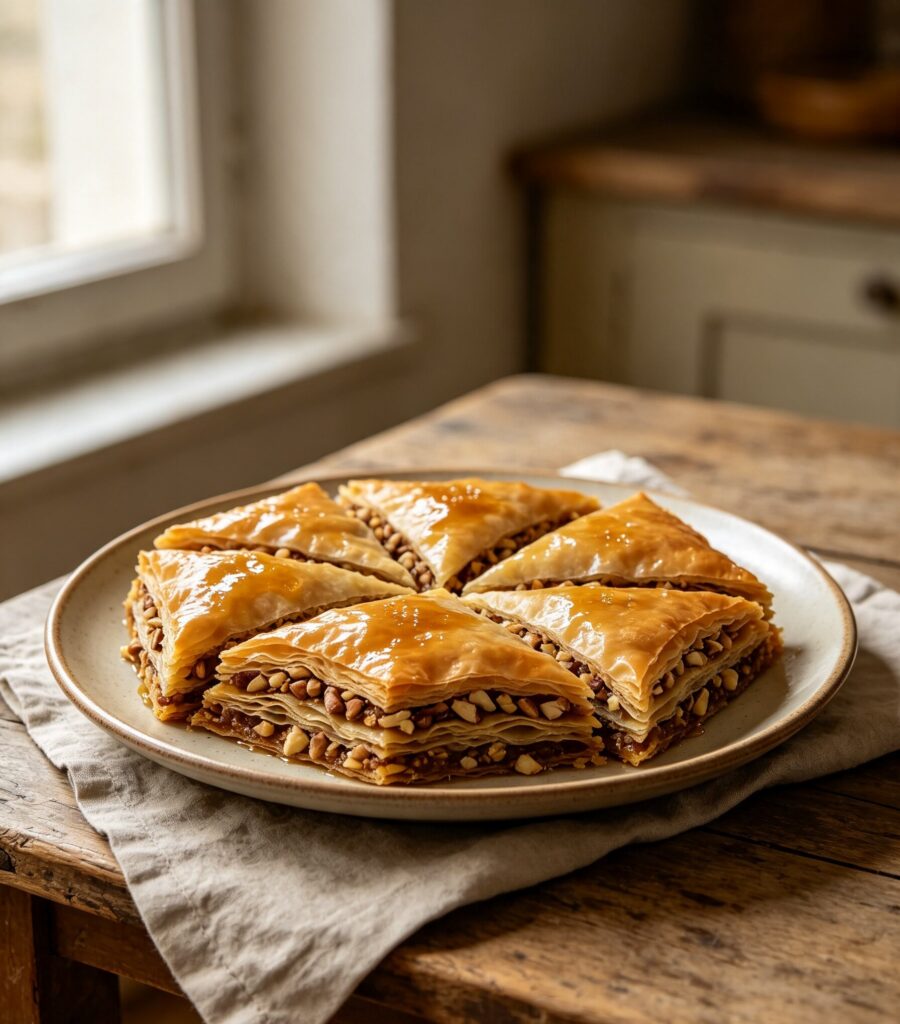
Ingredients
- 500 g filo pastry sheets
- 300 g (3 cups) chopped walnuts or pistachios
- 5 g (1 tsp) ground cinnamon
- 230 g (1 cup) unsalted butter, melted
- 400 g (2 cups) sugar
- 240 ml (1 cup) water
- 15 ml (1 tbsp) lemon juice
- 15 ml (1 tbsp) rose water or orange blossom water
Method
- Make the syrup first: simmer sugar and water for 10 minutes, add lemon juice and rose water, then cool completely.
- Mix chopped nuts with cinnamon in a bowl.
- Brush the baking dish with melted butter and layer half the filo sheets, brushing each with butter.
- Spread the nut mixture evenly over the layered filo.
- Top with the remaining filo sheets, brushing each layer with butter as you go.
- Cut into diamond shapes before baking, cutting all the way through the top layers.
- Bake at 160°C (325°F) for 45-50 minutes until golden and crisp.
- Immediately pour the cooled syrup evenly over the hot baklava.
- Let sit for at least 4 hours, ideally overnight, before serving to allow the syrup to absorb.
Introduction: Layers of paper-thin filo pastry filled with chopped nuts and soaked in fragrant sugar syrup, baklava is a centrepiece of Lebanese patisserie, especially prominent during Eid and family celebrations.
Cultural Background: Layers of paper-thin filo pastry filled with chopped nuts and soaked in fragrant sugar syrup, baklava is a centrepiece of Lebanese patisserie, especially prominent during Eid and family celebrations.
Tips: Keep unused filo covered with a damp cloth to prevent drying out while assembling. Pouring cold syrup over hot baklava (or vice versa) keeps the layers crisp rather than soggy.
Variations: Pistachio baklava is a prized variation in northern Lebanon. Some bakeries shape baklava into rolls (baklava asabeh) instead of layered trays.
Storage: Store at room temperature in an airtight container for up to 2 weeks.
Reheating: Not required; baklava is served at room temperature.
FAQs:
Q: Why must the syrup be cold when the baklava is hot?
A: The temperature contrast helps the pastry absorb syrup evenly while staying crisp rather than turning soggy.
Q: Can I use a different nut?
A: Yes, walnuts, pistachios or a blend are all traditional depending on the region.
Please log in to leave a comment.