
Drinks
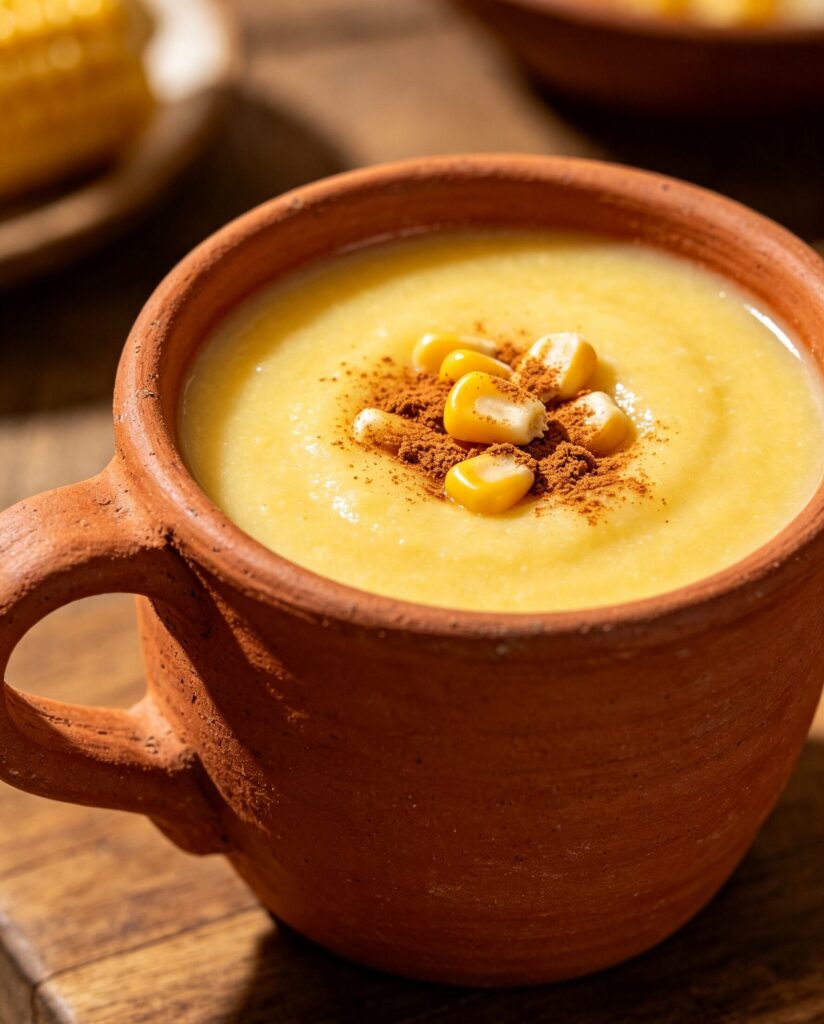
Atol de Elote (Guatemalan Sweet Corn Drink)
The Quirky Foodster Team
Ingredients
- 6 ears (6 ears) fresh corn, kernels removed
- 1 l (4 cups) whole milk
- 100 g (8 tbsp) sugar
- 1 cinnamon (1 stick) stick
- 1 pinch salt
Method
- Blend the corn kernels with 250 ml (1 cup) of the milk until smooth.
- Strain the blended corn through a fine sieve into a saucepan, pressing to extract as much liquid as possible; discard the solids.
- Add the remaining milk, sugar, cinnamon stick and salt to the saucepan.
- Bring to a gentle simmer over medium heat, stirring frequently to prevent sticking.
- Cook for 12-15 minutes, stirring constantly, until the mixture thickens to a smooth, drinkable consistency.
- Remove the cinnamon stick and serve hot in mugs.
Introduction: Atol de Elote is a warm, thick drink made from fresh corn, sold by street vendors in the evening across Guatemala and enjoyed as a comforting snack, particularly during the corn harvest season when fresh ears are at their sweetest.
Cultural Background: Atol de Elote is a warm, thick drink made from fresh corn, sold by street vendors in the evening across Guatemala and enjoyed as a comforting snack, particularly during the corn harvest season when fresh ears are at their sweetest.
Tips: Stir constantly once the mixture starts to thicken, as it can catch and scorch on the bottom of the pan.
Variations: A version using masa harina as a thickener instead of blended corn is common when fresh corn is unavailable.
Storage: Refrigerate up to 2 days in a sealed container.
Reheating: Reheat gently on the stovetop over low heat, stirring, adding a splash of milk if too thick.
Nutrition: Approx. 230 kcal, 6 g protein, 6 g fat, 38 g carbohydrate per serving.
FAQs:
Q: Can I use frozen corn?
A: Yes, thaw first and blend as you would fresh kernels, though flavour is best with fresh sweet corn.
Q: Is Atol de Elote the same as Mexican atole?
A: It is closely related, part of the same Mesoamerican atol tradition, though the Guatemalan version is typically less thick and lightly less sweet.
Please log in to leave a comment.