
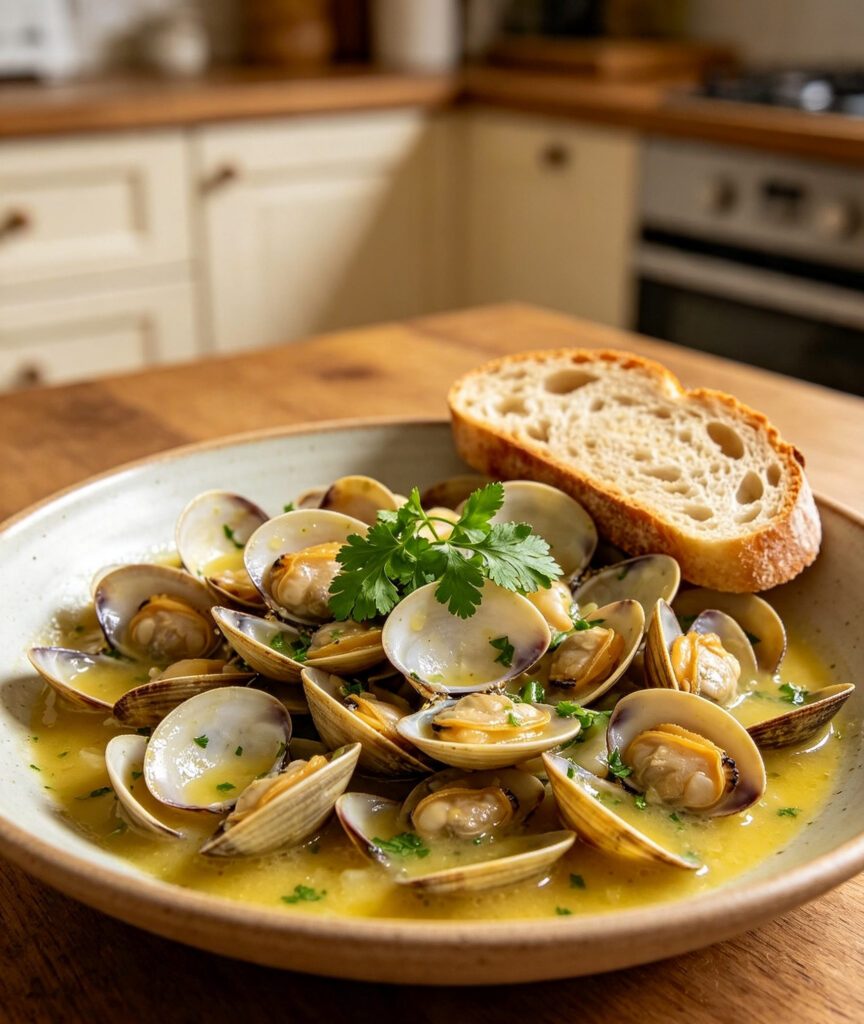
Amêijoas à Bulhão Pato
The Quirky Foodster Team
Ingredients
- Fresh clams, cleaned — 1 kg (2.2 lb)
- Garlic, minced — 4 cloves
- Olive oil — 60 ml (2 fl oz)
- White wine — 120 ml (4 fl oz)
- Chopped coriander — 15 g (0.5 oz)
- Lemon, cut into wedges — 1
- Salt — to taste
- Crusty bread, to serve
Method
- Soak the clams in salted water for 20–30 minutes to help release any sand, then rinse well.
- Heat the olive oil in a large pot and sauté the garlic until fragrant, being careful not to burn it.
- Add the white wine and bring to a simmer.
- Add the clams, cover, and cook for 4–6 minutes, shaking the pot occasionally, until the clams have opened.
- Discard any clams that remain closed.
- Stir in the chopped coriander and season with salt.
- Serve immediately with lemon wedges and crusty bread for dipping in the broth.
Introduction: Fresh clams quickly steamed with garlic, olive oil, white wine and coriander, a bright and beloved Portuguese seafood starter.
Cultural Background: This clam dish, named after the 19th-century Portuguese poet Bulhão Pato, reflects the country's strong coastal seafood tradition, its simple preparation letting the freshness of the clams shine through.
Tips: Soaking the clams beforehand helps ensure any grit or sand is released before cooking. Cook just until the clams open — overcooking will make them tough and rubbery.
Variations: Add a small chopped chilli for a little heat. Use parsley in place of coriander for a milder, more classic herb note if preferred.
Storage: Best eaten fresh; not suitable for storing, as clams are best enjoyed immediately after cooking.
Reheating: Reheating is not recommended, as clams can become tough; best made fresh.
FAQs:
Q: Who was Bulhão Pato?
A: A 19th-century Portuguese poet, after whom this classic clam preparation is named.
Q: How do I know if clams are fresh and safe to cook?
A: Fresh clams should be tightly closed before cooking (discard any that are open and don't close when tapped) and should open during cooking (discard any that remain closed).
- Fresh clams, cleaned — 1 kg (2.2 lb)
- Garlic, minced — 4 cloves
- Olive oil — 60 ml (2 fl oz)
- White wine — 120 ml (4 fl oz)
- Chopped coriander — 15 g (0.5 oz)
- Lemon, cut into wedges — 1
- Salt — to taste
- Crusty bread, to serve
Please log in to leave a comment.