
Desserts
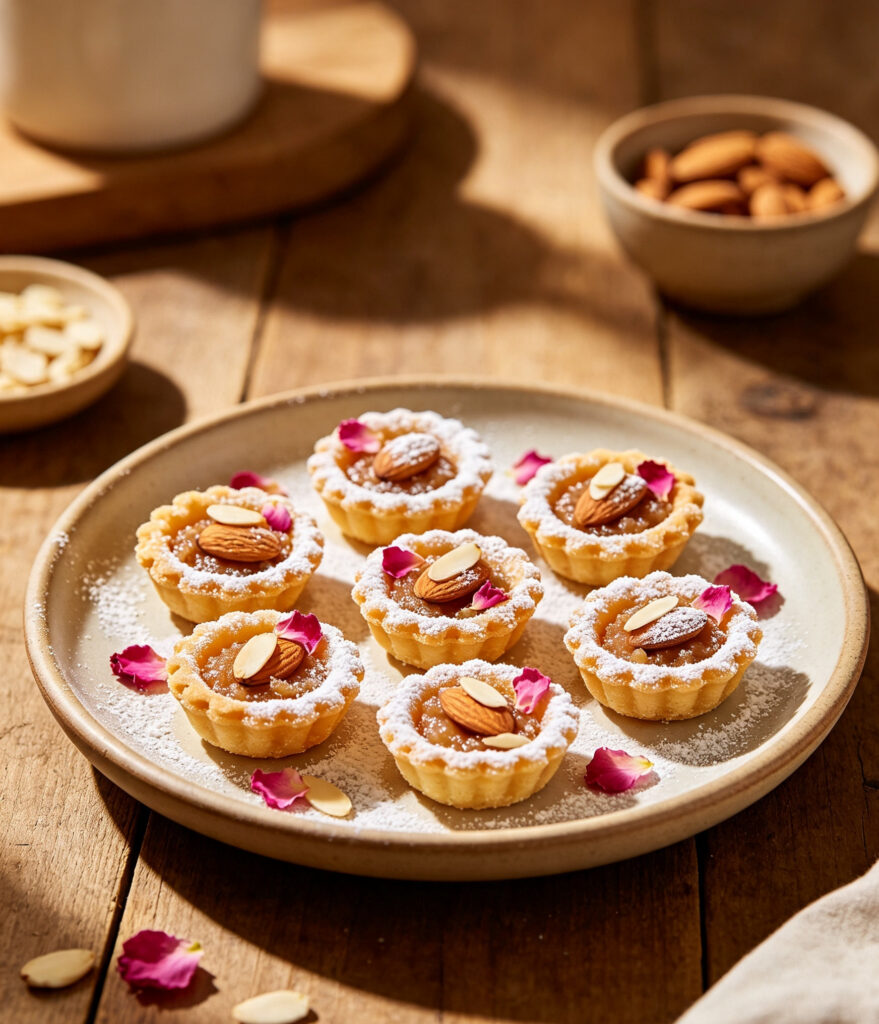
Almond and Rosewater Sweets (Lauzinaj)
sjfegan
Ingredients
- 200g (2 cups) Ground almonds
- 100g (1/2 cup) Sugar
- 2 tbsp rosewater, divided
- 2 cups thin pastry dough (or filo, store-bought)
- 60g (1/4 cup) Melted butter
- 170g (1/2 cup) Honey, for syrup
- 60ml (1/4 cup) Water, for syrup
Method
- Combine the ground almonds, sugar and 1 tablespoon rosewater into a smooth paste.
- Preheat the oven to 180°C (350°F).
- Cut the pastry dough into small squares, brushing each layer with melted butter.
- Place a small amount of almond paste in the centre of each square, fold into a small parcel, and seal.
- Place on a baking tray and bake for 18–22 minutes until golden.
- Meanwhile, warm the honey and water together with the remaining rosewater to make a light syrup.
- Drizzle the warm syrup over the baked pastries before serving.
Introduction: Small pastries filled with a sweet almond paste and perfumed with rosewater, one of the most celebrated desserts of the Abbasid court.
Cultural Background: Lauzinaj held legendary status in Abbasid culinary culture, celebrated in poetry and historical accounts as a dessert of extraordinary refinement, its delicate almond filling and aromatic rosewater syrup epitomising the era’s sophisticated sweet-making.
Tips: Work with the pastry dough quickly and keep it covered, as it dries out fast. Drizzle the syrup while the pastries are still warm, as this helps it absorb evenly.
Variations: Add a pinch of ground cardamom to the almond filling for extra fragrance. Garnish with a few crushed pistachios.
Storage: Store in an airtight container at room temperature for up to 1 week.
Reheating: Not applicable — served at room temperature.
Nutrition: Per serving (approx., 2 pieces): 280 kcal, 6 g protein, 14 g fat, 34 g carbohydrate.
FAQs:
Q: Why was lauzinaj so celebrated in Abbasid culture?
A: It was praised extensively in period poetry and literature as a dessert of extraordinary refinement, considered a hallmark of the era’s sophisticated sweet-making tradition.
Q: What role did rosewater play in Abbasid desserts?
A: Rosewater was a treasured aromatic ingredient, reflecting the caliphate’s access to luxury goods through trade, used to perfume many of the era’s most celebrated sweets.
Please log in to leave a comment.