
Drinks
Agua Dulce (Hot Sugarcane Drink)
The Quirky Foodster Team
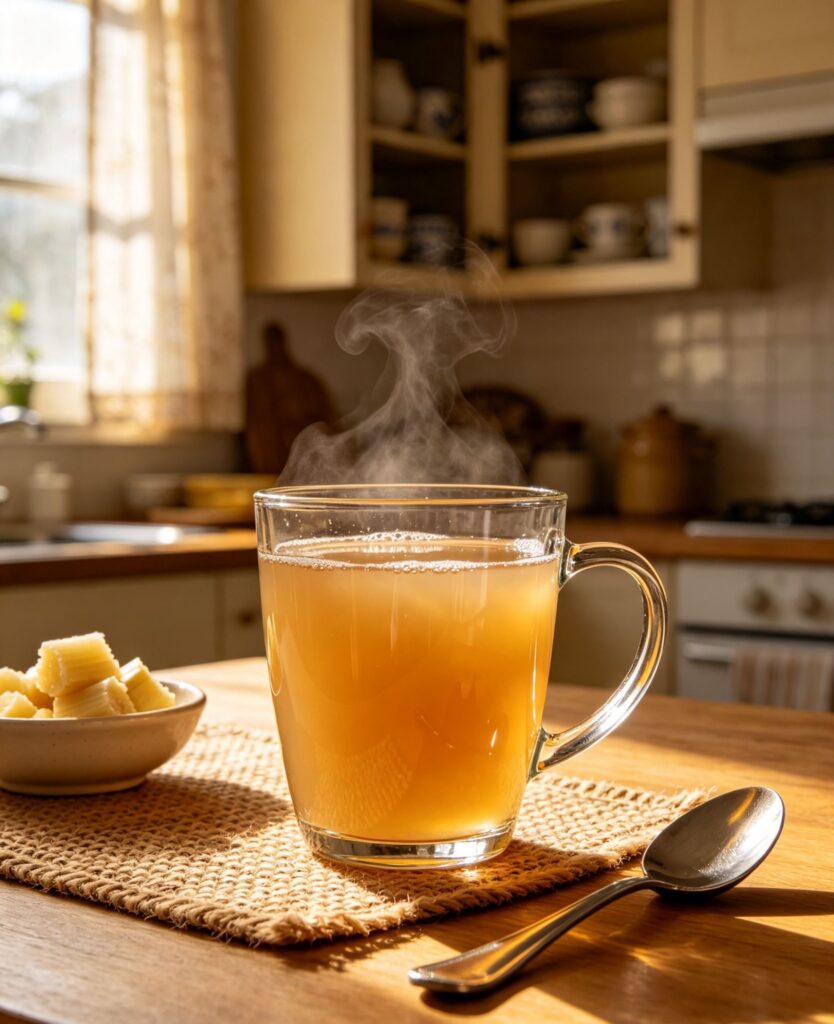
Ingredients
- 100 g (3 1/2 oz) tapa de dulce (unrefined cane sugar block), grated or chopped
- 1 litre (4 cups) water
- 2 whole cloves (optional)
- 1 cinnamon stick (optional)
- A splash of milk, to taste (optional)
Method
- Combine the water with the chopped tapa de dulce, cloves and cinnamon stick, if using, in a saucepan.
- Bring to a gentle boil, stirring occasionally, until the sugar is fully dissolved.
- Simmer for 5 minutes to let the spices infuse, if using.
- Strain out the spices, if used, and serve hot, with a splash of milk stirred in if desired.
Introduction: Agua Dulce is a simple, warming drink made by dissolving tapa de dulce (unrefined cane sugar) in hot
water, a rural Costa Rican tradition often enjoyed at breakfast or during chilly mornings in the highlands,
sometimes with a splash of milk or a squeeze of lime.
Cultural Background: Agua Dulce is a simple, warming drink made by dissolving tapa de dulce (unrefined cane sugar) in hot
water, a rural Costa Rican tradition often enjoyed at breakfast or during chilly mornings in the highlands,
sometimes with a splash of milk or a squeeze of lime.
Tips: Stir occasionally while heating to help the sugar block dissolve evenly without settling at the bottom. Adjust the amount of tapa de dulce to taste, as sweetness can vary between brands.
Variations: Add a squeeze of fresh lime for a tangier version, especially soothing when feeling unwell. Serve with a splash of milk for a creamier, more comforting drink.
Storage: Refrigerate any leftover drink in a sealed container for up to 3 days.
Reheating: Reheat gently on the stovetop until warmed through.
Nutrition: Approx. 110 kcal, 0g protein, 0g fat, 28g carbohydrate per serving.
FAQs
Q: What is tapa de dulce?
A: It is an unrefined, solid block of cane sugar (similar to panela or piloncillo found elsewhere in Latin America), retaining more molasses flavour than refined white sugar.
Q: Is Agua Dulce only for cold weather?
A: While especially popular on cool mornings, especially in Costa Rica's highlands, it is enjoyed year-round as a comforting everyday drink.
Please log in to leave a comment.