
Europe
European Table Fork
Italy, later spreading across Europe
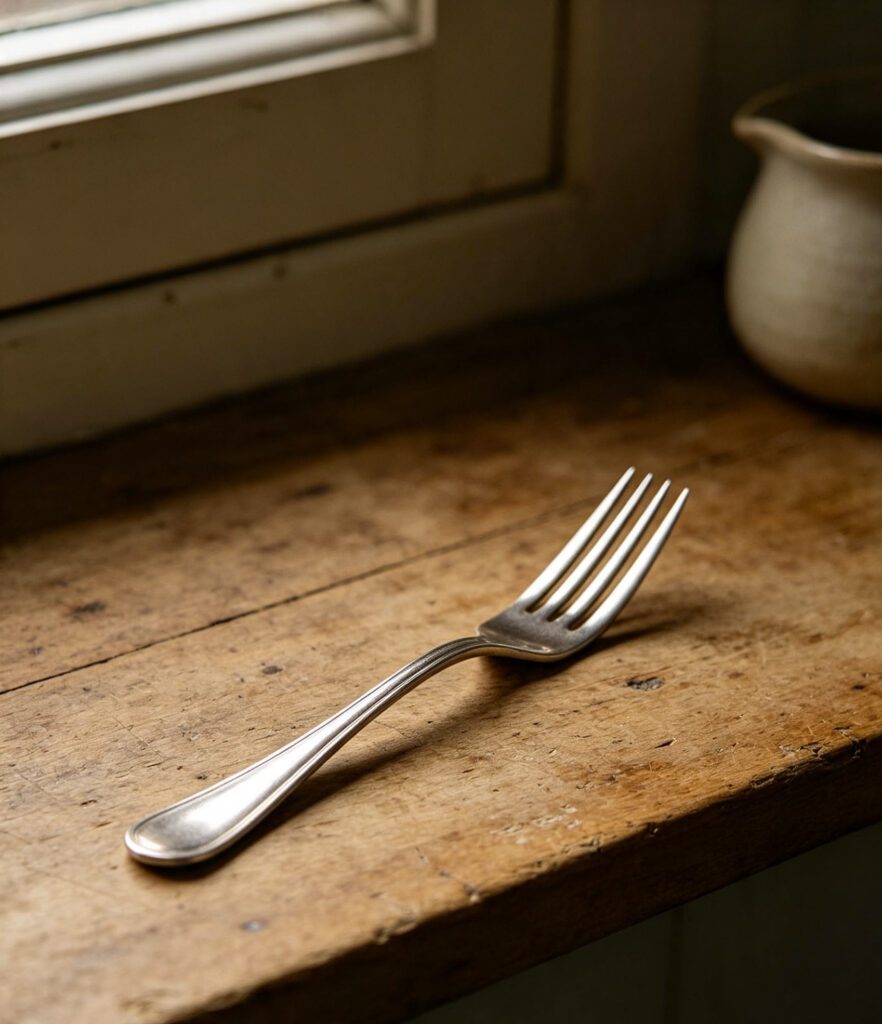
The now-standard multi-pronged eating fork, whose widespread adoption at the dining table is generally traced to Italy (particularly through Catherine de Medici's influence on French court dining) before spreading across the rest of Europe over subsequent centuries.
Material & Construction
Stainless steel or, historically, silver, with the now-familiar four-tine design that gradually standardized from earlier two-tine and three-tine forms.
Traditional Uses
General eating at the table, now the near-universal default utensil for solid food across Western and increasingly global dining settings.
Modern Availability / Equivalents
This is itself the current global standard with no meaningful substitute in contexts using fork-and-knife dining.
Care & Maintenance
Standard metal-cutlery care; dishwasher-safe.
The dining fork's documented, relatively late historical adoption in Europe (compared to spoons and knives, both far older) is a notable case study in how eating customs shift over time.
Please log in to leave a comment.